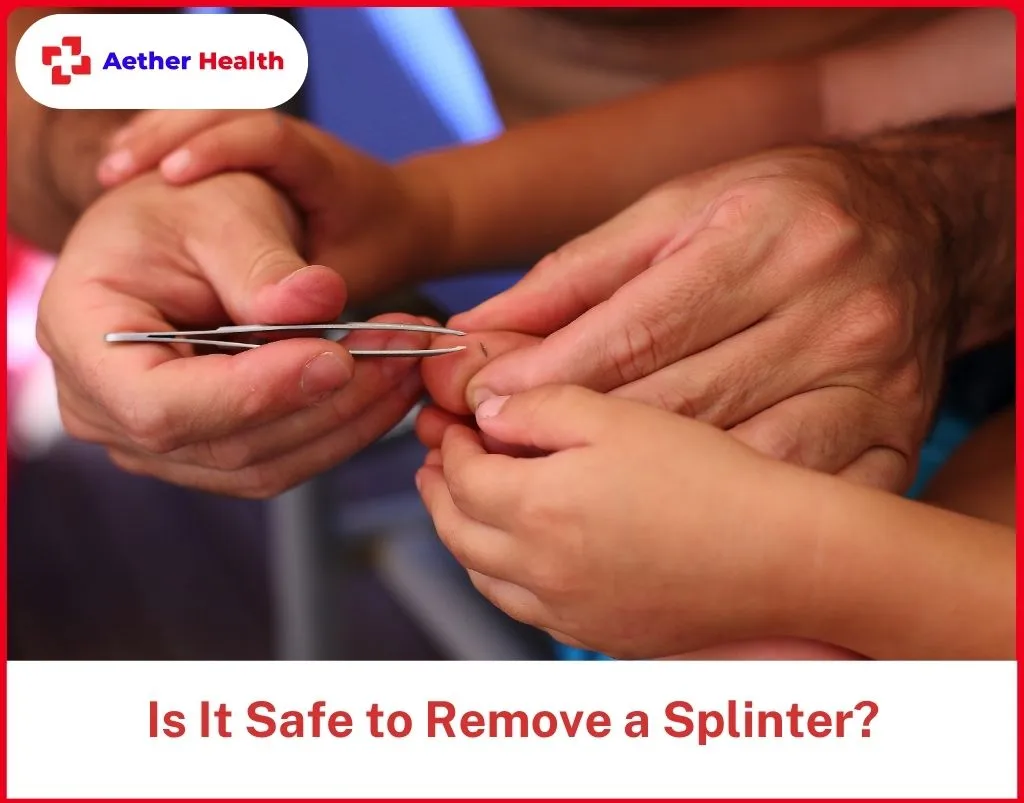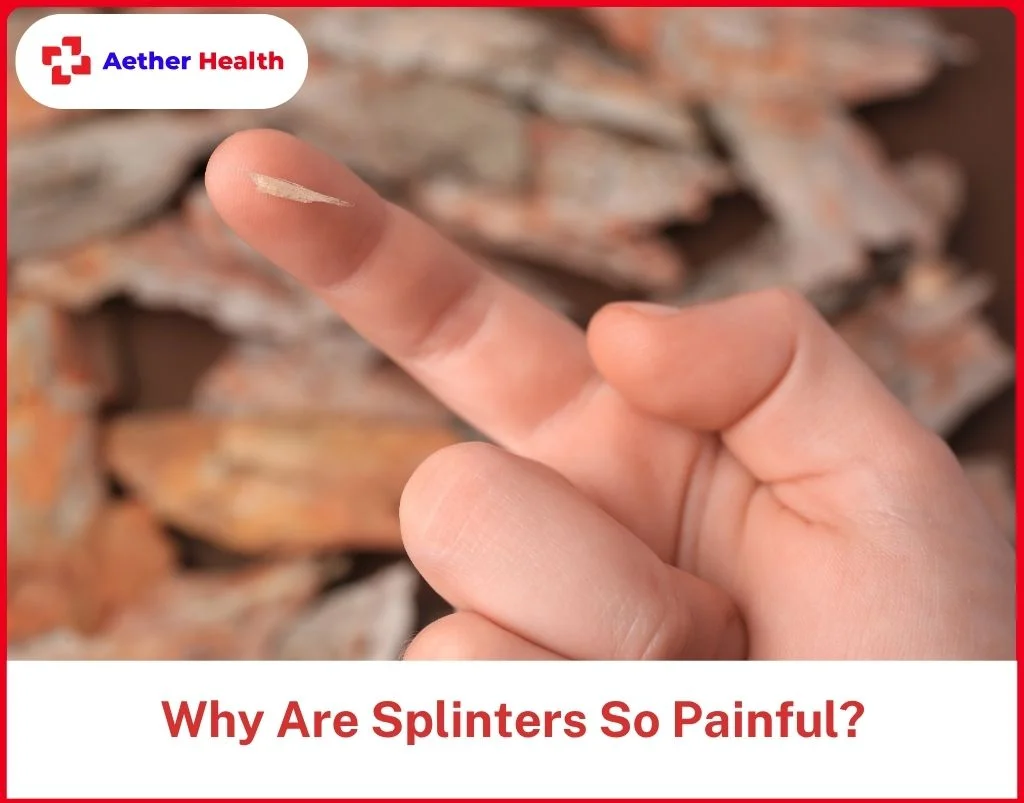
Reviewed by the emergency care team at Aether Health ER | Spring Cypress, Kingwood, and SilverLake (Pearland), TX | +1 (713) 528-8703
| DID YOU KNOW?
Your fingertip has around 3,000 touch receptors per square centimeter, more than almost anywhere else on your body. That’s exactly why a splinter the size of a sesame seed can feel like a crisis. |
Why are splinters so painful? Three biological reasons work together to produce a disproportionately big ache from a tiny fragment: your skin is packed with pain-sensing nerves, your body treats the splinter as a foreign invader, and continued pressure keeps triggering the alarm.
Most splinters are minor. Some can harbor bacteria, break off deeper than you think, or sit in locations that refuse to heal on their own.
The Honest Answer
Splinters hurt because they land in some of the most nerve-dense tissue in your body (fingers, feet, lips, palms). Your immune system responds instantly, releasing chemicals that heighten pain sensitivity. The splinter itself keeps mechanically irritating those nerves with every movement.
That combination of nerve density, inflammation, and physical pressure is why something so small can hurt so much.
The Science of Splinter Pain: 3 Reasons It Hurts So Much

Doctors can trace splinter pain to three overlapping mechanisms. All three can be active at once.
- Nerve density. Your fingertips, feet, lips, and palms contain some of the highest concentrations of nociceptors (pain receptors) in the body. A splinter here fires signals from dozens of nerve endings simultaneously.
- Immune response and inflammation. Your body treats the splinter as a foreign invader. White blood cells release histamine and prostaglandins, making nearby nerves more sensitive. Even mild pressure now feels painful.
- Mechanical pressure with movement. Unlike a bruise or scrape, a splinter is physically embedded. Every time you move, press, or bend the affected area, the splinter re-irritates the same nerves, keeping the pain active.
According to Cleveland Clinic, wooden splinters often cause more inflammation than metal or glass ones because wood is porous and can carry bacteria or fungi directly into the tissue.
Why Some Splinters Hurt More Than Others
Not all splinters produce the same level of pain. Material, location, and depth all shape the experience.
| Factor | Low Pain | High Pain | Why |
| Material | Smooth metal, glass | Rough wood, plant thorns | Rough surfaces grip tissue and carry bacteria |
| Location | Forearm, calf, back | Fingertip, sole of foot, lip | Nerve density is far higher in these areas |
| Depth | Just below surface | Below dermis layer | Deeper tissue contains larger nerve branches |
| Angle | Parallel to skin | Perpendicular, embedded | Perpendicular splinters press on nerves with every movement |
| Contamination | Clean indoor wood | Outdoor debris, rust | Bacteria accelerate inflammation and pain |
How Deep Is Too Deep?
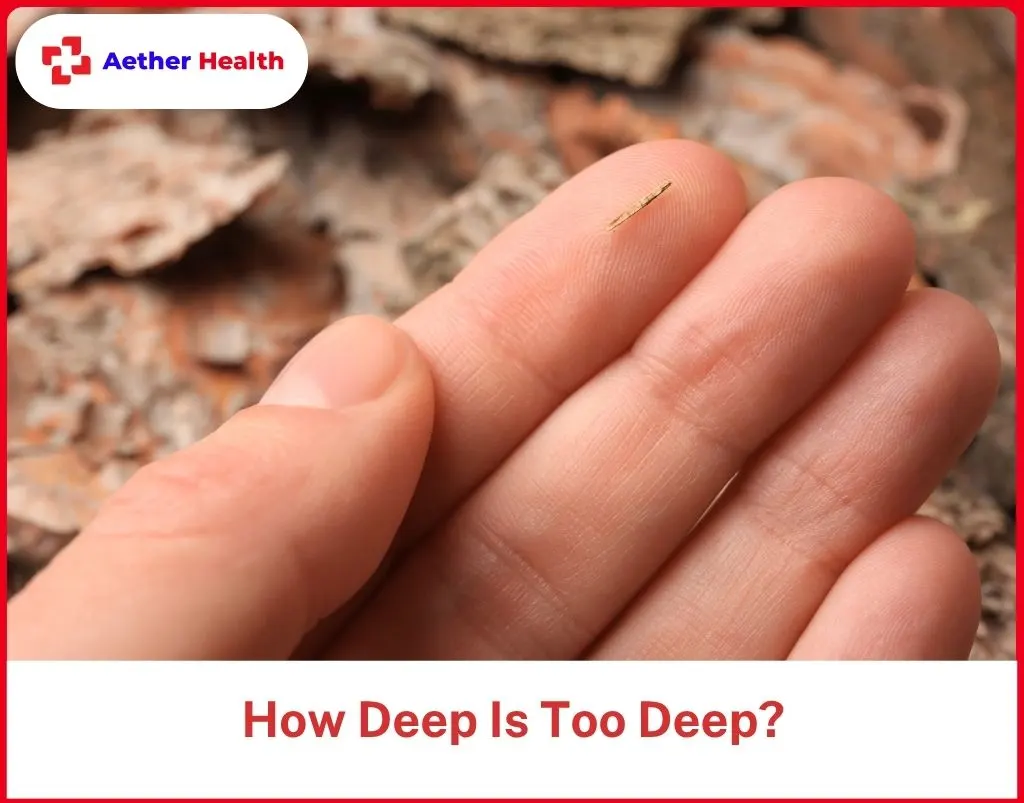
Depth is the single biggest factor in whether a splinter needs home care or professional removal.
Surface splinters (just beneath the epidermis)
Visible, easy to grip. Usually removable at home with clean tweezers.
Partial-depth splinters (into the dermis)
Only a tip visible, or completely buried but shallow. Removal often needs sterile technique.
Deep splinters (into fatty tissue)
Not visible from the surface. Felt as sharp, deep pain with pressure. These need professional removal to avoid leaving fragments behind.
- When to seek professional removal: If the splinter is fully buried, bleeding won’t stop, or you can’t grip the end cleanly. Walk-in care for mild cuts and surface wounds is available at Aether Health for exactly these situations.
Not sure if yours is deep enough to need help? Reach out to the Aether Health team or walk into any of our three Greater Houston locations. A quick assessment takes minutes and can save hours of discomfort.
Infection Warning Signs After a Splinter
A splinter wound can introduce bacteria into deeper tissue. Signs that it has turned into a real infection appear within hours to a few days.
- Redness: Spreading outward, not just localized at the puncture.
- Warmth: Area feels hot or warmer than surrounding skin.
- Swelling: Growing swelling 24 to 48 hours after injury.
- Pain that intensifies: Not improving or getting worse over time.
- Pus or drainage: Yellow, green, or cloudy fluid from the site.
- Red streaks: Lines moving away from the wound (lymphangitis).
- Fever: Any temperature above 100.4°F.
Untreated splinter infections can progress to cellulitis, abscess, or sepsis. Aether Health’s minor infections emergency care offers same-visit assessment, drainage when needed, and lab work.
Should You Try to Remove It Yourself?
Self-removal works for simple splinters. Certain patterns, however, call for professional help from the start.
Reasonable to Try at Home
- Surface splinter with a visible end you can grip
- Non-contaminated wood, metal, or plastic
- Small size, less than a quarter-inch long
- Not in the face, eye area, or near a joint
- You’re up to date on tetanus vaccination
Skip Home Removal and See a Professional
- The splinter is fully buried under the skin
- Material is glass, rust, or an unknown substance
- Location is the face, around the eye, under a fingernail, or near a joint
- Splinter is more than a quarter-inch long
- Diabetes, blood thinners, or a weakened immune system
- Unknown tetanus status or more than 5 years since last booster
- Pain is severe or bleeding won’t stop
General first aid steps for splinter removal are well-covered by Mayo Clinic’s splinter first aid guide. We won’t duplicate those steps here. Our focus is helping you decide when home care is enough and when it isn’t.
When a Splinter Needs the ER
Some splinter situations go beyond urgent care and warrant emergency evaluation. Watch for these.
- Deep splinter under a fingernail or toenail
- Splinter in the eye, lip, or genital area
- Splinter near a joint that limits movement
- Bleeding that won’t stop after 10 minutes of firm pressure
- Numbness, tingling, or weakness in the area
- Rapidly spreading redness, red streaks, or fever
- Splinter in a child under 2 years old
- Splinter plus a serious fall or accident: needs full evaluation. See our trauma and injury emergency services page.
- Signs of sepsis: confusion, rapid heart rate, high or low temperature
| Don’t wait on tetanus concerns. If your tetanus booster is more than 5 years old and the splinter came from outdoors, soil, or anything rusty, get evaluated the same day. Aether Health ER provides on-site tetanus updates 24/7. |
Common Questions About Painful Splinters
Why does a splinter hurt more than a cut of the same size?
A cut heals the moment it’s cleaned. A splinter remains inside the skin, continuing to press on nerves and triggering ongoing inflammation. The sustained physical and immune response makes it hurt longer and more sharply.
Can a splinter cause an infection even if it’s small?
Yes. Even a tiny splinter can carry bacteria deep enough to trigger cellulitis or abscess. Wood and plant material pose higher infection risk than smooth metal or glass because they’re porous.
Why do splinters in the fingertip hurt so much?
Fingertips contain some of the highest nerve-ending densities in the body (around 3,000 touch receptors per square centimeter). A splinter here activates far more pain receptors than the same splinter would in your forearm or back.
Can a splinter work its way out on its own?
Yes, sometimes. Shallow splinters can be pushed out as skin cells shed over several days. However, deeper splinters often remain embedded and cause chronic inflammation. When uncertain, get it checked at Aether Health.
Do I need a tetanus shot after a splinter?
You need an updated tetanus shot if your last booster was more than 5 years ago and the splinter came from an outdoor, rusty, or dirty source. Walk-in care centers and ERs can administer it same-visit.
Painful Splinter You Can’t Reach? Walk In Today
Aether Health ER provides same-visit splinter removal, tetanus updates, and infection assessment across three Greater Houston locations. No appointment, no referral, open 24/7.
Call +1 (713) 528-8703 or walk into Spring Cypress, Kingwood, or SilverLake (Pearland).