Reviewed by the emergency care team at Aether Health ER | Spring Cypress, Kingwood, and SilverLake (Pearland), TX | +1 (713) 528-8703
| PAUSE BEFORE YOU REACH FOR THE TWEEZERS.
Most splinters are safe to remove at home, but a surprising number aren’t. Trying to pull the wrong splinter the wrong way can push fragments deeper, trigger infection, or damage nerves. For anything beyond a simple surface splinter, Aether Health’s walk-in mild cuts and skin injury care is often the smarter first move. |
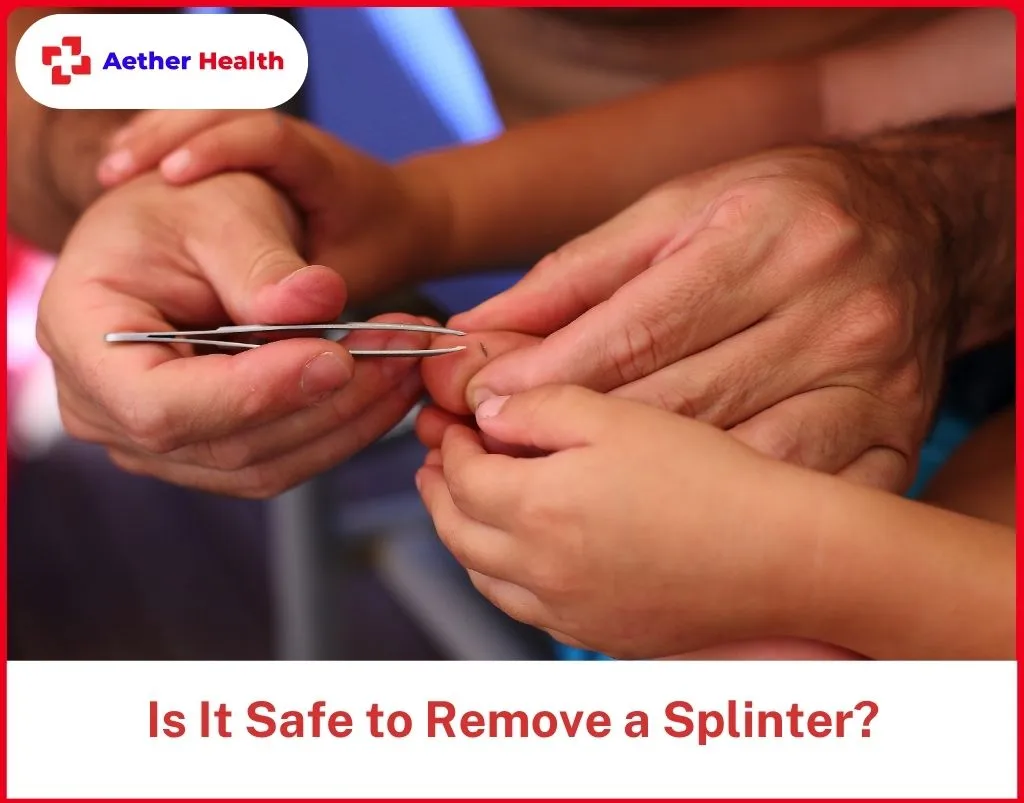
Is it safe to remove a splinter yourself? For most shallow, visible splinters, yes. For deep, buried, or contaminated splinters, often no. Knowing which situation you’re in is the single most important decision before you reach for tweezers.
This guide shows you exactly when home removal is a reasonable choice and when it isn’t, plus what to avoid and when to seek care.
The Honest Answer
Yes, most splinters can be safely removed at home when they’re visible, close to the surface, and not in a sensitive area. No, home removal is not safe when the splinter is deeply embedded, in the eye or face, near a joint, or shows early signs of infection.
When in doubt, don’t dig. Professional removal at Aether Health ER takes minutes and avoids complications that can take weeks to heal.
5 Signs It’s Safe to Remove at Home
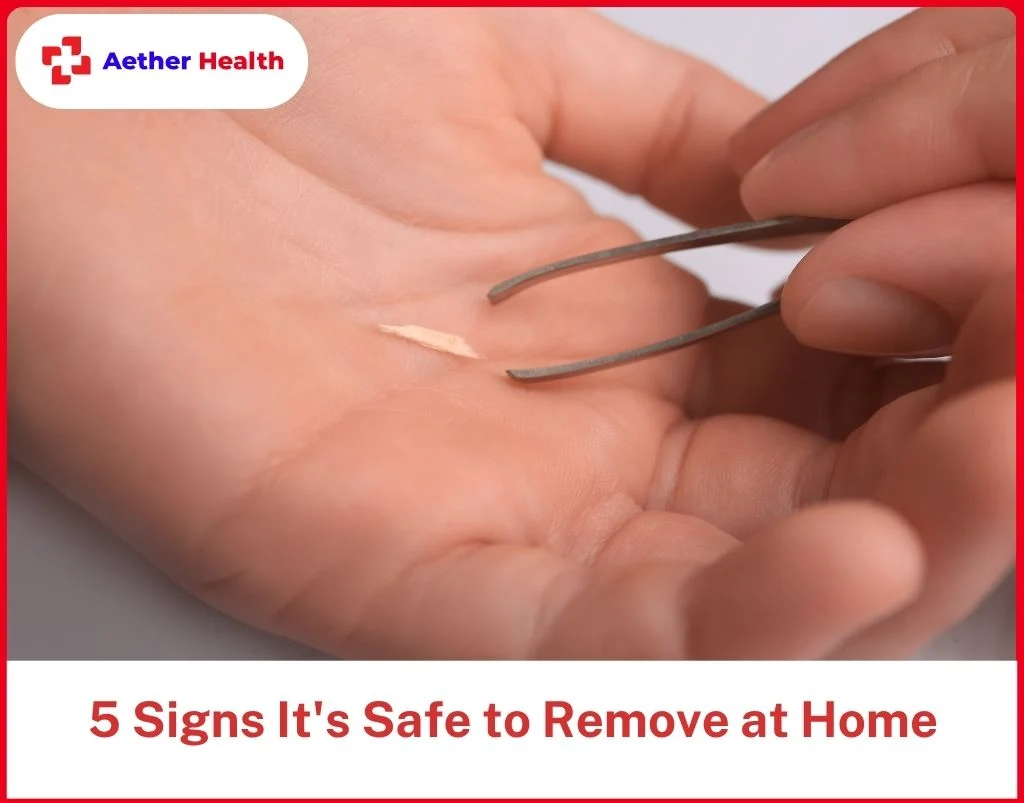
If all five of these apply, home removal is usually reasonable. Missing even one shifts the decision toward professional care.
✓ The splinter is clearly visible with the end sticking out of the skin.
✓ It’s a small, clean fragment of wood, plastic, or soft metal.
✓ The location is a less-sensitive area like the forearm, calf, or back.
✓ You can grip the end firmly without pushing the splinter deeper.
✓ Your tetanus booster is current (within the last 5 years).
5 Red Flags That Mean Don’t Do It Yourself
If any one of these applies, skip home removal. Trying anyway can turn a minor problem into a bigger one.
✗ The splinter is completely buried under the skin.
✗ It’s located in the eye, lip, face, or near a joint.
✗ The material is glass, rust, metal shards, or something contaminated.
✗ The splinter is larger than a quarter-inch or very deep.
✗ You have diabetes, take blood thinners, or have a weakened immune system.
For a straightforward description of general home splinter care, MedlinePlus (NIH) offers reliable guidance on when self-removal is appropriate.
What to Avoid at All Costs
Some common splinter-removal mistakes make the situation worse. Skip every one of these.
- Don’t dig with a sewing needle. Repeated poking tears healthy skin, drives the splinter deeper, and significantly raises infection risk. Reserve any sharp instruments for sterile professional use.
- Don’t squeeze the area to pop it out. Squeezing can break the splinter into fragments, embed them further, and spread bacteria into surrounding tissue.
- Don’t try tape or glue tricks on deep splinters. Tape and glue only lift splinters already partly out. On buried splinters, they do nothing and delay proper care.
- Don’t ignore pain or signs of infection. A splinter that’s still painful after 48 hours or shows redness, warmth, or drainage is telling you something. Listen.
- Don’t skip hand washing. Dirty hands turn a simple splinter into a staph or strep infection. Clean hands and the surrounding skin before any removal attempt.
Supplies That Make Home Removal Safer

Having the right basics on hand prevents the common mistakes above. These are general categories, not product recommendations.
- Precision tweezers: Clean, fine-tipped tweezers (sterilized with alcohol or boiling water before use)
- Soap and clean water: A clean cloth and plain soap for cleaning the area before and after
- Antiseptic: Rubbing alcohol or an antiseptic wipe for cleaning tools and skin
- Clean bandage: A small adhesive bandage to cover the puncture site after removal
- Good lighting: A magnifying glass helps you see fine fragments, especially in fingertips
For splinters in children, the American Academy of Pediatrics offers age-specific guidance on when to try at home and when to seek care.
After-Removal: What to Watch For
A successful removal is not the end. Keep an eye on the area for the next few days. These warning signs mean the wound has become infected or the splinter wasn’t fully removed.
- Redness that spreads outward from the puncture over 24 to 48 hours
- Warmth, growing swelling, or increasing tenderness
- Yellow, green, or cloudy drainage from the puncture site
- Red streaks moving away from the wound (a sign of lymphangitis)
- Fever above 100.4°F
- Continued pain that doesn’t ease within 48 hours
- A hard lump or persistent discomfort beneath the skin (possible retained fragment)
Any of these signs warrant same-day evaluation. Aether Health’s minor infections emergency care provides assessment, drainage when needed, and tetanus updates at any of our Greater Houston locations.
Situations That Always Need Professional Care

For certain splinter scenarios, home removal is not just inadvisable, it’s unsafe. Go directly to professional care for any of these.
- Splinter in or near the eye
- Splinter under a fingernail or toenail that can’t be reached
- Splinter in the mouth, lip, or face
- Deep puncture wound from a thorn, nail, or metal fragment
- Splinter longer than a quarter-inch or embedded fully below the surface
- Rapid redness, pus, red streaks, or fever within hours of the injury
- Any splinter in someone with diabetes, blood thinner use, or weak immune function
- Tetanus booster is more than 5 years old and the splinter came from outdoors, soil, or rust
- Splinter plus a serious fall or accident: needs full-body evaluation. See trauma and injury emergency services.
| If pain is severe or bleeding won’t stop, head to the ER immediately. These signs can indicate a deeper injury or vascular involvement that needs same-visit imaging and evaluation. |
Common Questions About Splinter Removal
Is it OK to leave a splinter in and let it work out on its own?
Only for very small, superficial splinters. Deeper or contaminated splinters that stay in the skin can cause chronic inflammation, infection, or granuloma formation. Most splinters are safer out than in.
Can I use baking soda or a drawing salve to pull a splinter out?
Baking soda paste and drawing salves can sometimes help bring very shallow splinters closer to the surface. They are not reliable for deep or embedded splinters and should not replace professional evaluation when red flags are present.
What if the splinter breaks while I’m removing it?
Stop and don’t dig. Breaking a splinter often leaves fragments behind that are too small to grip. Clean the area, cover it with a bandage, and get professional removal within 24 hours to prevent infection.
Do I need a tetanus shot after a splinter?
You need an updated tetanus shot if your last booster was more than 5 years ago and the splinter came from outdoors, soil, or anything rusty. Walk-in care provides tetanus boosters at the same visit.
What if I can’t get to a doctor the same day?
Clean the area thoroughly, cover it with a sterile bandage, and avoid pressing on it. Watch for signs of infection and get evaluated as soon as possible. If symptoms worsen, contact the Aether Health team or go directly to the ER.
Stuck Splinter? We Can Help in Minutes
Aether Health ER provides same-visit splinter removal, tetanus updates, and infection assessment across three Greater Houston locations. No appointment, no referral, open 24/7.
Call +1 (713) 528-8703 or walk into Spring Cypress, Kingwood, or SilverLake (Pearland).