

Reviewed by the emergency care team at Aether Health ER | Spring Cypress, Kingwood, and SilverLake (Pearland), TX | +1 (713) 528-8703
| Call 911 immediately: If back pain comes with chest pressure, shortness of breath, sweating, fainting, severe abdominal pain, vomiting blood, black stools, or a tearing sensation in your back or abdomen, call 911 right now. These are signs of a heart attack, aortic emergency, or serious internal bleeding. Aether Health ER is open 24/7 with three freestanding emergency room locations across Greater Houston: Spring Cypress, Kingwood, and SilverLake (Pearland). |
Yes, gas can absolutely cause back pain. Trapped gas in the digestive tract creates pressure that can radiate outward, producing a dull ache or sharp jab in the upper back, lower back, or between the shoulder blades.
Most gas-related back pain is uncomfortable but harmless. However, back pain also happens in more serious conditions like kidney stones, gallbladder issues, heart attack, and aortic problems, so it’s important to know how to tell the difference.
This guide walks through how gas produces back pain, what it typically feels like, when the pain points to something more serious, and when a visit to Aether Health ER is warranted.
Quick Answer: Can Gas Cause Back Pain?
Yes. Trapped intestinal gas can produce back pain by putting pressure on nerves and organs that share pathways with the back. Upper gas trapped near the diaphragm can radiate to the upper back or shoulder blades. Lower gas can radiate to the lower back.
Gas-related back pain is typically dull, comes and goes with bowel activity, eases after passing gas or a bowel movement, and improves with position changes.
Back pain that is severe, constant, comes with fever, blood in the stool or urine, chest tightness, or that doesn’t improve within a few hours warrants immediate medical evaluation.
How Gas Causes Back Pain: The Anatomy Explained
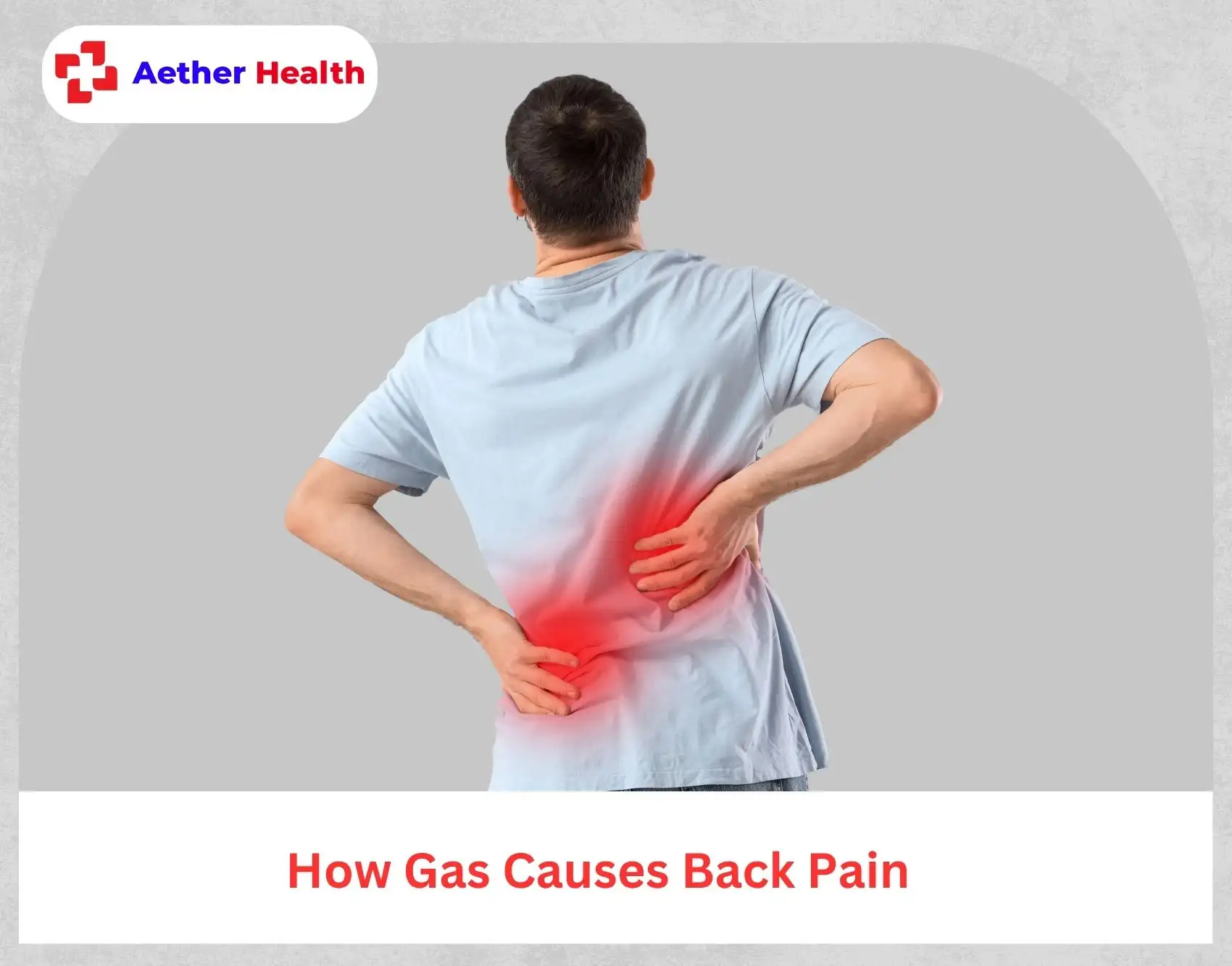
The digestive tract sits in close contact with muscles, nerves, and organs that share pain pathways with the back. When gas builds up and creates pressure, that pressure doesn’t stay local.
The Referred Pain Mechanism
The nerves that carry pain signals from the abdomen and the back travel through the same spinal segments. When the intestines are distended by gas, those shared pathways can misinterpret the source of the pain.
This is why abdominal problems often show up as back pain, and vice versa. Doctors call this phenomenon referred pain.
Pressure on the Diaphragm
The diaphragm is the muscle just below the lungs that helps you breathe. When gas builds up in the upper digestive tract, it pushes upward and irritates the diaphragm.
Because the diaphragm shares nerve supply with the shoulders and upper back, this pressure can create pain that feels like it’s coming from the back.
Colonic Distension
The colon runs along the sides and lower part of the abdomen. When gas trapped in the colon expands the intestinal wall, the pressure pushes against nearby muscles and nerves.
Lower back pain often comes from gas trapped in the descending or sigmoid colon on the left side.
Muscle Tension from Bloating
When your abdomen is distended by gas, your core muscles and lower back muscles work harder to compensate. This extra strain can produce a fatigue-like ache in the lower back.
This kind of muscle-related pain usually improves once the bloating resolves.
What Gas-Related Back Pain Feels Like
Recognizing the pattern helps you distinguish gas pain from more serious causes. Gas-related back pain has some very specific characteristics.
Typical Signs of Gas-Related Back Pain
- Dull, cramping quality: Dull, aching pressure or a squeezing sensation rather than sharp, stabbing pain.
- Intermittent nature: Pain comes and goes with bowel activity, often in waves.
- Relief after passing gas: Pain often eases significantly after passing gas or a bowel movement.
- Accompanied by abdominal distension: Visible or noticeable bloating, tightness in the belly, or an urge to pass gas.
- Rumbling or gurgling: Loud stomach noises during or before the pain.
- Position-dependent: Stretching, walking, or lying in different positions may bring temporary relief.
- Related to eating: Pain shows up within an hour or two of eating a gas-producing meal.
- Not constant: Discomfort tends to be brief, minutes to a few hours.
Locations Where Gas Often Causes Back Pain
- Upper back: Between shoulder blades, from diaphragm pressure.
- Lower back: Lower back on one or both sides, from colonic gas.
- Flanks (sides): From gas pockets pushing against the sides of the abdomen.
- Right shoulder blade: From gas near the diaphragm creating referred pain.
| A useful test: If your back pain eases when you pass gas, walk around, or change positions, it’s more likely to be gas-related. If the pain stays constant regardless of movement, bowel activity, or eating, that points to a different cause and deserves evaluation. |
What Causes Trapped Gas in the First Place?
Understanding what leads to gas buildup helps you identify triggers and reduce the frequency of gas-related back pain.
Dietary Causes
- High-fiber foods: Beans, lentils, broccoli, cauliflower, cabbage, and Brussels sprouts.
- Dairy products: Milk, cheese, and yogurt in lactose-intolerant individuals.
- Carbonated drinks: Sodas, sparkling water, beer.
- Artificial sweeteners: Sorbitol, xylitol, and other sugar substitutes in gum and candy.
- High-fiber foods: Whole grains, bran, and high-fiber cereals introduced too quickly.
- FODMAPs: Onions, garlic, and certain grains contain FODMAPs that ferment in the gut.
Behavioral Causes
- Swallowing air: Talking while eating, drinking through straws, or chewing gum.
- Eating too fast: Rapid consumption doesn’t allow proper digestion.
- Stress: Stress alters digestive function and gas production.
- Prolonged sitting: Sitting for long periods slows normal gas movement.
- Lack of physical activity: Movement helps gas transit through the digestive tract.
Medical Conditions
- IBS: Irritable bowel syndrome, chronic bloating.
- Food intolerances: Difficulty digesting lactose, gluten, or fructose.
- Small intestinal bacterial overgrowth (SIBO): Bacterial imbalance in the gut.
- Recent dietary changes: Extreme carb elimination or sudden fiber increase.
Gas Pain vs. Something More Serious: Key Differences

This is the most important section for anyone with back pain. Several serious conditions can look like gas pain at first, but they require completely different care.
| Feature | Gas-Related Back Pain | Serious Cause |
| Onset | Gradual, often after eating | Sudden, severe, or without warning |
| Quality | Dull, cramping, comes in waves | Sharp, constant, tearing, or crushing |
| Duration | Minutes to a few hours | Constant, hours to days |
| Response to movement | Eases with walking, position changes, or passing gas | Does not improve with movement |
| Other symptoms | Bloating, burping, rumbling stomach | Fever, blood, vomiting, sweating, chest tightness |
| Severity | Mild to moderate discomfort | Severe, unbearable, or worsening |
Serious Conditions That Can Mimic Gas Back Pain
- Kidney stones: Sharp pain in the mid-back or side that radiates to the groin, often with nausea and blood in urine.
- Gallbladder attack: Right upper back or shoulder blade pain after eating fatty foods, with nausea.
- Heart attack: Chest pressure with back or shoulder pain, sweating, shortness of breath.
- Aortic dissection or aneurysm: Sudden, severe, tearing pain in the back or abdomen. A medical emergency.
- Pancreatitis: Severe upper abdominal and back pain, often with nausea.
- Kidney infection: Fever, back pain, painful urination.
- Appendicitis: Sudden severe pain that starts around the belly button and shifts to the lower right.
- Perforated ulcer: Sudden severe upper abdomen and back pain, sometimes vomiting blood or dark stools.
If your back pain doesn’t fit the gas pattern or if any of these serious symptoms appear, get to the ER without delay. Our guide on when to go to the ER for abdominal pain covers the specific decision criteria in more detail.
How to Ease Gas-Related Back Pain
For confirmed gas-related back pain (not something serious), simple approaches often provide relief within minutes to hours.
General Categories That May Help
- Movement: A short walk after meals stimulates natural gas movement.
- Position changes: Yoga poses like child’s pose or knees-to-chest can help release trapped gas.
- Warm compress: A warm compress on the abdomen or lower back can relax intestinal muscles.
- Hydration: Adequate water intake supports digestion and helps gas pass.
- Slow eating: Eating slowly and chewing thoroughly reduces air swallowing.
- Avoiding trigger foods: Track and reduce foods that consistently cause gas.
- Professional consultation: A licensed provider can recommend appropriate options based on your history.
For persistent or recurring gas pain, a healthcare provider can identify underlying causes like IBS, food intolerances, or SIBO that may need targeted care.
When Back Pain Requires Emergency Care
Certain patterns of back pain always require immediate ER evaluation. Do not assume it’s just gas if any of the following apply.
Go to the ER Immediately If You Have:
- Sudden, severe back pain that comes on without warning.
- Back pain with chest pressure, tightness, or shortness of breath.
- Back pain with sweating, dizziness, or fainting.
- Tearing pain in the back or abdomen.
- Back pain with a fever above 101°F.
- Back pain with vomiting blood, black stools, or blood in urine.
- Back pain that radiates to the groin with nausea (possible kidney stone).
- Severe pain in the right upper back or shoulder blade after eating (possible gallbladder).
- Back pain that prevents you from standing or walking.
- Weakness, numbness, or tingling in the legs.
- Loss of bladder or bowel control.
- Back pain after a recent fall, injury, or car accident.
- Back pain with unexplained weight loss or night sweats.
- Back pain in someone with a history of cancer, aortic disease, or blood clots.
- Back pain in pregnancy with any additional symptoms.
| Get evaluated fast: Aether Health ER provides 24/7 emergency care with on-site imaging (CT, ultrasound), labs, EKG, and board-certified emergency physicians who can identify or rule out kidney stones, heart problems, aortic emergencies, and other serious causes of back pain within minutes. Call +1 (713) 528-8703 or walk into any of our three Greater Houston locations. |
Who Should Be Extra Cautious About Back Pain?
Certain groups face a higher risk that back pain is signaling something serious rather than harmless gas.
- Adults over 50: Heart attack risk climbs with age, and cardiac pain can show up as back or shoulder pain.
- People with high blood pressure or heart disease: Any back pain warrants closer attention due to cardiovascular risk.
- People with diabetes: Higher risk of kidney stones and infections presenting as back pain.
- People with a history of kidney problems: Kidney stones, kidney infections, and pyelonephritis are common causes.
- Heavy alcohol users: Both raise the risk of pancreatitis and gallbladder issues.
- History of kidney stones: Kidney stones can recur and cause severe flank and back pain.
- Pregnant women: Back pain in pregnancy can point to preeclampsia, kidney infection, or other issues.
- Cancer patients or survivors: Metastatic disease can cause bone pain in the back.
- People with connective tissue disorders: Higher risk of aortic dissection and other vascular emergencies.
- People on blood thinners: Higher risk of blood clots and internal bleeding.
How Aether Health ER Evaluates Back Pain and Suspected Gas Pain

When you walk in with back pain that could be gas or something more serious, our team is ready to identify the source quickly. Learn more about our 24/7 abdominal pain emergency care and what to expect during your visit:
- Rapid triage: Board-certified emergency physicians assess vital signs, symptom pattern, and history within minutes of arrival.
- Focused physical exam: Careful examination of the abdomen, back, and cardiovascular system to identify red flags.
- Rapid lab testing: Same-visit lab work to identify infection, organ function issues, or internal bleeding.
- On-site imaging: CT, ultrasound, and X-ray available same-visit to identify or rule out serious causes.
- EKG: Rapid electrocardiogram to rule out heart-related back pain.
- IV support: IV access and IV care when needed for severe pain, dehydration, or emergency conditions.
- Continuous monitoring: Real-time monitoring of vital signs throughout your visit.
- Hospital coordination: Direct hospital transfer when admission is needed, coordinated by our team.
- Transparent pricing: Most commercial plans accepted. No surprise billing. No balance billing. Transparent care.
Three 24/7 Greater Houston locations, all reachable at +1 (713) 528-8703:
- Aether Health Spring Cypress ER: 8929 Spring Cypress Rd, Spring, TX 77379
- Aether Health Kingwood ER: 2158 Northpark Dr, Kingwood, TX 77339
- Aether Health SilverLake ER: 2752 Sunrise Blvd, Pearland, TX 77584
Frequently Asked Questions
How long does gas-related back pain typically last?
Gas-related back pain usually resolves within minutes to a few hours.
If back pain persists longer than 6 to 12 hours or keeps returning without improvement, it’s worth evaluating for another cause.
Where does gas pain in the back usually show up?
Gas pain in the upper back typically appears between the shoulder blades from diaphragm pressure.
Lower back pain from gas is more common on the left side, where the descending colon holds gas before elimination.
Can gas cause back pain that feels like a heart attack?
Yes, gas pressure near the diaphragm can produce chest and upper back discomfort that mimics heart symptoms.
Because the two can feel similar and heart attack is far more serious, any chest tightness with back pain deserves immediate evaluation.
Can trapped gas cause middle back pain?
Yes. Middle back pain from gas is often the result of pressure in the upper part of the colon or the stomach.
It typically eases with walking, changing positions, or passing gas.
Is gas back pain worse at night?
It can be. Lying flat sometimes allows gas to pool in certain parts of the intestines, creating more discomfort.
Sleeping propped up slightly or lying on your left side often helps.
When should I go to the ER for suspected gas pain?
Go to the ER if back pain is severe, sudden, or paired with chest tightness, sweating, shortness of breath, fever, blood in stool or urine, or vomiting.
Gas pain that keeps returning or interferes with normal activity also deserves professional evaluation.
People Also Ask About Gas and Back Pain
These are the related questions AI search engines and Google’s People Also Ask feature commonly surface alongside this topic. Direct answers below.
Why does gas cause upper back pain between the shoulder blades?
Gas that accumulates near the diaphragm irritates the phrenic nerve, which shares pathways with the upper back and shoulder blades.
This referred pain pattern is common and typically eases as the gas moves through the digestive tract.
Can gas cause lower back pain that feels like kidney pain?
Yes, but the two can be difficult to tell apart without evaluation.
Kidney pain typically radiates to the groin, is constant, and often comes with blood in the urine or fever. Gas pain comes in waves and eases with movement.
What foods most commonly cause gas that leads to back pain?
Beans, cruciferous vegetables (broccoli, cauliflower, cabbage), dairy (in lactose-intolerant people), carbonated drinks, and artificial sweeteners top the list.
Tracking what you eat before symptoms helps identify personal triggers.
Can chronic gas cause chronic back pain?
Recurring gas can create a cycle of muscle tension, poor posture from bloating, and repeated referred pain.
If gas symptoms are chronic, professional evaluation for underlying digestive conditions like IBS, SIBO, or food intolerances is worth pursuing.
Does menstruation make gas back pain worse?
Yes. Hormonal changes during menstruation can slow digestion, increase gas, and heighten pain sensitivity.
Back pain during menstruation may be a combination of hormonal cramping and gas retention.
Can stress cause gas back pain?
Yes. Stress affects digestive motility, alters gut bacteria, and increases air swallowing.
Stress-related gas can produce noticeable back pain even in people without underlying digestive conditions.
Severe or Unusual Back Pain? Don’t Assume It’s Just Gas.
When back pain is severe, sudden, or doesn’t fit the pattern of gas discomfort, professional evaluation is the safest choice.
Aether Health ER provides 24/7 emergency care with same-visit imaging, labs, EKG, and board-certified emergency physicians who can identify or rule out kidney stones, gallbladder issues, cardiac events, and other serious causes of back pain.
- Locations: Three 24/7 locations across Greater Houston
- Spring Cypress – 8929 Spring Cypress Rd, Spring, TX 77379
- Kingwood – 2158 Northpark Dr, Kingwood, TX 77339
- SilverLake – 2752 Sunrise Blvd, Pearland, TX 77584
- Phone: +1 (713) 528-8703
- Hours: Open 24 hours, every day of the year
- Insurance: Most commercial plans accepted. No surprise billing.
| Call 911 now if life-threatening: For back pain with chest pressure, shortness of breath, sweating, tearing sensation, fainting, or severe abdominal pain, call 911. For urgent but non-life-threatening back or gas pain concerns, call Aether Health ER at +1 (713) 528-8703 or come to any of our three Greater Houston locations. |