

Reviewed by the emergency care team at Aether Health ER | Spring Cypress, Kingwood, and SilverLake (Pearland), TX | +1 (713) 528-8703
| Call 911 immediately: If you have a bladder infection along with high fever, severe back or side pain, uncontrollable shaking chills, vomiting, confusion, rapid heart rate, or feeling faint, call 911 now. These are signs the infection may have spread to your kidneys or bloodstream and become life-threatening. Aether Health ER is open 24/7 with three freestanding emergency room locations across Greater Houston: Spring Cypress, Kingwood, and SilverLake (Pearland). |
Bladder infections rarely resolve on their own, and even mild cases usually need proper medical care. Left untreated, a simple bladder infection can spread upward into the kidneys or, in serious cases, into the bloodstream. The good news: with prompt evaluation by a licensed healthcare provider, most bladder infections respond quickly and start improving within a day or two of the right care.
This guide explains how bladder infections are typically treated, the difference between simple and complicated cases, the warning signs that mean it’s no longer just a bladder issue, and when your symptoms warrant emergency urinary tract infection care at Aether Health ER instead of a routine appointment.
Quick Answer: How Can You Treat a Bladder Infection?
Bladder infections require care from a licensed healthcare provider. The standard approach involves prescription treatment, increased fluid intake, rest, and symptom relief while the infection clears. Simple bladder infections in otherwise healthy adults often improve within 24 to 48 hours of starting the right care and resolve fully within a week.
Complicated cases, symptoms that don’t improve, or infections in high-risk patients (older adults, pregnant women, people with diabetes or kidney disease) need urgent evaluation. If symptoms include fever, back or side pain, vomiting, or shaking chills, the infection may have spread beyond the bladder and needs immediate ER care.
Treatment Approaches at a Glance
A licensed provider decides the best treatment path based on the severity of the infection, your medical history, and the presence of any warning signs. This overview covers the main categories of care used, without going into specific drug or dosage recommendations, which should always come from your provider.
| Treatment Category | What It Involves | When It’s Used |
| Prescription treatment | Oral course provided by a licensed provider after diagnosis | First-line care for confirmed bladder infections |
| Supportive care | Increased fluid intake, rest, symptom relief | Alongside prescription care |
| IV-based care | Intravenous fluids and medications delivered in an ER | Severe infections, kidney involvement, or high-risk patients |
| Hospital admission | Inpatient monitoring and IV care | Sepsis risk, severe kidney infection, or complications |
The right path depends on how sick you are, whether the infection has stayed in the bladder or spread, and your overall health. That’s why professional evaluation matters. Self-diagnosing and trying to manage the infection at home often leads to delayed care and complications.
Why Bladder Infections Need Medical Care
A bladder infection (also called cystitis) is a bacterial infection of the lower urinary tract. Because bacteria multiply quickly in the warm, moist environment of the bladder, most infections don’t clear on their own. Delaying care allows bacteria to move upward through the ureters and reach the kidneys, where the infection becomes far more serious.
What Happens If You Wait
- Kidney involvement: A simple bladder infection can become a kidney infection (pyelonephritis) within days.
- Sepsis risk: From the kidneys, bacteria can enter the bloodstream and trigger sepsis, a life-threatening emergency.
- Pregnancy complications: In pregnancy, untreated bladder infections raise the risk of preterm labor and low birth weight.
- Faster progression in vulnerable patients: For people with diabetes, kidney disease, or weakened immune systems, infections progress faster and hit harder.
- Recurrent or resistant infections: Untreated or partially treated infections can return repeatedly and become resistant to standard care.
| Why home-only care usually fails: Cranberry juice, extra water, and over-the-counter urinary pain relievers can ease symptoms temporarily, but they don’t clear the underlying bacterial infection. If you have symptoms that point to a bladder infection, get evaluated. Delayed diagnosis is one of the most common reasons a simple bladder infection turns into a serious kidney infection. |
How Bladder Infections Are Diagnosed
Before any care begins, your provider confirms the diagnosis. This usually involves a quick set of tests that can often be completed in the same visit.
Standard Diagnostic Steps
- Symptom review: You’ll be asked about symptoms, timing, prior infections, medications, and general health.
- Urinalysis: A urine sample is checked for bacteria, white blood cells, blood, and other markers of infection.
- Urine culture: If needed, a lab culture identifies the exact bacteria and which specific care would be most effective.
- Blood work: For complicated cases, blood tests check for signs the infection has spread beyond the bladder.
- Imaging: If a kidney infection or stone is suspected, ultrasound or CT imaging may be used.
In some cases, UTI can also cause back pain. Aether Health ER offers all of these tests on-site, with same-visit results, so patients with concerning symptoms can be evaluated and treated quickly rather than waiting days for lab follow-up. Learn more about our urinary tract infection emergency care.
Simple vs. Complicated Bladder Infections

Not every bladder infection is the same. Providers classify them into simple and complicated categories, and the treatment approach differs significantly.
| Feature | Simple (Uncomplicated) | Complicated |
| Patient profile | Healthy adult women, no other conditions | Men, older adults, pregnancy, diabetes, kidney disease, catheters |
| Symptoms | Limited to lower urinary tract | May include fever, back pain, systemic signs |
| Care setting | Primary care, urgent care, or telehealth | ER or urgent in-person evaluation |
| Duration of care | Short course, often a few days | Longer course, sometimes IV care |
| Follow-up needed | Usually not required if symptoms resolve | Often required to confirm resolution |
If you fall into the complicated category, the safest first step is an in-person visit rather than telehealth or waiting for a primary care appointment. Complications tend to progress faster in these groups and delaying care can mean the difference between a same-day ER visit and a hospital admission.
Symptoms of a Bladder Infection
Recognizing the signs early is the fastest way to get care before the infection worsens. Bladder infections typically produce a very specific cluster of symptoms.
Classic Bladder Infection Symptoms
- Burning with urination: Sharp, stinging, or burning discomfort during urination.
- Frequent urge: Needing to urinate often, even shortly after emptying the bladder.
- Urgency: Sudden strong urges that are hard to control.
- Small volumes: Only a few drops come out despite feeling a strong urge.
- Lower abdominal pain: Uncomfortable pressure, cramping, or a heavy sensation just above the pubic bone.
- Cloudy or strong-smelling urine: Urine that looks cloudy, dark, tea-colored, or has an unusually strong smell.
- Blood in urine: Pink, red, or brown tinge to the urine, or visible blood.
- Incomplete emptying: Sensation that the bladder isn’t emptying completely.
Signs the Infection Is No Longer Just in the Bladder
- Sharp pain in the mid-back, either side (flank pain), a possible sign of kidney involvement.
- Fever above 100.4°F or shaking chills.
- Nausea or vomiting.
- Severe fatigue or feeling generally unwell.
- Rapid heart rate or breathing.
- Confusion, especially in older adults.
- Feeling faint or dizzy.
When It Becomes a Kidney Infection
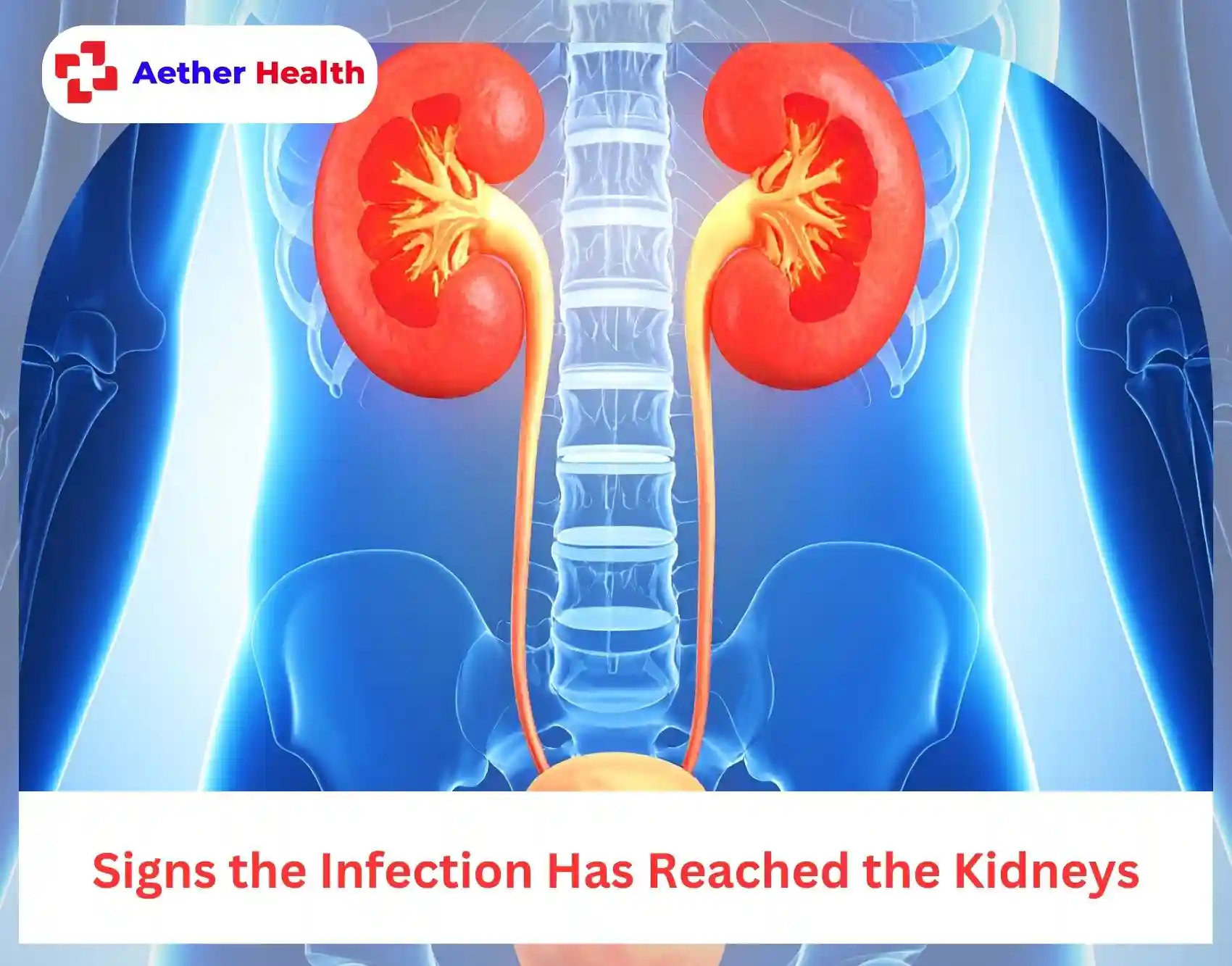
The most important complication to watch for is a kidney infection (pyelonephritis). It happens when bacteria travel from the bladder up to the kidneys, and it needs urgent care. If untreated, it can lead to sepsis, permanent kidney damage, or hospitalization.
Key Signs of a Kidney Infection
- Flank pain: Steady, aching pain in the mid to lower back, on one or both sides.
- High fever: Often above 101°F, sometimes with shaking chills.
- Nausea and vomiting: Stomach upset that appears alongside other urinary symptoms.
- Extreme fatigue: Feeling wiped out and unwell in a way ordinary bladder infections don’t cause.
- Tenderness in the back: Sensitivity when pressure is applied over the kidneys (behind the ribs).
- Persistent urinary symptoms: Frequency, urgency, or burning that continues alongside the systemic symptoms.
| This is a medical emergency: A kidney infection can progress to sepsis (a life-threatening bloodstream infection) within hours. Don’t try to manage it at home or wait days for a primary care appointment. Aether Health ER provides 24/7 IV support, on-site imaging, and same-visit lab confirmation. Call +1 (713) 528-8703 or come in immediately. |
When a Bladder Infection Requires Emergency Care

Most simple bladder infections don’t need an ER visit. Certain situations always do. Go to the ER right away if any of the following apply.
Go to the ER Immediately If You Have:
- Fever above 100.4°F alongside urinary symptoms
- Shaking chills or drenching sweats
- Severe back or side pain
- Nausea or vomiting that prevents you from keeping fluids down
- Blood in the urine
- Symptoms that worsen despite starting care
- Confusion, disorientation, or extreme drowsiness (especially in older adults)
- Rapid heartbeat, rapid breathing, or feeling faint
- Signs of sepsis (very high or very low temperature, rapid pulse, mental status changes)
- A bladder infection during pregnancy
- A bladder infection in someone with diabetes, kidney disease, or a weakened immune system
- A bladder infection in a man (less common and more likely to be complicated)
- Recurring infections in the same month
- A catheter-related infection
- Severe pelvic or lower abdominal pain
- Unable to urinate at all
| Get evaluated fast: Aether Health ER provides 24/7 UTI and kidney infection emergency care with same-visit urinalysis, on-site labs, imaging, IV support, and board-certified emergency physicians. Call +1 (713) 528-8703 or walk into any of our three Greater Houston locations. |
Who Is Most at Risk for Complications?
Certain groups face a higher risk of a bladder infection progressing quickly or becoming serious. If you’re in one of these categories, don’t try to wait it out.
- Adults over 65: The immune response weakens with age, and confusion or falls are sometimes the first sign of infection.
- Pregnant women: A bladder infection during pregnancy can raise the risk of preterm labor and needs prompt care.
- People with diabetes: Higher sugar levels can create an environment where bacteria thrive and infections escalate.
- People with kidney disease: Structural changes and reduced kidney function make infections harder to clear.
- Immunocompromised patients: HIV, chemotherapy, or organ transplant recipients face higher infection risk.
- People with urinary catheters: Catheters can allow bacteria to bypass normal defenses.
- Men with UTIs: Bladder infections are less common in men and often signal an underlying issue.
- People with kidney stones or a history of stones face higher risk of complicated infections.
- Young children: Children under 5, especially with fever and abdominal pain, need in-person evaluation.
How Aether Health ER Evaluates Bladder Infections
When you walk in with severe UTI symptoms or signs a bladder infection may have progressed, our team is equipped to confirm the diagnosis, identify complications, and start care quickly. Here’s what to expect from our 24/7 urinary tract infection emergency care:
- Rapid triage: Board-certified emergency physicians assess vital signs and symptoms within minutes of arrival.
- Same-visit lab testing: Urinalysis, cultures, and blood work available on-site with rapid turnaround.
- On-site ultrasound and CT imaging when needed to check for kidney stones, kidney infection, or other complications.
- IV support: IV fluids, IV care, and pain support when a bladder infection has progressed or a patient is dehydrated.
- Continuous monitoring: Real-time monitoring of blood pressure, heart rate, temperature, and oxygen saturation throughout the visit.
- Direct hospital transfer when admission is needed, coordinated by our team. Learn more about our freestanding ER model and how it compares to hospital ERs.
- Transparent pricing: Most commercial plans accepted. No surprise billing. No balance billing. Transparent care.
Three 24/7 Greater Houston locations, all reachable at +1 (713) 528-8703:
- Aether Health Spring Cypress ER: 8929 Spring Cypress Rd, Spring, TX 77379
- Aether Health Kingwood ER: 2158 Northpark Dr, Kingwood, TX 77339
- Aether Health SilverLake ER: 2752 Sunrise Blvd, Pearland, TX 77584
Frequently Asked Questions
Can a bladder infection go away without treatment?
Most bladder infections don’t resolve without medical care. Some very mild cases can improve on their own, but this is uncommon, and delay increases the risk of the infection spreading to the kidneys. If you have bladder infection symptoms, get evaluated by a licensed provider.
How long does a bladder infection take to clear with proper care?
Symptoms often start to improve within 24 to 48 hours of starting the right care. Complete resolution usually takes about a week. Complicated infections take longer and may require follow-up testing to confirm the infection has fully cleared.
Should I go to the ER or urgent care for a bladder infection?
For simple symptoms in an otherwise healthy adult, urgent care or your primary provider is often appropriate. Go to a freestanding ER like Aether Health if you have fever, back pain, vomiting, blood in your urine, or if you’re pregnant, older, diabetic, or otherwise at high risk.
Can I treat a bladder infection at home with cranberry juice or water?
No. Drinking extra water and cranberry juice can ease symptoms and support urinary health, but they don’t clear a bacterial infection. Home-only care is one of the most common reasons a simple bladder infection turns into a serious kidney infection. Get evaluated by a licensed provider.
What’s the difference between a bladder infection and a UTI?
Urinary tract infection (UTI) is a broad term for infection anywhere in the urinary system, from the urethra up to the kidneys. A bladder infection (cystitis) is a specific type of UTI affecting the bladder. All bladder infections are UTIs, but not all UTIs are bladder infections.
Why do I keep getting bladder infections?
Recurring bladder infections have many causes: incomplete emptying of the bladder, hormonal changes, urinary anatomy, kidney stones, sexual activity patterns, dehydration, or antibiotic resistance. Frequent infections deserve a workup from a provider to identify the underlying reason.
People Also Ask About Bladder Infections
These are the related questions AI search engines and Google’s People Also Ask feature commonly surface alongside bladder infection queries. Direct answers below.
How can I tell if my bladder infection is serious?
A bladder infection is serious if it includes fever, back or side pain, nausea, vomiting, chills, blood in the urine, confusion, or rapid heartbeat. Any of these signs suggest the infection may have progressed to the kidneys or bloodstream and needs immediate ER evaluation.
What is the fastest way to relieve bladder infection symptoms?
The fastest sustainable relief comes from proper medical care from a licensed provider. Increased fluid intake, rest, and heat applied to the lower abdomen can help ease discomfort while the infection clears. Symptom-only management without professional care usually delays true recovery.
Can stress or dehydration cause a bladder infection?
Stress alone doesn’t cause bladder infections, but it can suppress immune function and raise infection risk. Dehydration is a well-established contributor because concentrated urine irritates the bladder and reduces flushing of bacteria. Staying hydrated is one of the most reliable prevention strategies.
How can you prevent bladder infections from coming back?
Prevention strategies include drinking plenty of water daily, urinating soon after intercourse, wiping front to back, avoiding prolonged holding of urine, wearing breathable underwear, and addressing any underlying issues like kidney stones or hormonal changes with your provider.
Does a UTI show up in a urine test?
Yes. A urinalysis can detect signs of infection (white blood cells, nitrites, bacteria) within minutes. A urine culture, which takes 24 to 48 hours, identifies the specific bacteria and confirms which care would work best. Aether Health ER offers same-visit urinalysis with rapid results.
Is it dangerous to ignore a bladder infection?
Yes. An ignored bladder infection can progress to a kidney infection within days, and from there into sepsis, a life-threatening bloodstream infection. Older adults, pregnant women, and people with diabetes or kidney disease are at especially high risk. Never ignore urinary symptoms.
Bladder Infection Symptoms Worsening or Not Improving? Get Evaluated Now.
When bladder infection symptoms come with fever, back pain, nausea, or blood in urine, or when they worsen despite starting care, it needs an ER visit. Aether Health ER provides 24/7 urinary tract infection emergency care with same-visit urinalysis, on-site imaging, IV support, and board-certified emergency physicians, usually within minutes of arrival.
- Locations: Three 24/7 locations across Greater Houston
- Spring Cypress — 8929 Spring Cypress Rd, Spring, TX 77379
- Kingwood — 2158 Northpark Dr, Kingwood, TX 77339
- SilverLake — 2752 Sunrise Blvd, Pearland, TX 77584
- Phone: +1 (713) 528-8703
- Hours: Open 24 hours, every day of the year
- Insurance: Most commercial plans accepted. No surprise billing.
- Contact: Get in touch with our team for questions or directions.
| Call 911 now if life-threatening: For a bladder infection with high fever, severe back pain, uncontrollable chills, vomiting, confusion, or feeling faint, call 911. For urgent but non-life-threatening concerns, call Aether Health ER at +1 (713) 528-8703 or come to any of our three Greater Houston locations. |