Reviewed by the emergency care team at Aether Health ER | Spring Cypress, Kingwood, and SilverLake (Pearland), TX | +1 (713) 528-8703
What is sinus arrhythmia? In simple terms, it’s a small, natural variation in your heart rate tied to your breathing. Your heart speeds up slightly when you inhale and slows down when you exhale. That variation is called sinus arrhythmia.
For most people, sinus arrhythmia is completely benign, especially in children, teenagers, and healthy athletes. It’s often noticed only during an EKG. Some forms, however, can point to underlying heart or nervous system issues that deserve professional evaluation.
The Short Answer
Sinus arrhythmia is a normal, rhythmic change in heart rate that follows your breathing pattern. Your heart’s natural pacemaker (the sinoatrial node) responds to signals from the vagus nerve, speeding up on inhalation and slowing on exhalation.
Most cases require no treatment. Persistent, unexplained variations in older adults or those with existing heart conditions may need cardiology evaluation to rule out other rhythm disorders.
The Two Main Types of Sinus Arrhythmia
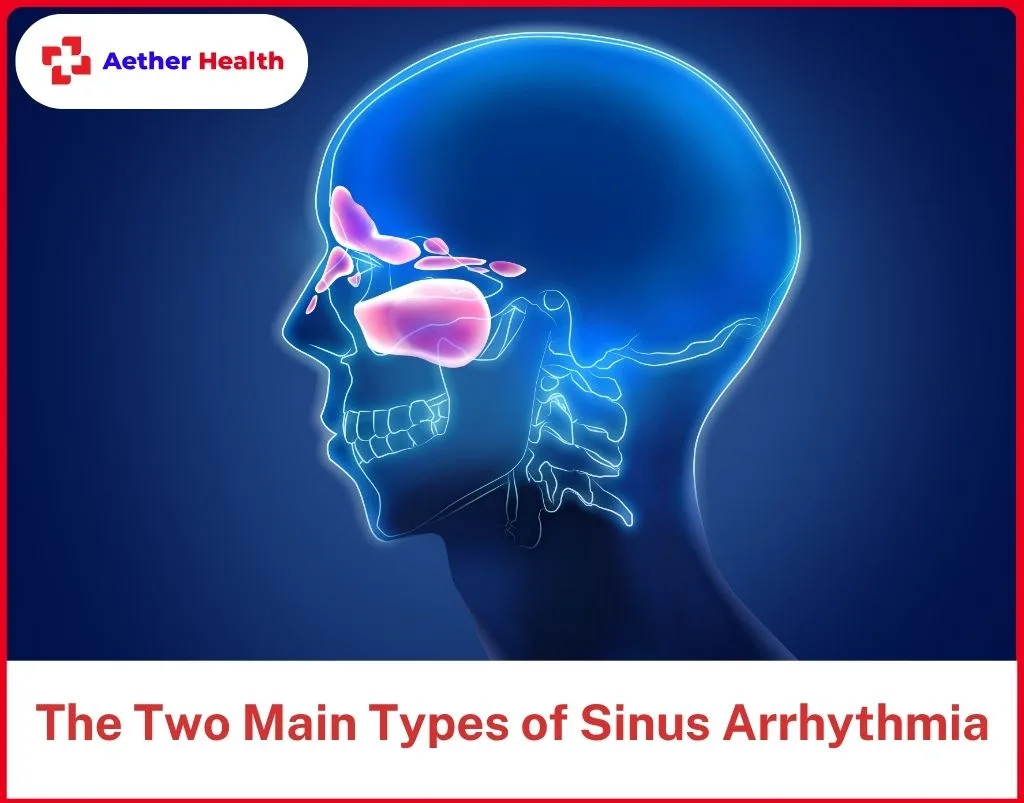
Doctors classify sinus arrhythmia into two categories based on what triggers the variation. Knowing which type you have helps determine whether it’s benign or worth investigating.
Respiratory Sinus Arrhythmia (The Common, Healthy Type)
This is the most common form, especially in children and young adults. The heart rate rises with each breath in and falls with each breath out. It reflects a well-functioning autonomic nervous system.
Athletes and physically fit people often show pronounced respiratory sinus arrhythmia. It’s considered a sign of cardiovascular health, not a problem.
Non-Respiratory Sinus Arrhythmia (The Less Common Type)
Here, the heart rate varies without a clear connection to breathing. It’s more common in older adults and can sometimes point to underlying heart disease, though it’s often still benign.
This type deserves a closer look, especially if paired with symptoms like dizziness, chest discomfort, or fainting.
Why Your Heart Does This (The Physiology)

Sinus arrhythmia is not a malfunction. It’s your body’s autonomic nervous system finely tuning your heart to match your breathing and oxygen needs.
- The sinoatrial (SA) node: Located in the right atrium, this cluster of cells sets your normal heart rhythm.
- The vagus nerve: The main nerve of the parasympathetic system slows the heart during exhalation.
- The breathing loop: On inhalation, vagal tone drops and the heart speeds up. On exhalation, vagal tone rises and the heart slows.
For a deeper clinical explanation, Cleveland Clinic’s guide to sinus arrhythmia and the NIH StatPearls chapter on sinus arrhythmia both cover the physiology in medical detail.
Who Gets Sinus Arrhythmia?
Sinus arrhythmia can appear at any age but is more common in some groups than others. Here’s the demographic pattern.
| Group | How Common | What It Usually Means |
| Children and teens | Very common | Normal, healthy sign |
| Young adults | Common | Normal, especially in fit individuals |
| Athletes | Very common | Marker of cardiovascular fitness |
| Middle-aged adults | Less common | Worth mentioning to a provider |
| Older adults (65+) | Less common | May warrant cardiac workup |
If sinus arrhythmia is new for you in adulthood, especially after age 50, it’s worth mentioning to a healthcare provider. In younger age groups, it’s rarely a concern on its own.
Symptoms You Might Notice (or Might Not)
Most people with sinus arrhythmia don’t feel anything unusual. When symptoms appear, they’re typically mild and tied to the underlying cause rather than the arrhythmia itself.
- A brief awareness of your heart speeding up and slowing down
- Occasional palpitations or a flutter feeling in the chest
- Mild lightheadedness during position changes
- Feeling out of breath during physical exertion
Persistent dizziness, especially when standing, is a symptom worth taking seriously. Aether Health provides emergency care for dizziness alongside cardiac evaluation when a rhythm issue is suspected as the cause.
Not sure whether what you’re feeling is normal? Reach out to our team or walk into any of our three Greater Houston locations. Same-visit EKG and physician evaluation are available 24/7.
When Sinus Arrhythmia Is Actually Something Else
Certain rhythm patterns can look like sinus arrhythmia on the surface but are actually different, more serious conditions. Only an EKG or Holter monitor can tell them apart with certainty.
- Atrial fibrillation (AFib): Chaotic, irregular rhythm from the upper heart chambers. Raises stroke risk.
- Premature atrial contractions (PACs): Extra beats that create the sense of skipping. Usually benign but can be frequent.
- Sick sinus syndrome: The SA node itself malfunctions, producing periods of very fast then very slow rhythm.
- Sinus bradycardia: A slower-than-normal heart rate that may not be respiratory in origin.
If your rhythm variations feel dramatic, cause symptoms, or appear in an unexpected age group, get evaluated. Aether Health’s irregular heartbeat emergency care provides same-visit EKG and rhythm analysis to distinguish benign sinus arrhythmia from more serious patterns.
When Sinus Arrhythmia Warrants Emergency Evaluation
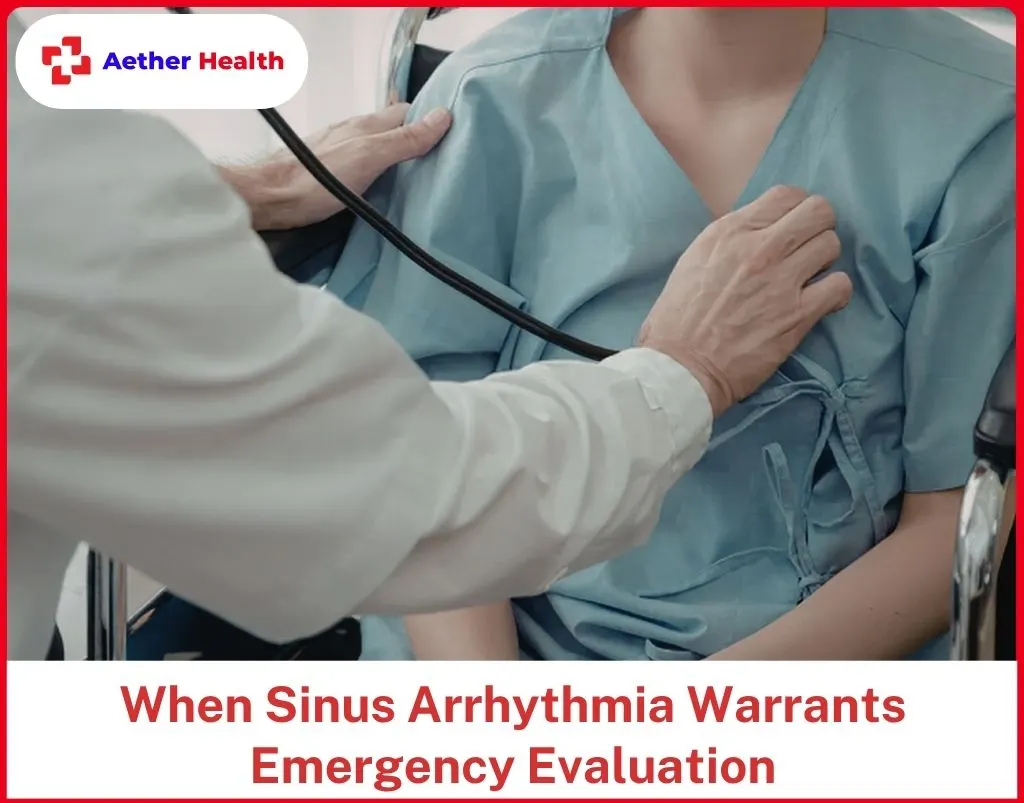
Simple sinus arrhythmia rarely needs the ER. Certain warning signs, however, mean any rhythm irregularity deserves same-day evaluation.
- Chest pain or pressure with the rhythm variation
- Shortness of breath at rest
- Fainting or near-fainting spells
- Severe dizziness that doesn’t resolve with rest
- Confusion, weakness, or difficulty speaking
- New palpitations in someone with heart disease or prior stroke
- Heart rate consistently below 40 or above 130 at rest
- Pregnancy with new rhythm changes and symptoms
| When in doubt, get evaluated. An EKG takes minutes and can rule out serious rhythm disorders. Aether Health ER is open 24/7 with on-site EKG, cardiac monitoring, and board-certified emergency physicians. |
Common Questions About Sinus Arrhythmia
Is sinus arrhythmia dangerous?
Usually no. Respiratory sinus arrhythmia is a normal, healthy finding, especially in young people and athletes. Non-respiratory forms in older adults may warrant evaluation but often remain benign after testing.
Do I need treatment for sinus arrhythmia?
Most people with sinus arrhythmia need no treatment at all. If it’s tied to an underlying condition like thyroid disease, electrolyte imbalance, or another heart rhythm disorder, treating that underlying cause resolves it.
Can anxiety cause sinus arrhythmia?
Anxiety and stress increase awareness of your own heartbeat rather than causing sinus arrhythmia directly. However, anxiety can trigger other palpitations or exacerbate the sensation of an irregular rhythm.
What tests diagnose sinus arrhythmia?
A 12-lead EKG usually confirms it in minutes. For patterns that come and go, a Holter monitor (24 to 48 hours) or event monitor may be used. Same-visit EKG is available across Aether Health locations.
When should I worry about sinus arrhythmia?
Worry if it appears alongside chest pain, fainting, severe dizziness, shortness of breath, or if you have a history of heart disease. New sinus arrhythmia in an older adult also deserves professional evaluation.
Concerned About Your Heart Rhythm? We’re Here 24/7
Aether Health ER offers same-visit EKG, cardiac monitoring, and board-certified emergency physicians across three Greater Houston locations. No appointment. No referral.
Call +1 (713) 528-8703 or walk into Spring Cypress, Kingwood, or SilverLake (Pearland). Open 24/7, every day of the year.