
Reviewed by the emergency care team at Aether Health ER | Spring Cypress, Kingwood, and SilverLake (Pearland), TX | +1 (713) 528-8703
| Not Every Skipped Beat Is Serious. Some Are.
An abnormal heartbeat can range from harmless caffeine jitters to atrial fibrillation raising your stroke risk. The trick is knowing which is which, and this guide walks you through the causes, warning signs, and when to head to the ER. |
What causes an abnormal heartbeat? The list runs from everyday triggers like too much coffee and poor sleep to serious conditions like heart disease, thyroid disorders, and electrical malfunctions in the heart itself.
Most abnormal heartbeats are brief and harmless. Some, however, are the earliest warning sign of a life-threatening problem. Knowing the difference helps you decide whether to shrug it off or seek same-day care.
The Quick Snapshot
An abnormal heartbeat, called an arrhythmia, is any change from your normal heart rhythm. Causes include lifestyle triggers (caffeine, alcohol, stress), electrolyte imbalances, thyroid disease, high blood pressure, heart disease, and electrical issues in the heart’s conduction system.
If your heart is fluttering, racing, skipping beats, or beating out of sync alongside chest pain, shortness of breath, fainting, or dizziness, get evaluated fast. Aether Health’s irregular heartbeat emergency care provides on-site EKG, monitoring, and physician evaluation within minutes.
8 Common Causes of an Abnormal Heartbeat
Causes fall into four broad categories: lifestyle, health conditions, structural heart issues, and electrical problems. Here are the eight you’re most likely to encounter.
Lifestyle Triggers
- 1. Caffeine and stimulants: Coffee, energy drinks, tea, and pre-workout supplements can push heart rate higher and trigger palpitations.
- 2. Alcohol and nicotine: Both raise heart rate and can cause a rapid or irregular rhythm.
- 3. Stress and poor sleep: Anxiety, panic attacks, and lack of sleep release adrenaline, which speeds and destabilizes the heart’s rhythm.
- 4. Acid reflux and GI disturbances: The vagus nerve links the digestive tract to the heart. Reflux can trigger palpitations. Learn more in our guide on acid reflux and irregular heartbeat.
Health Conditions
- 5. Electrolyte imbalances: Low potassium, magnesium, or calcium can disrupt the electrical signals that regulate heart rhythm.
- 6. Thyroid disorders: An overactive or underactive thyroid can speed or slow the heart. This is a very common overlooked cause.
Structural and Electrical Causes
- 7. Heart disease: Coronary artery disease, heart failure, and prior heart attacks damage the tissue that carries electrical signals.
- 8. Conduction system disorders: Atrial fibrillation, ventricular tachycardia, and heart block are electrical disorders that need specialist care.
Types of Abnormal Heartbeats You Should Know
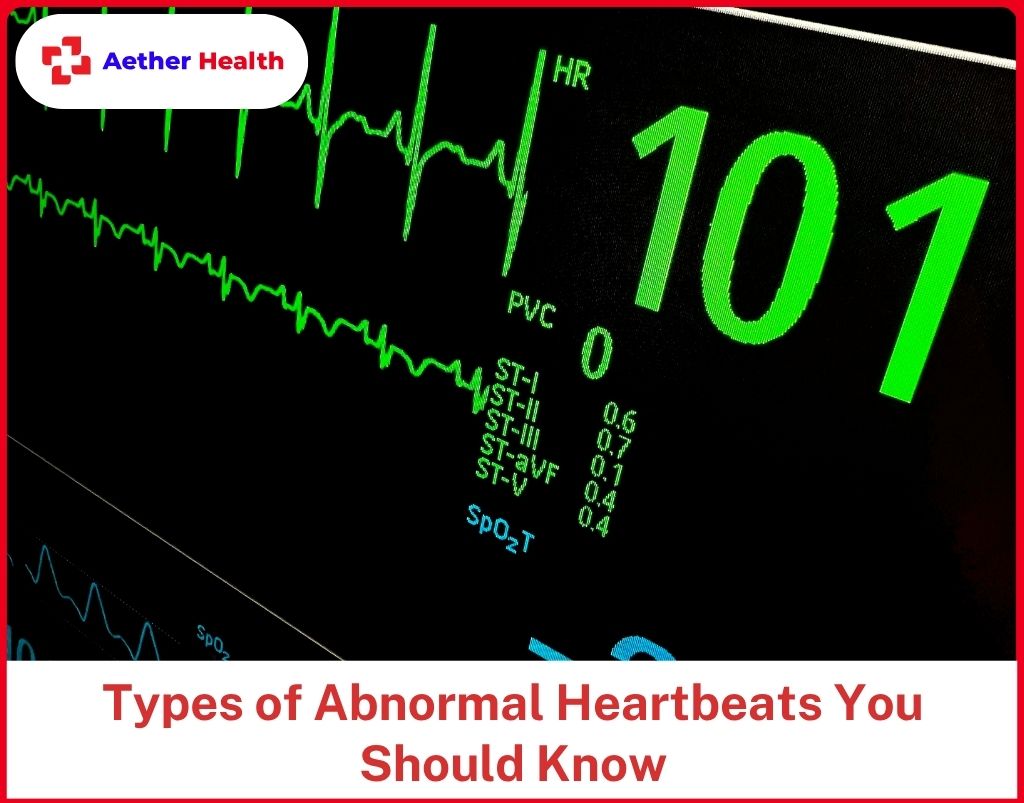
Not all arrhythmias are the same. The five below make up the majority of what patients experience.
| Type | What It Is | Severity |
| Tachycardia | Heart rate faster than 100 beats per minute at rest | Depends on cause |
| Bradycardia | Heart rate slower than 60 beats per minute at rest | Serious if symptomatic |
| Atrial fibrillation | Chaotic, irregular rhythm in the heart’s upper chambers | High stroke risk |
| PACs / PVCs | Premature or extra beats. Feel like a skip or thump. | Usually harmless |
| Ventricular tachycardia | Very fast rhythm from the lower chambers | Life-threatening |
For the full clinical breakdown of arrhythmia types, Mayo Clinic’s heart arrhythmia guide covers each in medical depth.
How an Abnormal Heartbeat Actually Feels
Descriptions vary from person to person, but most abnormal heartbeats produce at least one of these sensations.
- A heavy thump or skipped beat in the chest
- Fluttering like a butterfly behind the breastbone
- Racing or pounding, even at rest
- An unusually slow, dragging pulse
- A brief feeling that the heart “turned over”
- Awareness of your own heartbeat during quiet moments
- Neck or throat pounding along with the chest sensation
These sensations often come and go. What matters more is whether they’re paired with other symptoms like dizziness, chest pain, breathlessness, or fainting.
Risk Factors That Raise Your Odds
Certain factors make an abnormal heartbeat more likely, and more likely to be serious. According to the American Heart Association, these are the most well-established.
- Age over 60: Arrhythmia risk climbs sharply after 60 as heart tissue changes with age.
- High blood pressure: Chronic hypertension damages the heart’s structure and raises arrhythmia risk. See our page on severe hypertension emergency care for related warning signs.
- Existing heart disease: Coronary artery disease, heart failure, valve disorders.
- Diabetes and obesity: Both stress the heart and raise electrical instability risk.
- Sleep apnea: Repeated oxygen drops during sleep destabilize heart rhythm.
- Substance use: Frequent recreational stimulant or heavy alcohol use.
- Family history: A parent or sibling with arrhythmia increases your genetic risk.
- Thyroid disease: Untreated hyper- or hypothyroidism can directly cause arrhythmia.
When an Abnormal Heartbeat Is a Red-Flag Emergency
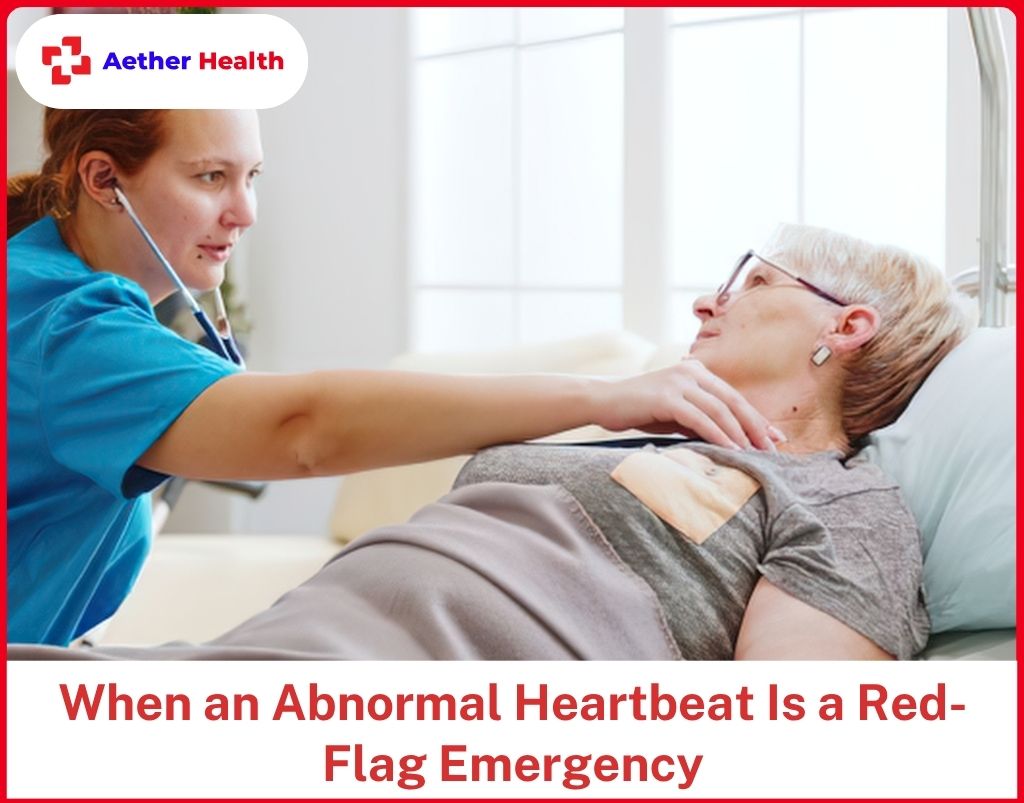
Some patterns of abnormal heartbeat need immediate emergency evaluation, not a routine appointment. Get to the ER right away if you have any of the following.
- Chest pain or pressure with the abnormal rhythm
- Shortness of breath at rest
- Fainting or near-fainting spells
- Severe dizziness or lightheadedness
- Rapid heartbeat lasting longer than 30 minutes
- Heart rate above 150 or below 40 at rest
- Confusion, weakness on one side, or slurred speech
- A history of heart attack, heart failure, or stroke
- Pregnancy with persistent palpitations
| Time matters for arrhythmias. An untreated dangerous rhythm can lead to stroke, heart failure, or cardiac arrest within hours. Aether Health ER provides same-visit EKG, cardiac monitoring, labs, and physician evaluation 24/7. Contact our team or walk into any of our three Greater Houston locations. |
What Happens When You Walk Into Aether Health ER

For anyone concerned about an abnormal heartbeat, here’s exactly what to expect from our 24/7 freestanding emergency room.
- Immediate triage: Vital signs, oxygen saturation, and rhythm strip within moments of arrival.
- Same-visit EKG: A full 12-lead EKG on-site, plus continuous cardiac monitoring throughout your visit.
- Physician evaluation: Board-certified emergency physicians examine you personally. Not nurse practitioners or PAs alone.
- Full lab workup: Blood work on-site to check electrolytes, thyroid, cardiac enzymes, and other markers.
- On-site imaging: Chest X-ray, ultrasound, and CT available same-visit if structural issues are suspected.
- IV support: IV access and medications for acute rhythm issues when appropriate.
- Cardiology coordination: Coordination directly with cardiology for admission or specialist follow-up.
- Transparent pricing: Most commercial insurance accepted. No surprise billing.
Three 24/7 Greater Houston locations, all reachable at +1 (713) 528-8703:
- Spring Cypress ER: 8929 Spring Cypress Rd, Spring, TX 77379
- Kingwood ER: 2158 Northpark Dr, Kingwood, TX 77339
- SilverLake ER: 2752 Sunrise Blvd, Pearland, TX 77584
Common Questions About Abnormal Heartbeats
Is it normal to feel your heart skip a beat?
Occasional skipped beats (premature contractions) are common and usually harmless, especially after caffeine, stress, or lack of sleep. Frequent or symptomatic skipped beats deserve professional evaluation to rule out underlying causes.
Can anxiety cause an abnormal heartbeat?
Yes. Anxiety and panic release adrenaline, which can trigger palpitations, racing, or skipped beats. However, cardiac and anxiety symptoms overlap heavily. Any new persistent palpitations should be evaluated to rule out a heart cause.
What foods can trigger heart palpitations?
Caffeine, alcohol, spicy foods, artificial sweeteners, and monosodium glutamate can trigger palpitations in sensitive individuals. Tracking your food intake and symptoms helps identify personal triggers to avoid.
When should I go to the ER for an abnormal heartbeat?
Go immediately if palpitations come with chest pain, shortness of breath, fainting, severe dizziness, or if a rapid rhythm lasts longer than 30 minutes. Also seek care for any new persistent irregular rhythm.
Can dehydration cause an abnormal heartbeat?
Yes. Dehydration alters electrolyte levels, which directly affects heart electrical signaling. Even mild dehydration can trigger palpitations. Steady hydration is one of the simplest prevention steps.
Feeling It Now? Get Evaluated Today
Do not sit at home wondering if your heart rhythm is serious. Walk into any Aether Health ER location for same-visit EKG, monitoring, and physician evaluation. No appointment needed.
Call +1 (713) 528-8703 or visit Aether Health. Open 24/7 across Spring Cypress, Kingwood, and SilverLake (Pearland).