

Unusual bumps on the back of your tongue can trigger immediate concern. Are they normal taste buds? Irritation? Or could they be HPV bumps on back of tongue?
HPV-related oral growths are more common than most people realize, and knowing what to look for helps you respond appropriately. Most oral HPV infections clear on their own without ever causing visible symptoms. But when bumps do appear, understanding their characteristics, causes, and treatment options puts you in control.
What Are HPV Bumps on Tongue?

HPV bumps on tongue are small, wart-like growths caused by human papillomavirus infection. They typically appear as soft, raised lesions with a rough, cauliflower-like texture. Most are benign papillomas that develop when certain HPV strains infect oral tissue.
HPV isn’t a single virus but a family of over 200 related strains. About 40 can infect your mouth and throat. Most oral HPV infections never cause problems. Your immune system typically clears the virus within one to two years, often without any visible symptoms developing.
However, when the virus persists, it can cause changes in oral tissue, including HPV tongue bumps. These growths can appear anywhere in the mouth, but HPV bumps on back of tongue are particularly common because that tissue is more susceptible to viral infection.
What Do HPV Bumps Look Like?
HPV bumps look like small, soft, raised growths with a rough, cauliflower-like surface. They may appear white, pink, or match your tongue’s natural color. Most people develop a single bump, though multiple growths occasionally occur.
What Does a Papilloma on the Tongue Look Like?
The most common HPV-related oral growth is a squamous papilloma. Picture a tiny piece of cauliflower sitting on a short stem. That’s the classic appearance of HPV tongue lesions. Unlike lie bumps or irritation, which appear smooth, round, and often painful, HPV tongue bumps look textured, uneven, and warty.
When HPV bumps on back of tongue develop, they often appear near the naturally large circumvallate papillae in that area. This proximity can make them harder to notice initially. The key difference: HPV bumps have a distinct cauliflower-like surface, while normal taste buds remain round and smooth.
Other Common Locations of HPV Bumps
- HPV bumps under tongue: May develop on the floor of the mouth or underside of the tongue
- Sides and top of tongue: Less common but possible
- Inner cheeks and lips: Occasional sites of HPV papillomas
Early HPV on Tongue
In early stages, early HPV on tongue might appear as a small, slightly raised bump that’s barely noticeable. As it develops, the characteristic rough, warty texture becomes more apparent. Catching these growths early simplifies treatment.
Types of Oral HPV Lesions
Four types of HPV-related growths appear in the mouth, each with distinct characteristics:
1. Squamous Papilloma
The most common HPV bump on tongue. Appears as a soft, pink or white growth with finger-like projections. Usually single, painless, and caused by low-risk HPV-6 or HPV-11. Rarely recurs after surgical removal.
2. Verruca Vulgaris
The common wart, occasionally appearing in the mouth through self-inoculation from hand warts. Firm, white or pink with a thick, rough surface. Caused by HPV-2 or HPV-4. Treated with excision, cryotherapy, or laser.
3. Condyloma Acuminatum
Genital warts appearing orally, typically from oral-genital contact. Soft, pink, cauliflower-like clusters that may involve multiple lesions. Caused by HPV-6 or HPV-11. Higher recurrence rate than papillomas.
4. Focal Epithelial Hyperplasia
Multiple soft, flat-topped nodules clustering on lips, tongue, or inner cheeks. Caused by HPV-13 or HPV-32. More common in certain genetic populations. Often resolves spontaneously.
HPV Tongue Bumps vs. Other Tongue Conditions
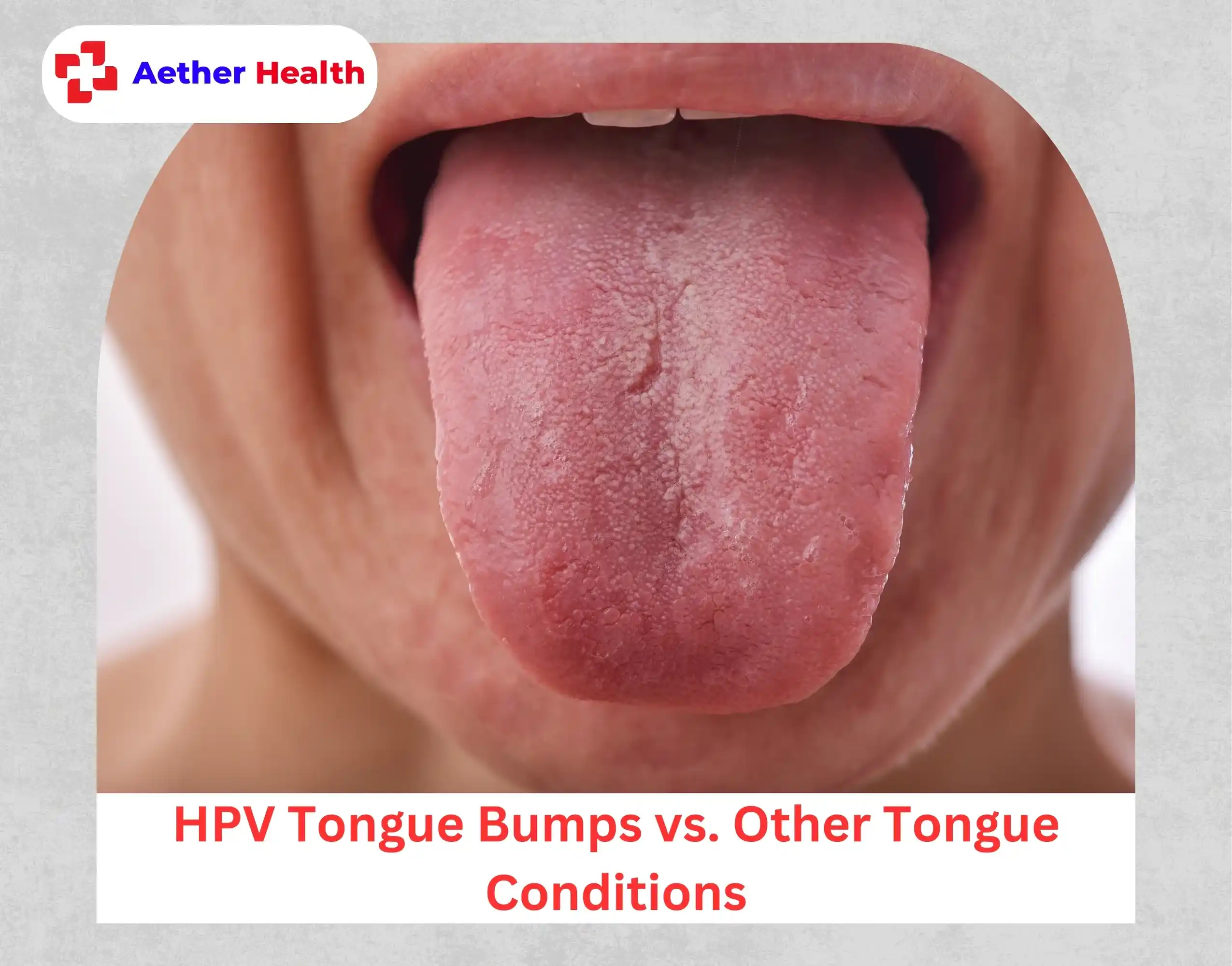
Not every bump indicates HPV. Many conditions cause similar appearances, making professional evaluation essential.
HPV Lie Bumps: A Common Misconception
True “lie bumps” (transient lingual papillitis) are inflamed taste buds with no connection to HPV. They appear as small, painful bumps that resolve within days. The term “HPV lie bumps” reflects terminology confusion rather than an actual condition.
Chlamydia HPV Bumps on Tongue
Chlamydia and HPV are completely different infections. Chlamydia is a bacterial STI that rarely causes visible tongue lesions. HPV is a viral infection that produces distinct papillomas. Searching for “chlamydia HPV bumps on tongue” often reflects concern about multiple STIs, which warrants comprehensive testing rather than self-diagnosis.
Other Causes of Tongue Bumps
- Inflamed taste buds
- Canker sores
- Oral thrush (fungal infection)
- Traumatic fibromas from biting
- Benign growths unrelated to HPV
- Circumvallate papillae (often mistaken for HPV bumps on back of tongue)
What’s the Difference Between HPV vs. Herpes?
HPV causes painless, rough, wart-like bumps that persist until removed. Herpes causes painful blisters that burst, crust over, and heal within two weeks but recur periodically. Both spread through direct contact but behave very differently.
| Feature | HPV | Herpes |
| Appearance | Cauliflower-like bumps | Fluid-filled blisters |
| Pain | Painless | Painful, burning |
| Duration | Persists until removed | Heals in 7-14 days, recurs |
| Onset | Gradual over weeks | Sudden, often with tingling warning |
If uncertain, professional evaluation confirms which condition you have.
HPV Symptoms in the Mouth
Oral HPV symptoms include painless growths that gradually increase in size, rough or textured patches, white or pink lesions, and occasionally multiple small bumps. Many people with oral HPV experience no symptoms at all.
Beyond visible HPV bumps on tongue, watch for:
- Painless growths that slowly enlarge
- Rough or textured patches on oral tissue
- White or slightly pink lesions
- Persistent sore throat
- Difficulty swallowing (rare)
The infection can remain present without causing visible changes, which makes regular dental checkups important for detection.
Does Tongue HPV Go Away?
Most oral HPV infections clear naturally within one to two years as your immune system eliminates the virus. About 90% resolve without treatment. However, visible HPV bumps on tongue typically don’t disappear on their own and usually require removal if treatment is desired.
- For the infection: Your immune system recognizes and eliminates the virus without intervention in most cases.
- For visible bumps: Once HPV tongue bumps form, the physical growth usually remains until removed, even after the underlying infection clears. Small bumps occasionally resolve spontaneously, but this is uncommon.
Factors Affecting Clearance
- Strong immune system: Accelerates viral clearance
- No smoking: Tobacco impairs HPV immunity
- Overall health: Good nutrition supports immune function
- HPV strain: Some types clear more easily than others
How Does Oral HPV Spread?
Oral HPV spreads through direct mouth-to-skin contact with an infected person:
- Oral-genital contact: The primary transmission route
- Deep kissing: Can spread the virus, though less commonly
- Shared items: Rarely, through objects contacting saliva
Studies show approximately 7% of American adults have oral HPV at any given time. Men develop oral HPV more frequently than women. Having more oral sexual partners increases the risk of developing HPV bumps on tongue.
Who’s at Higher Risk?
Certain factors increase vulnerability to HPV bumps on back of tongue:
- Weakened immune system: From HIV, immunosuppressive medications, or other conditions
- Tobacco and alcohol use: Both significantly increase risk
- Multiple sexual partners: Especially for oral sexual contact
- Age and gender: Men develop oral HPV more often
- No HPV vaccination: Unvaccinated individuals face higher risk
When Should You See a Doctor?
Many tongue bumps are harmless and resolve independently. However, consult a healthcare provider or dentist if you notice:
- Bumps that don’t heal within two weeks
- Painless bumps that keep growing
- Warts on tongue with cauliflower-like texture
- Bleeding from mouth sores
- Trouble swallowing or speaking
- Persistent sore throat
- One-sided ear pain
- Unexplained weight loss
- White or red patches in your mouth
- Neck lumps
- Voice changes
Your doctor will examine your mouth carefully, possibly using a mirror or camera to visualize the back of your tongue. If concerning, they may recommend a biopsy, taking a small tissue sample for microscopic examination. This confirms whether a bump is HPV-related and rules out precancerous HPV tongue lesions.
How Are HPV Bumps Treated?
Treatment for HPV bumps on tongue includes surgical removal, laser therapy, cryotherapy, or electrocautery. Small, asymptomatic bumps may be monitored without immediate intervention. Most procedures use local anesthesia and allow same-day discharge.
Treatment Options
Wait and watch: Small bumps causing no symptoms might not need immediate treatment. Since they’re typically benign, monitoring may be appropriate.
Surgical removal: The most common approach when treatment is needed:
- Traditional excision: Cutting with a scalpel under local anesthesia
- Laser treatment: Using focused light energy to remove tissue
- Cryotherapy: Freezing the growth to destroy it
- Electrocautery: Using heat to remove the lesion
Recovery
Most people heal within one to two weeks. Soft foods may be necessary temporarily, especially after removing HPV bumps on back of tongue. Recurrence is possible but uncommon. Regular dental checkups remain important for monitoring.
Can You Prevent Oral HPV?
Yes. Effective prevention strategies include:
- HPV vaccination: Protects against strains causing most cancers and warts. CDC recommends vaccination at ages 11-12, with catch-up vaccines available through age 26 and sometimes age 45.
- Safer sex practices: Barriers during oral sex reduce but don’t eliminate risk
- Limiting partners: Fewer sexual partners means less HPV exposure
- Avoiding tobacco: Protects oral tissue and supports immune function
- Limiting alcohol: Supports overall oral health
- Regular dental visits: Enables early detection of HPV on tongue
HPV Bumps on Tongue: What to Remember
Oral HPV is common and often harmless. Most infections clear naturally, and when bumps appear, they’re usually benign papillomas that respond well to straightforward treatment. The characteristic cauliflower-like texture distinguishes them from other tongue conditions.
Regular dental checkups, professional diagnosis, and the HPV vaccine all play an important role in protecting your oral health.
FAQs
What are the early warning signs of HPV in the mouth?
Most people have no symptoms. When signs appear, they’re typically small, painless bumps or warts with a rough texture, often on the back of the tongue.
Is HPV on the tongue an STD?
Yes. Oral HPV spreads primarily through oral sexual contact. Not all HPV strains cause visible bumps.
How long is oral HPV contagious?
HPV can spread as long as the virus remains active. Most people clear it naturally within one to two years.
Should I panic if I have HPV bumps on tongue?
No. HPV is extremely common and usually harmless. Visible bumps are typically benign and treatable. Professional diagnosis confirms whether bumps are HPV-related rather than other conditions.
Can HPV Bumps on Lips Spread?
Yes. HPV bumps on lips can spread to other areas of your mouth or to partners through direct contact. Avoid picking or touching lesions, as this can transfer the virus to new sites. Kissing and oral contact can transmit HPV to others, though transmission risk varies by HPV strain and individual immunity.
Will oral HPV make me sick?
Most people never feel sick or develop symptoms. Only certain strains cause issues, and those are usually manageable with appropriate care.
Can HPV bumps on tongue turn into cancer?
Rarely. Most oral HPV bumps are benign papillomas. However, certain high-risk HPV strains can contribute to oropharyngeal cancer over many years, which is why professional evaluation and monitoring matter.