Reviewed by the emergency care team at Aether Health ER | Spring Cypress, Kingwood, and SilverLake (Pearland), TX | +1 (713) 528-8703
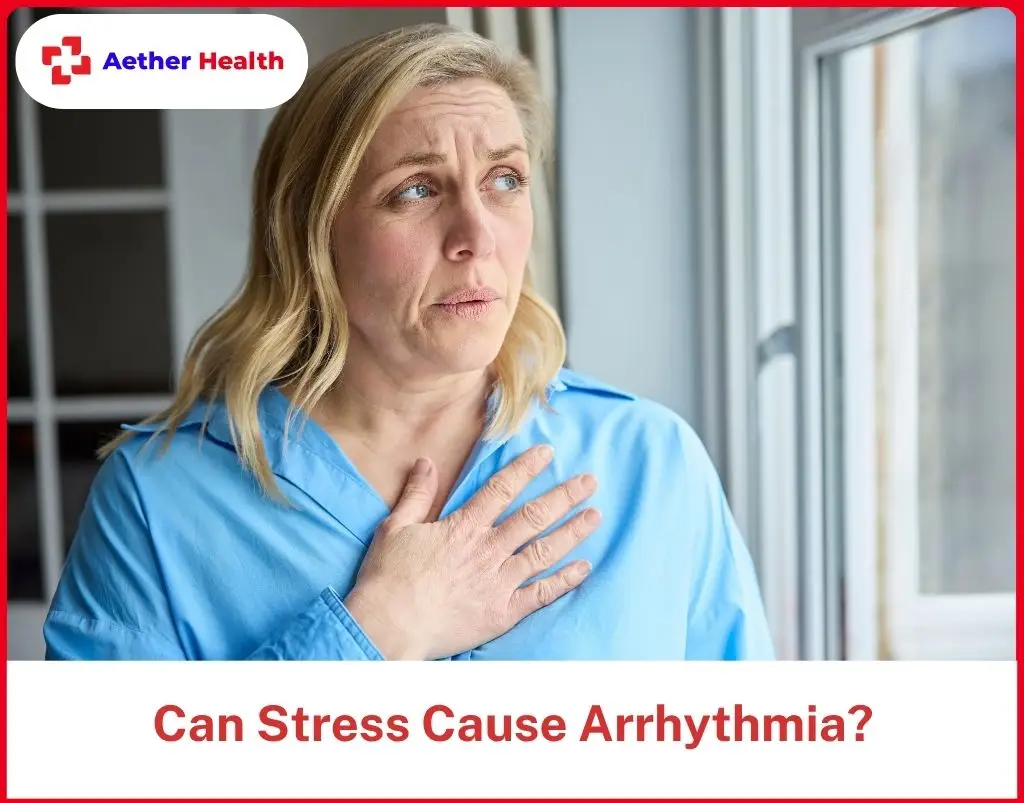
| A tough day at work. A difficult conversation. A sleepless night. Suddenly, your heart feels like it’s fluttering or skipping.
Short answer: Yes, stress can cause arrhythmia. The science is well-established, and it affects more people than you might think. |
Can stress cause arrhythmia? Yes. Acute stress floods your body with adrenaline, which speeds up your heart and can trigger irregular beats. Chronic stress raises cortisol, blood pressure, and inflammation, all of which stress the heart’s electrical system over time.
For most people, stress-related palpitations are brief and harmless. For some, they signal an underlying rhythm disorder that deserves professional evaluation.
The Short Answer
Stress triggers physical changes that can produce arrhythmias. Acute stress releases adrenaline, causing premature beats or short bursts of fast rhythm. Chronic stress contributes to high blood pressure, inflammation, and sleep disruption, raising your risk of atrial fibrillation and other persistent rhythm disorders.
Whether stress-related arrhythmia is dangerous depends on your underlying heart health and whether symptoms escalate.
The Stress-Heart Science (How Stress Causes Rhythm Changes)
Your heart doesn’t beat in isolation. It responds to nervous system signals that are directly tied to how your brain processes stress. The National Heart, Lung, and Blood Institute has highlighted this connection as one of the fastest-growing areas of cardiac research.¹
The Sympathetic Nervous System (Your “Fight or Flight” Switch)
Under acute stress, your sympathetic nervous system releases adrenaline and noradrenaline. These chemicals speed up your heart rate, raise blood pressure, and can destabilize the heart’s electrical signals. The result is often palpitations or short bursts of racing rhythm.
The HPA Axis and Cortisol
Chronic stress activates the hypothalamic-pituitary-adrenal (HPA) axis, which releases cortisol. Prolonged cortisol exposure contributes to high blood pressure, inflammation, insulin resistance, and electrolyte imbalances. All of these raise long-term arrhythmia risk.
Vagal Tone and Autonomic Imbalance
Chronic stress reduces vagal tone (your calming parasympathetic signal). The imbalance between a dominant sympathetic system and a weakened parasympathetic system makes irregular rhythms more likely.
| Reality check: You don’t have to be in a disaster to feel the effects. Daily workplace stress, financial pressure, and poor sleep can accumulate into measurable rhythm changes over months. If you’re noticing new palpitations alongside life stressors, it’s worth getting evaluated at Aether Health to rule out other causes. |
Which Arrhythmias Does Stress Most Often Trigger?
Stress doesn’t cause every type of arrhythmia equally. Here are the rhythm disorders most strongly linked to stress in medical research.
- Premature atrial contractions (PACs): Extra beats originating in the upper heart chambers. The most common stress-related rhythm change.
- Premature ventricular contractions (PVCs): Extra beats from the lower chambers. Felt as skips or thumps.
- Sinus tachycardia: Sustained rapid heart rate from caffeine, dehydration, acute stress, or anxiety.
- Atrial fibrillation (AFib): Chronic stress is a documented risk factor for new-onset AFib, especially in people with other cardiovascular risk factors.
- Supraventricular tachycardia (SVT): Episodes of fast rhythm from the upper chambers. Often triggered by acute emotional stress.
For a deeper look at how stress specifically affects atrial fibrillation, Mayo Clinic’s guide on AFib and managing stress covers both the mechanism and practical strategies.²
One warning sign to take seriously: dizziness that accompanies stress-related palpitations. Severe dizziness can signal inadequate blood flow during an arrhythmia episode. Aether Health provides same-visit emergency care for dizziness alongside cardiac rhythm evaluation.
Acute Stress vs. Chronic Stress: Different Impacts on Your Heart
Not all stress affects your heart the same way. Short-term bursts and long-term exposure produce different rhythm problems.
| Feature | Acute Stress | Chronic Stress |
| Hormone | Adrenaline (immediate) | Cortisol (sustained) |
| Timeline | Minutes to hours | Months to years |
| Common rhythm effect | Palpitations, PACs, PVCs, SVT | New-onset AFib, persistent tachycardia |
| Blood pressure effect | Short spikes | Sustained hypertension |
| Reversibility | Usually fully reversible | Can cause lasting damage |
The Hypertension Bridge
- Chronic stress → Sustained high blood pressure → Arrhythmia risk: Long-term stress elevates blood pressure, which damages heart tissue and the electrical conduction system. If you’re already managing hypertension, chronic stress can push a borderline condition into a hypertensive emergency. Learn more at our severe hypertension emergency care page.
Signs Your Stress-Related Rhythm Change Is Something More
Stress-triggered palpitations usually resolve within minutes once you calm down. Some signs mean the arrhythmia has crossed from a stress response into territory that needs evaluation.
- Palpitations lasting longer than 30 minutes without easing
- Rapid heart rate above 150 beats per minute at rest
- Episodes that recur daily or multiple times per week
- Chest pain or pressure with the rhythm change
- Shortness of breath, especially at rest
- Dizziness, fainting, or near-fainting
- Any irregular rhythm in someone with existing heart disease
- Symptoms that persist well after the stressful moment has passed
| If palpitations come with chest pain, breathlessness, or fainting, treat it as an emergency and call 911 or get to the nearest ER. Stress is a plausible trigger, but it’s not the only possible explanation, and ruling out dangerous rhythms takes same-visit testing. |
Habits That Lower the Risk of Stress-Related Arrhythmia
General lifestyle strategies can lower both your perceived stress and your cardiac response to it. None of these replace medical evaluation when symptoms are present.
- Movement: Regular aerobic exercise strengthens the heart and lowers resting rate.
- Consistent sleep: Chronic sleep deprivation is one of the strongest known arrhythmia triggers.
- Limit caffeine and alcohol: Both widen blood vessels briefly but worsen rhythm stability over time.
- Mindfulness practices: Meditation, deep breathing, yoga, and talk therapy all raise vagal tone.
- Hydration: Dehydration affects electrolyte balance and heart rhythm.
- Mental health care: Treating underlying anxiety or depression lowers cardiac stress markers.
Why a Freestanding ER Is the Right Call for Rhythm Concerns
Stress-related palpitations can almost always be assessed quickly if you have the right setup. Aether Health’s irregular heartbeat emergency care is designed exactly for this kind of situation.
- Same-visit EKG: A 12-lead electrocardiogram captures your rhythm within minutes of arrival.
- Cardiac monitoring: Real-time rhythm tracking throughout your visit to catch intermittent changes.
- Rapid lab work: On-site labs for thyroid, electrolytes, and cardiac markers.
- Physician evaluation: Board-certified emergency physicians examine you personally. Not nurse practitioners alone.
- Specialist coordination: Direct referral to cardiology if a specialist workup or follow-up is needed.
- Transparent pricing: Most commercial insurance accepted. No surprise billing.
Common Questions About Stress and Heart Rhythm
Can anxiety alone cause an arrhythmia?
Yes. Anxiety and panic attacks release stress hormones that can trigger palpitations, PACs, PVCs, and short bursts of fast rhythm. Most are brief and harmless, but new persistent symptoms deserve evaluation to rule out a cardiac cause.
How can I tell if my palpitations are from stress or something serious?
Stress palpitations usually settle within minutes of calming down and don’t come with chest pain or fainting. Rhythm changes that last longer, come with other symptoms, or occur without a clear trigger need professional evaluation.
Does stress-induced arrhythmia go away on its own?
Occasional stress-triggered palpitations typically resolve once the stressor passes. Chronic stress-related rhythm issues often need both lifestyle changes and medical management, especially if they progress to AFib or sustained tachycardia.
Can stress permanently damage the heart?
Chronic stress contributes to lasting high blood pressure, coronary artery disease, and new-onset AFib, all of which can cause lasting cardiac damage. Managing stress is a legitimate cardiovascular health strategy, not a soft recommendation.
When should I go to the ER for stress-related palpitations?
Go to the ER if palpitations come with chest pain, shortness of breath, fainting, severe dizziness, or last longer than 30 minutes. New rapid or irregular rhythms in someone with heart disease also warrant immediate care.
Palpitations During Stressful Times? We Can Help Rule Out the Rest
Walk into any Aether Health ER for same-visit EKG, cardiac monitoring, and physician evaluation. No appointment, no referral, open 24/7. Call +1 (713) 528-8703 or get in touch with our team with any questions.
Three Greater Houston locations: Spring Cypress, Kingwood, and SilverLake (Pearland).