
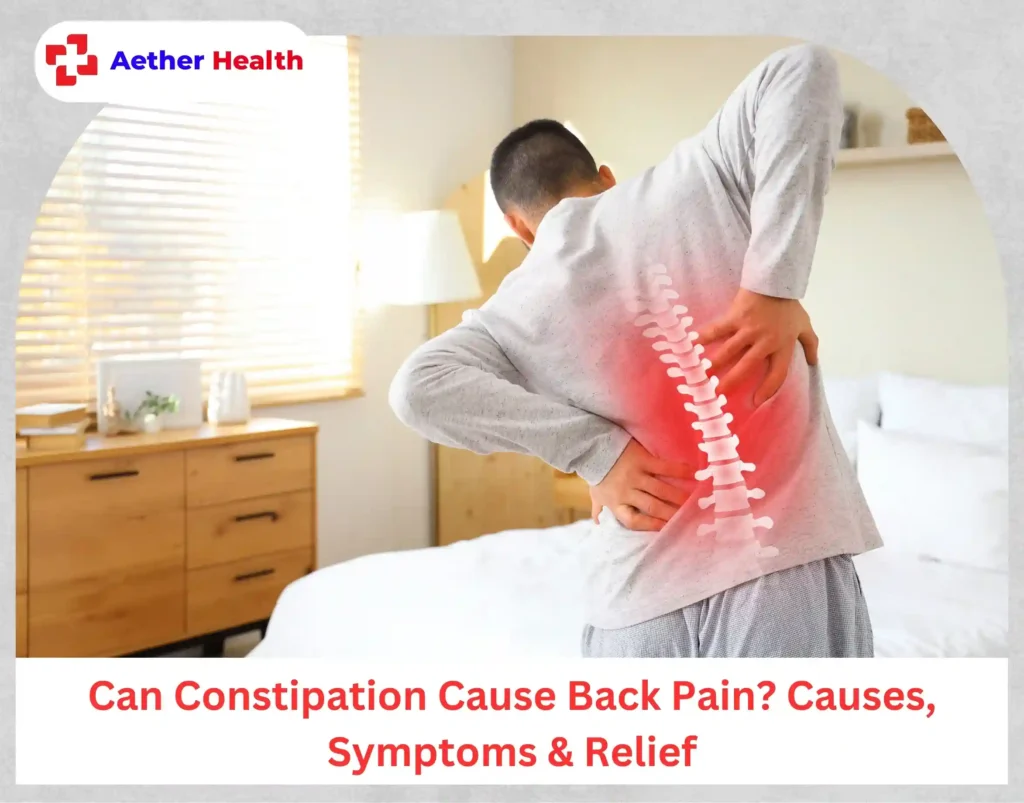
Constipation is usually thought of as a digestive problem, but many people are surprised when it also causes lower back pain. While it may seem unrelated at first, the digestive system and lower spine are closely connected, which is why discomfort in the gut can sometimes be felt in the back.
This guide explains Can Constipation Cause Back Pain, why it happens, and when it may signal something more serious.
Can Constipation Cause Back Pain?
Yes, constipation can cause back pain in some cases, especially lower back pain. When stool builds up in the colon and becomes hard or difficult to pass, it creates pressure inside the intestines. This pressure can stretch the bowel and surrounding tissues, and in some cases, it can irritate nearby nerves in the lower spine, leading to discomfort that feels like back pain.
This pain is often described as dull and aching and not sharp or stabbing. This may be improved after a bowel movement, which is an important indication that constipation is the underlying problem. But back pain and constipation can also happen together because of other health conditions or lifestyle factors.
In case, you are feeling discomfort in the back, you can opt for the back pain care at the nearest medical facility, like Aether Health for instant relief.
How Constipation Can Cause Back Pain
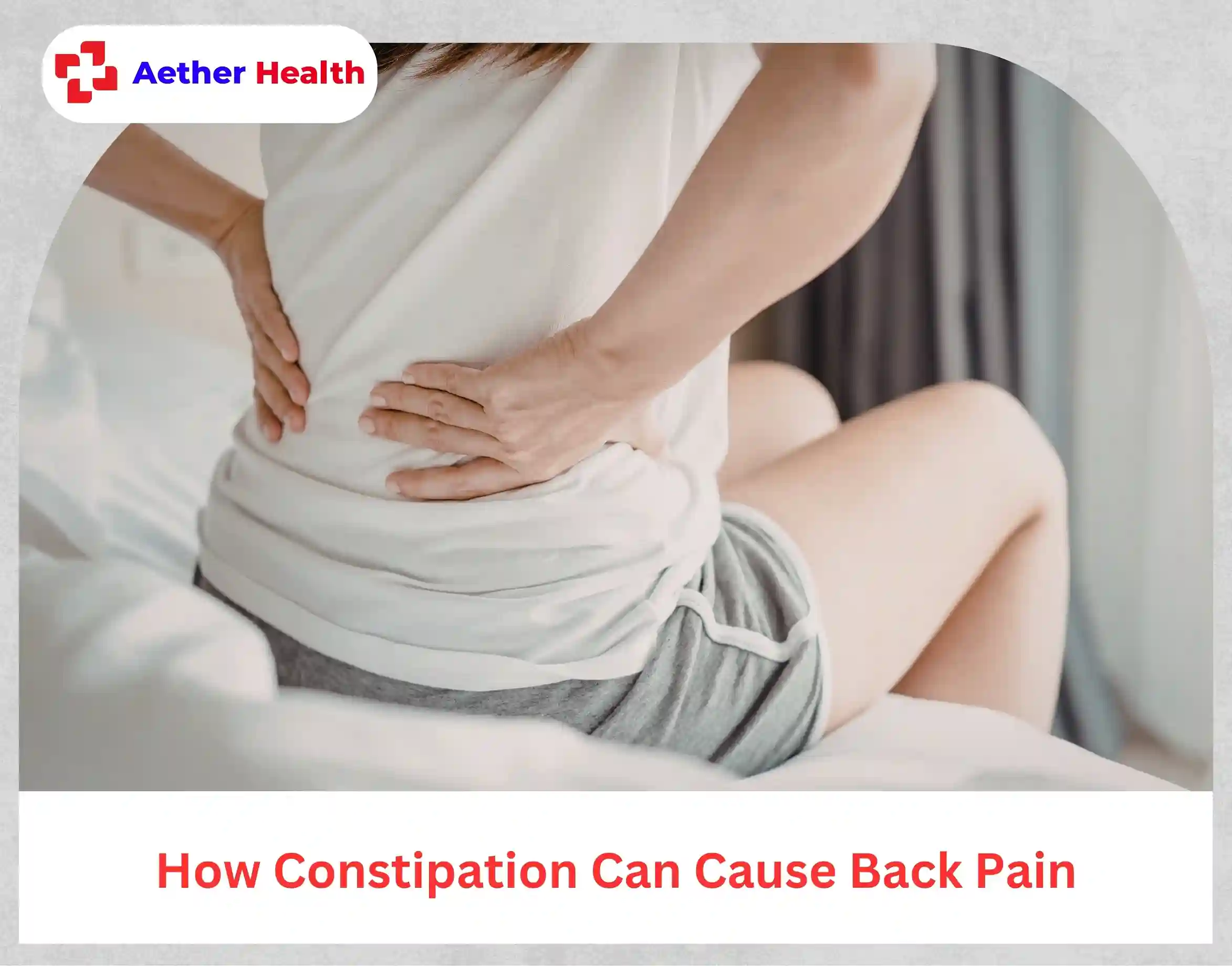
Constipation can impact the back in three primary ways: pressure, nerve irritation and muscle strain. When stool spends too much time in the colon, it makes the intestine expand, which can push on nearby organs and tissues in the lower abdomen and pelvic region. Sometimes you can feel this pressure in the bottom of your back.
In more extreme examples, an ailment known as fecal impaction can occur, in which hard stool becomes trapped within the colon. This can put more pressure on the sacral nerves in your lower spine, causing back pain that is harder to ignore. And constipation-related bloating and gas buildup can put additional pressure on the abdomen, which may radiate to the back and bring discomfort or tightness.
Some people may also confuse this pain with the Sciatica pain which is completely different from back pain.
Common Causes of Constipation
Constipation typically occurs as the result of changes in diet, lifestyle, or underlying health conditions. One of the most common causes is a low-fiber diet because fiber helps to soften stool and support regular bowel movements. A lack of fiber leads to harder stool that is harder to pass.
Dehydration, lack of exercise and some medications that slow down bowel movement are other common causes. Constipation can also be associated with conditions like irritable bowel syndrome (IBS), hormonal changes, or disorders of the digestive tract. If constipation turns chronic, the risk for associated symptoms such as bloating and pain in the lower back can increase.
How Constipation Can Cause Different Kinds of Back Pain
Constipation-related back pain is typically mild to moderate and localized to the lower back. It’s often described as a constant dull ache, not sharp pain. This occurs because pressure from a packed colon may irritate nerves or muscles in the lower abdominal and pelvic area.
In some instances, constipation and straining during bowel movements may also play a role in back pain. When a person pushes too hard, pressure is increased in the abdominal cavity, which can have effects on lower back muscles and spinal structures. This is also why people can sometimes have back pain that worsens along with constipation and improves after they relieve it.
Constipation and Lower Back Pain Together: Common Causes
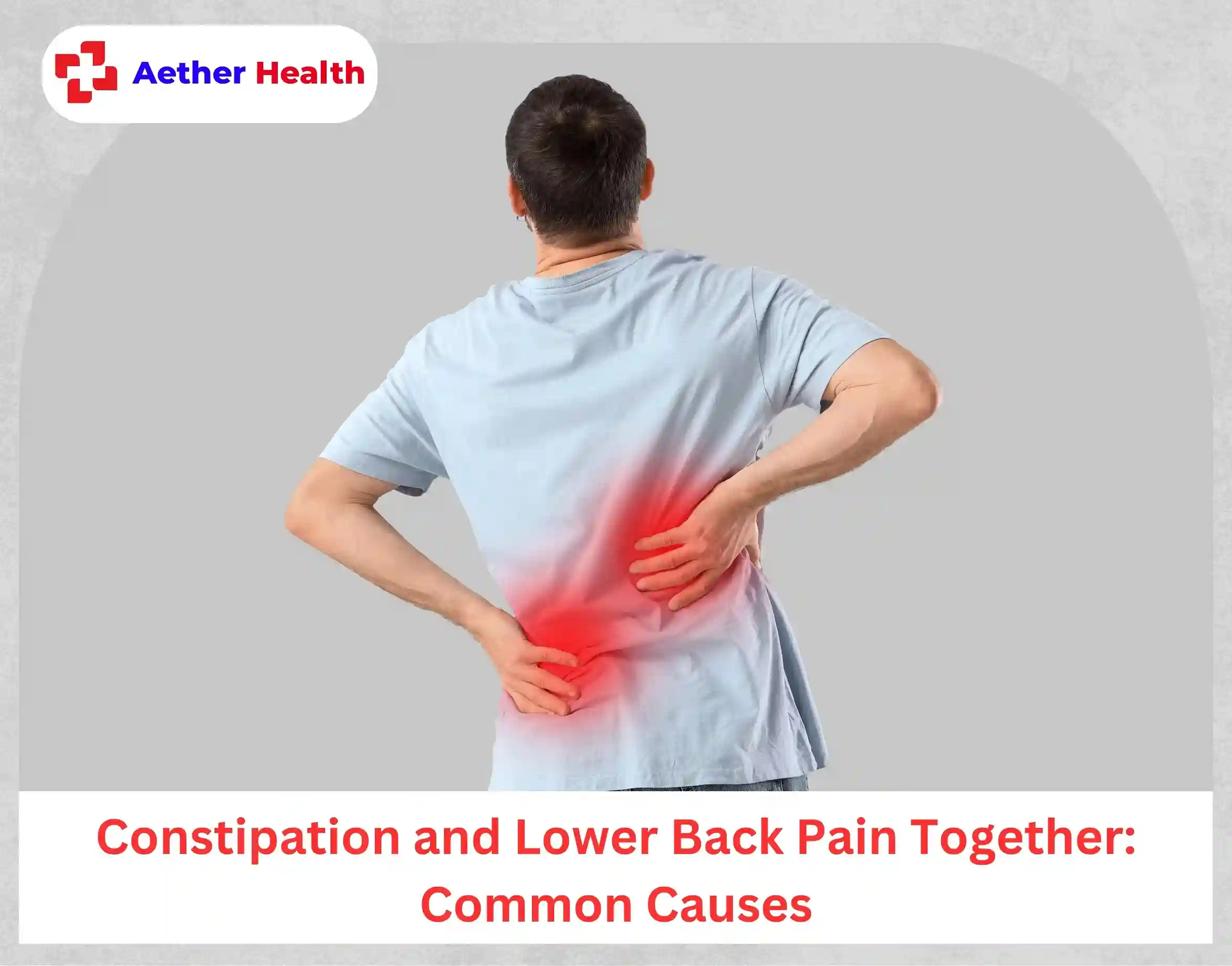
In some cases, constipation and back pain happen at the same time because they have a common underlying cause, rather than one directly causing the other. For instance, diseases affecting the spine or nerves can slow down bowel function and certain gastrointestinal disorders can create referred pain that registers in the back.
Less mobility can delay digestion, causing constipation; it also weakens the back muscles, leading to discomfort. Due to this overlap, the combined presence of symptoms warrants a consideration of both digestive and musculoskeletal aspects.
How to Get Relief From Constipation and Back Pain
Relief is often associated with increased bowel movement and decreased pressure in the digestive tract. Increasing the fiber intake through fruits, vegetables and whole grains can help soften stool and aid with digestion on a regular basis. It’s also important to drink enough water, since dehydration can lead to harder stool that increases constipation.
Gentle movement, such as walking, can get the bowels moving and also relieve stiffness in the back. When constipation resolves, related back pain generally also lessens.
When Should You See a Doctor?

You should seek medical advice or visit the 24/7 free standing emergency room if constipation and back pain persist for several days without improvement. Persistent symptoms may indicate a more serious condition that requires treatment.
Immediate medical attention is needed if you experience severe abdominal pain, vomiting, blood in stool, unexplained weight loss, or worsening back pain. These signs may suggest complications such as fecal impaction or other underlying digestive or spinal issues that need prompt evaluation.
Final Thoughts
Can constipation cause back pain? Yes, constipation can cause back pain, especially in the lower back, due to pressure buildup, nerve irritation, and muscle strain. While the pain is usually mild and temporary, it can become uncomfortable if constipation is not treated.
Improving digestion often leads to improvement in back pain as well. However, persistent symptoms should always be evaluated to rule out more serious conditions.
FAQs
Can constipation really cause lower back pain?
Yes, constipation can cause lower back pain due to pressure buildup in the colon and irritation of nearby nerves.
Why does my back hurt when I’m constipated?
Back pain may occur because trapped stool causes pressure in the intestines, which can affect surrounding muscles and nerves.
Does back pain go away after constipation is treated?
In many cases, yes. Once bowel movements return to normal, pressure decreases and back pain often improves.
Can severe constipation cause serious back pain?
Yes, severe constipation or fecal impaction can lead to more noticeable pain and may require medical treatment.
When should I worry about constipation and back pain?
Seek medical help if symptoms persist, worsen, or include warning signs like vomiting, blood in stool, or severe abdominal pain.