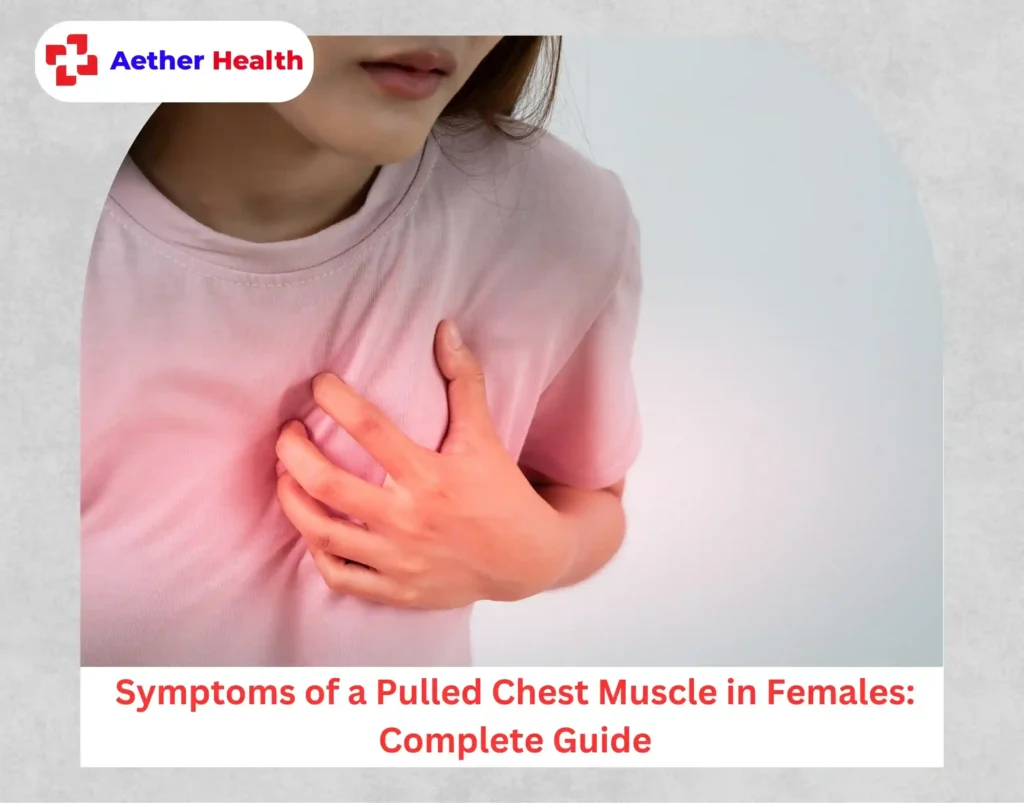
A pulled chest muscle, medically known as a chest muscle strain can be painful and confusing, especially for women who may worry about more serious causes of chest pain. While chest pain sometimes signals a serious heart or lung condition, many cases are due to muscle strains involving the chest wall or chest muscles.
This guide explains the common symptoms, how they present specifically in females, what causes them, and when to seek medical care.
What Is a Pulled Chest Muscle?
A pulled chest muscle occurs when muscle fibers in the chest, such as the pectoralis major, pectoralis minor, or intercostal muscles between your ribs are overstretched or partly torn. These injuries can range from mild strains to more severe tears.
Chest muscle strain is a type of musculoskeletal chest pain, meaning the discomfort originates from muscles, tendons, or other structures around the chest rather than from your heart or lungs.
Common Symptoms of a Pulled Chest Muscle (Especially in Females)
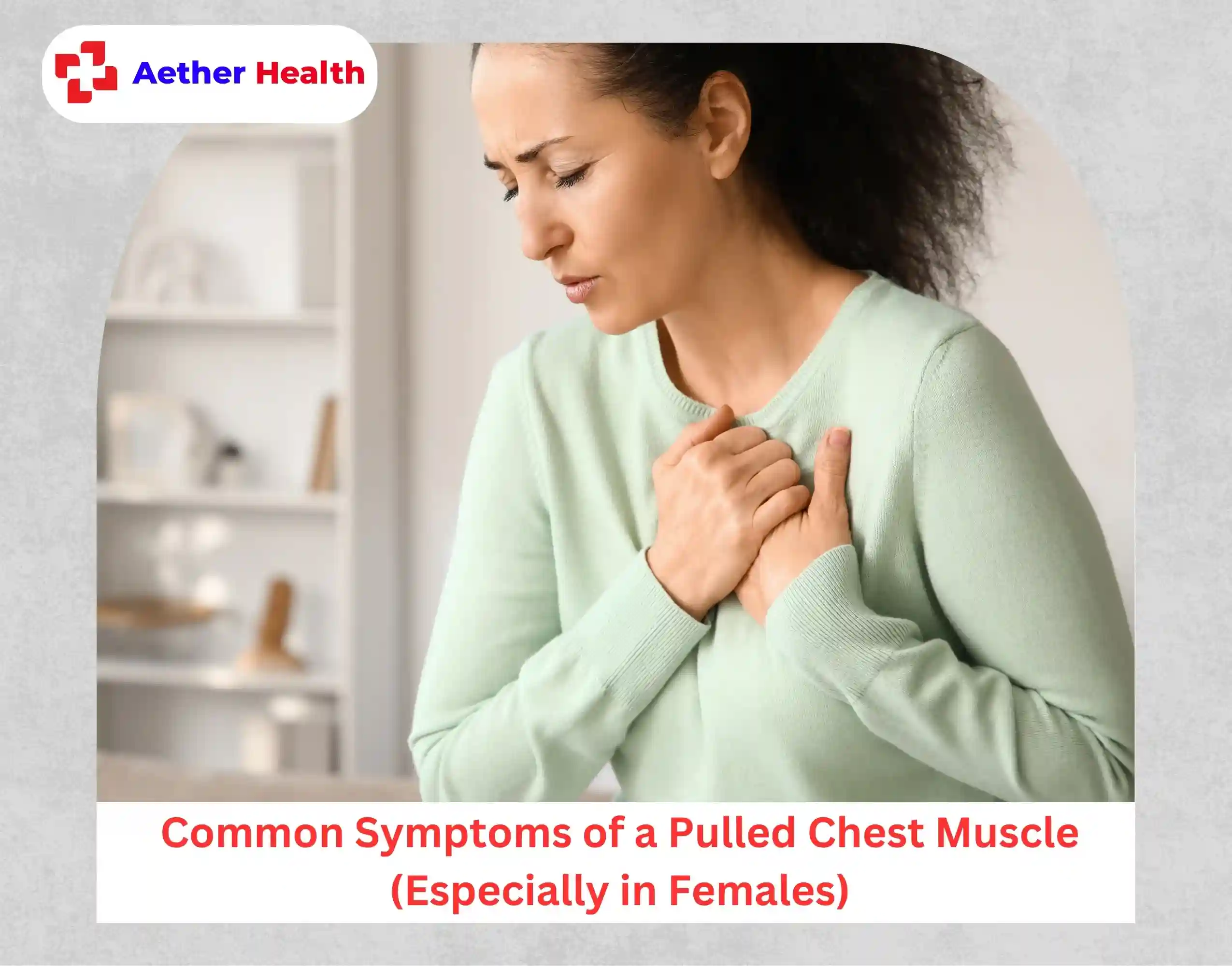
While the basic symptoms are similar for everyone, women may notice the discomfort more acutely around the pectoral region or under the breasts, because chest muscle involvement might relate to daily activities, posture issues, or exercises that involve the upper body.
1) Localized Chest Pain
Pain is usually sharp or dull and focused in one specific area of the chest wall. You can often point to exactly where it hurts, a key sign this pain is muscular rather than cardiac.
2) Pain Increases With Movement
Pain often worsens when you:
- Lift or reach with your arms.
- Twist your upper body.
- Push or pull objects.
- Take a deep breath.
- Cough or sneeze.
This is because these actions stretch or contract the injured muscle.
3) Pain With Breathing or Deep Inhalation
Now, these being the muscles that help open your chest while you breathe in, a strained muscle can be painful with deep breaths.
Tenderness or Soreness to Touch
The injured site may be sore to pressing and tender to light touch.
Swelling and Bruising
There may be some mild swelling or bruising around the affected area, particularly when it comes to moderate or severe strains.
Muscle Spasms or Tightness
It may bring cramps, twitching or constriction of the chest muscles, a protective reflex as your body attempts to stabilize the area.
Use of Arm or Upper Body Is Problematic
You may have trouble moving or using your arm as you normally would because the chest muscles help move your shoulders and arms.
Why Symptoms of Pulled Chest Muscle Can Be Scary for Women
Women may freak out when they have chest pain, assuming it’s heart-related and possibly even tied to breast tissue. But a strained muscle is usually different from cardiac pain. Some distinguishing features include:
Muscle pain: Typically very localised and aggravated by certain movements or pressure
Cardiac pain: It usually feels like pressure or squeezing, can radiate to the jaw, arms, shoulders or back and is not associated with movement
Pain from more serious conditions, like a heart attack might also be accompanied by sweating, nausea, dizziness or shortness of breath. Call emergency medical services right away if you have these symptoms.
Pulled Chest Muscles in Women Causes
A pulled chest muscle can occur in a variety of daily activities, not just exercise or sports. Common causes include:
- Physical activity and activities that use the upper body (for example: chest presses, push ups, repetitive arm movements)
- Lifting: carrying awkwardly groceries, furniture, or children
- Bad posture or overuse: particularly when slouching or sitting at a desk for long periods
- Forceful coughs or sneezes: especially if you have had a cold lately
- Injury or blow: Drop, knock, or blow the chest.
Women can also suffer chest muscle strain from doing repetitive things day in and day out, such as toting a child on one hip or shoulder, reaching often over the head or even dancing too intensely.
Symptoms of Chest Muscle Strain and How They Differ from Other Types of Chest Pain
With so many potential causes of chest pain, it helps to understand how muscle strain in the chest stands apart from other forms:
Muscle Strain vs Heart-Related Pain
Pain form muscle strain tend to be focal, worsens with certain activities, and is tender to palpation.
Symptoms are often similar to those experienced in a heart attack, with a sensation of pressure or squeezing that may spread to the arm, jaw, neck or back and does not vary with chest movements.
Muscle Strain vs Costochondritis
Costochondritis is a condition involving inflammation of the cartilage connecting a rib to the breastbone and it can be mistaken for that. But costochondritis typically affects more than one set of rib joints and not necessarily the pain from movement.
When to Seek Medical Help
A pulled chest muscle can be uncomfortable, but it is almost never serious, and you can take steps to manage pain associated with it right at home. However, seek medical care or visit an ER near you if:
- Pain is severe or does not get better with rest and home treatment.
- Pain spreads to your arm, jaw or neck.
- You experience shortness of breath, sweating, nausea, dizziness or fainting.
- You have numbness, significant swelling or you see a red ring around it.
- Pain continues for more than a few weeks and/or does not improve.
There’s no such thing as taking a chance with chest pain, even if you are pretty sure it’s a pulled muscle.
Home cures and treatment for pulled chest muscles

The majority of mild strains improve with conservative treatments:
Rest and Avoid Aggravating Activities
If a muscle is allowed to rest by restricting the movements that cause pain, it has a chance to heal.
Ice and Heat Therapy
For the first two days, use ice to decrease swelling, and then switch to heat to loosen muscles.
Pain Relief
Pain and inflammation can be minimized with over-the-counter pain relievers, such as ibuprofen or acetaminophen.
Gentle Stretching and Strengthening
Once the pain is gone, some gentle movement and stretching can help restore flexibility and prevent stiffness. Check with a clinician or physical therapist for exercises suitable to your needs.
Why Women May Feel Sprains in the Chest Muscles Differently
Though the primary symptoms of a pulled chest muscle are generally consistent in all adults, women may be more sensitive to possible chest wall pain resulting from differences in body structure and daily habits. Movements, such as reaching, lifting and twisting, while exercising or consider caregiving and housework can strain chest muscles in a repetitive way.
Other factors that contribute to imbalance and tension in the chest and shoulder area can stem from posture/ergonomics like hunched forward sitting chairs, carting a purse or bag on one side of the body or using phones constantly.
When to Worry: Signs It’s Not Just a Pulled Muscle

If chest pain is combined with any of the following, and, no, these aren’t typical for a simple muscle strain, seek emergency care:
- Difficulty breathing or shortness of breath.
- Sweating, nausea, or dizziness.
- Pain that radiates to the arm, jaw, or back.
- Fainting or severe palpitations.
- Rapid heartbeat or lightheadedness.
These could be signs of a heart attack or another frequent serious condition that requires immediate treatment.
Conclusion
Here are some signs where pulled chest muscle pain in females might be associated with:
- Localized sharp chest pain, or dull ache
- Pain is exacerbated by movement, breathing, coughing or sneezing
- Tenderness and soreness of the chest
- Swelling, bruising or tightness of the muscles
- Difficulty moving the upper torso or an arm
Remember to see a medical professional immediately if your symptoms are intense, or longer in length than usual and have warning signs of a serious condition.
Frequently Asked Questions (FAQs)
1) Can a pulled chest muscle feel like breast pain?
Yes, chest wall muscle strains can feel like pain under or around the breasts, especially when the pectoral region is involved.
2) How long does a pulled chest muscle take to heal?
Mild strains may improve in a few weeks with rest and care, while more severe injuries can take several weeks to months.
3) Is it dangerous to pull a chest muscle?
Usually no but it’s important to rule out heart or lung causes if pain is severe or accompanied by systemic symptoms.
4) Is Aether Health open 24/7 for chest pain and urgent symptoms?
Yes, Aether Health emergency rooms are open 24 hours a day, 7 days a week, providing immediate evaluation and treatment for chest pain, muscle strains, and other urgent medical conditions whenever you need care.