
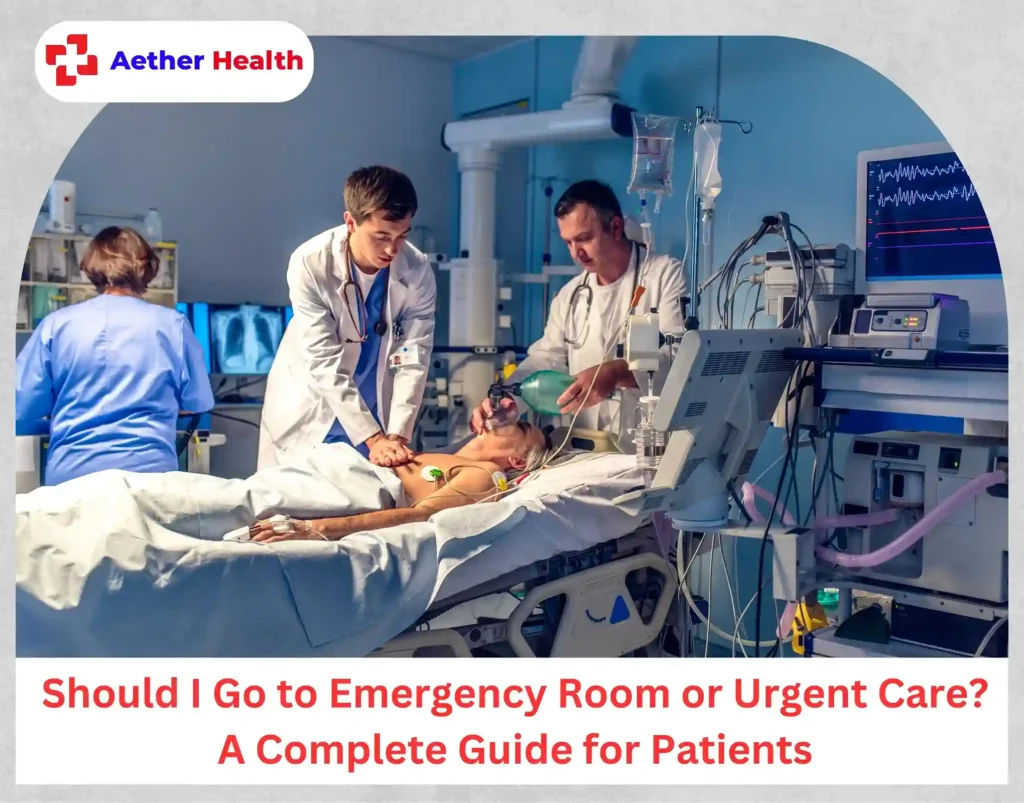
The emergency room handles life-threatening emergencies, while urgent care treats minor injuries and illnesses that require quick attention. Choosing the right facility is crucial for your health and safety.
Going to the wrong facility can cause treatment delays, higher costs, or added stress. This guide breaks down the key differences so you know exactly where to go.
What Is an Emergency Room (ER)?
The emergency room (ER) is a hospital-based or freestanding facility designed to treat life-threatening and severe medical conditions. It is staffed with specialized doctors, nurses, and equipment capable of handling everything from heart attacks to major trauma.
Emergency rooms are open 24/7, including nights, weekends and holidays, which means that patients can get immediate attention whenever they experience an emergency. They have sophisticated diagnostic equipment like imaging machines, labs and surgical areas capable of managing complex and serious cases.
The emergency room, unlike all other medical facilities in the United States, doesn’t treat patients in order of arrival. Doctors see patients based on how severe their condition is via a triage system designed to ensure that the sickest people get treated first. That makes it the best place for conditions where life is at stake and every minute counts.
What Is Urgent Care?
An urgent care center is a walk-in clinic that treats non-life-threatening illnesses and injuries but needs immediate attention. It is perfect for issues that need attention but can’t wait for a standard doctor’s appointment, and aren’t bad enough to warrant the emergency room.
These clinics will provide treatment for minor fractures, sprains, infections, flu and small cuts. They usually have basic diagnostic tools, such as X-rays and lab testing, but are not equipped to handle major emergencies or complex surgeries.
Urgent care centers tend to be quicker and less expensive than E.R. visits, and they have extended weekday hours and weekend availability, making them a convenient choice when primary care offices are closed. They are staffed with qualified health care providers who can stabilize patients and send them to the E.R. or hospitals if conditions are more severe than initially observed.
Some Freestanding ER facilities like Aether Health provide both the Emergency rooms and urgent Care. Thus, you get exceptional care by expert physicians without any wait time.
Emergency Room vs Urgent Care: Key Differences
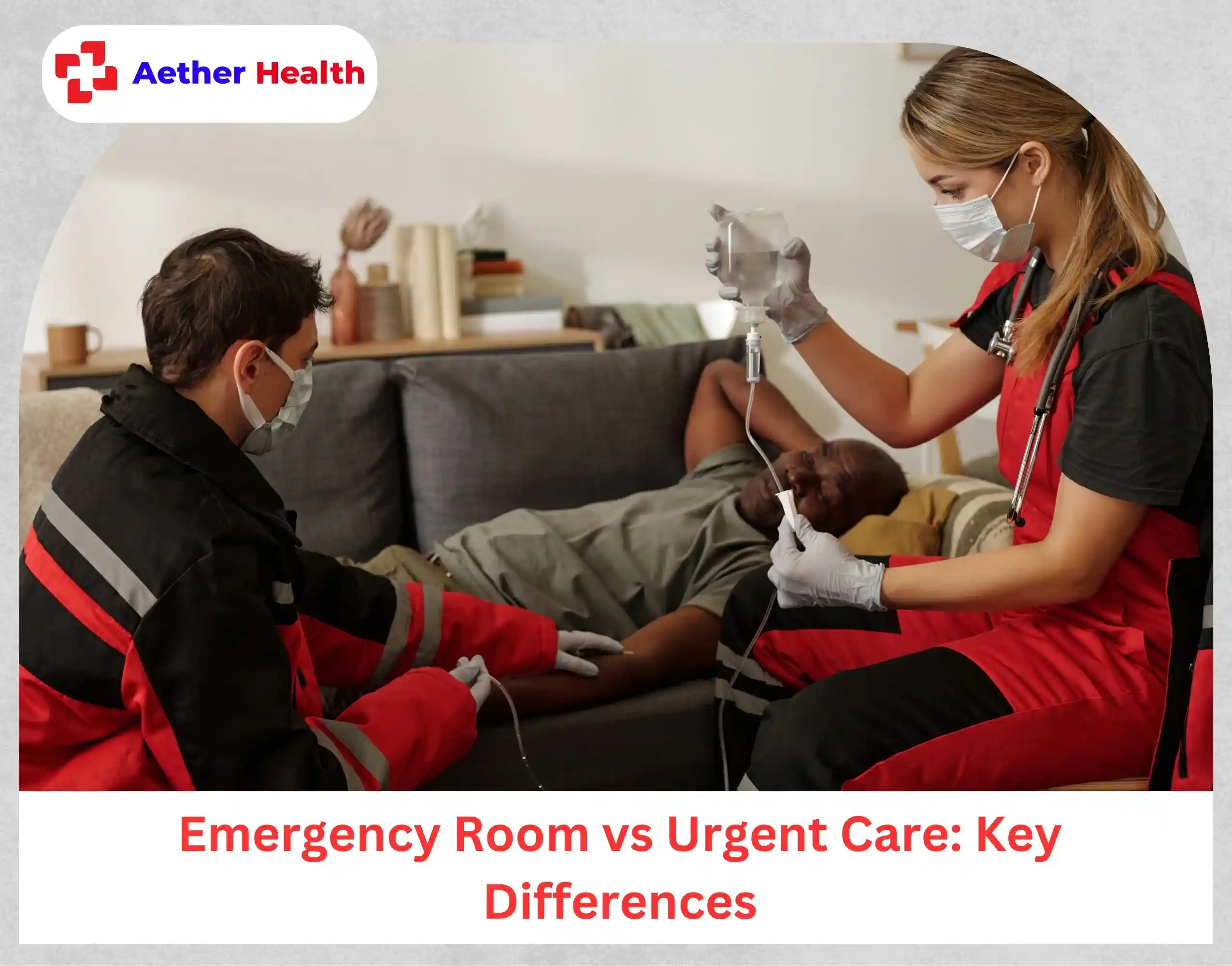
Knowing the difference between the ER and urgent care can help you get to the right place for treatment as quickly as possible. Here’s a side-by-side table comparing the key factors:
| Feature | Emergency Room (ER) | Urgent Care |
| Purpose | Treats life-threatening and severe medical emergencies. | Treats non-life-threatening illnesses and minor injuries. |
| Availability | 24/7, including holidays and nights. | Typically open evenings, weekends, and some holidays. |
| Severity of Conditions | Heart attacks, strokes, severe trauma, major bleeding. | Minor fractures, sprains, mild infections, flu, cuts. |
| Wait Times | Can be long; triage system prioritizes critical cases. | Usually faster; first-come, first-served. |
| Cost | Higher due to advanced equipment and hospital staffing. | Lower; more cost-effective for minor conditions.
|
| Equipment | Advanced imaging, labs, surgery, specialists. | Basic X-rays, lab tests, minor procedures. |
In a nutshell,
ER: Best for situations where life or long-term health is at risk.
Urgent Care: Ideal for quick, convenient care for conditions that are urgent but not life-threatening.
When Should You Go to the Emergency Room?
An emergency room (ER) is meant to treat life-threatening or extreme medical conditions that require urgent care. Visiting the ER may be lifesaving when symptoms are severe and possibly life threatening.
Routine Situations That Call for the ER:
- Chest pain or pressure that could be signs of a heart attack.
- Difficulty breathing or shortness of breath which may be a sign of lung or heart problems.
- Stroke symptoms, such as sudden numbness, weakness, confusion or slurred speech.
- Serious injuries, like fractures, deep lacerations, head trauma or significant burns.
- Profuse bleeding due to cuts or trauma.
- Severe abdominal pain due to possible appendicitis or other urgent conditions.
- Seizures or sudden unconsciousness.
Why ER Is Necessary
ERs have better diagnostic tests, surgery centers, and specialists on call 24/7. For life-threatening symptoms, waiting for an appointment at either urgent care or a regular doctor can slow treatment and raise risks.
When Should You Visit Urgent Care?
They are not for life-threatening emergencies, but urgent care centers are best for mild to moderate health issues that require immediate attention. They deliver speedy, accessible care when you can’t wait for a standard doctor’s visit.
Common Situations for Urgent Care:
- Fractures or sprains or X-rays possible for confirmation.
- Flu, colds or fever for prompt evaluation and treatment.
- Small cuts or burns might require stitches or dressing.
- Ear infections, sinus infections or sore throat, requiring antibiotics or treatment.
- Allergic reactions are mild to moderate, not leading to breathing problems.
- Urinary tract infections (UTIs), requiring diagnosis and medication.
Why Urgent Care Is Useful
An urgent care costs less than the ER visits, and wait times are typically shorter here. They can stabilize patients and send them to the E.R. or hospital if a problem turns out to be more serious than they first thought.
Real-Life Scenarios for Emergency Room vs Urgent Care (Decision Guide)
Yes, it can be tricky to choose between the ER and urgent care. Below are some real-world use cases to help you make quick decisions:
Scenario 1: Chest Pain or Shortness of Breath
Head to the ER as these may signal a heart attack or serious respiratory problem. Immediate treatment is critical.
Scenario 2: Sprained ankle or minor fracture
Visit Urgent Care as X-rays and basic treatment are rapidly available, and it is not life threatening.
Scenario 3: High Fever with Rash
ER or Urgent Care? If it’s with shortness of breath, disorientation or extreme pain, go to the ER. Otherwise, urgent care can assess and treat the infection.
Scenario 4: Deep Cut with Significant Bleeding
A trip to the E.R., If bleeding is uncontrollable or deep, the E.R. has specialized tools and staff for stanching it, and preventing future complications.
Option 5: Flu or Cold Symptoms
Go to Urgent Care for fast diagnosis and treatment.
Quick Tip:
When symptoms are severe, life-threatening or rapidly worsening, the E.R. is always a safer bet.
Cost of Care: ER vs. Urgent Care
The cost of treatment is one of the biggest differences between the emergency room (ER) and urgent care. It’s also one of the deciding factors for ‘should I go to emergency room or urgent care’ scenarios. Knowing which one can help you make an informed decision while considering your health first.
Emergency Room Costs
Emergency rooms are more expensive because of advanced equipment, specialists and hospital overhead.
Even treatable conditions can lead to expensive medical bills from the ER.
Insurance plans will cover ER visits, but copays and out-of-pocket expenses are generally higher.
Urgent Care Costs
For non-life-threatening problems, urgent cares’ costs are lower.
The vast majority of urgent care clinics accept insurance, and most are also upfront about their pricing policies for self-pay patients.
Urgent care can cost hundreds or even thousands of dollars less than an ER visit for minor injuries or illnesses.
Wait Times: ER vs Urgent Care
Another major consideration when weighing the choice between the ER and urgent care are wait times. Understanding what will happen can help you plan and be less stressed.
Emergency Room Wait Times
Emergency rooms treat patients according to severity of illness or injury, not by order of arrival.
Life-ending cases are taken care of first, while other, much less severe cases may wait hours.
Patients, including low-acuity patients, can face painful delays even in off hours.
Urgent Care Wait Times
Here patients are seen and treated on a first-come, first-served basis, often with shorter wait times.
Many urgent care centers offer online check-in or appointments, which can reduce wait times as well.
Well-suited for patients with minor injuries or illnesses who desire immediate assessment and treatment.
What If You’re Not Where You Should Go?

It can be hard to tell at times if your condition is bad enough for the ER or urgent care. In such types of situations, safety must come first and guidance needs to be sought urgently.
Steps to Take When Unsure:
Call ahead: Many urgent care centers and ERs can help over the phone.
Use telehealth services: You’re not sick enough for the emergency department or your doctor’s office, but virtual consultations can help assess the severity of your symptoms.
When in doubt, opt for the ER: If symptoms are severe or rapidly worsening or can be life-threatening, it’s safer to go to the E.R.
Risks of Choosing the Wrong Option
Deciding the right place to go when you need urgent care is not simply a matter of convenience, as you also avoid serious consequences, such as:
Potential Risks:
Delayed Treatment
Going to urgent care for a life-threatening emergency can delay important interventions, increasing the risk of serious health problems.
Higher Costs
Visiting the emergency room for minor issues will lead to unnecessary medical bills and insurance complications.
Overcrowding
Non-emergent ER visits can contribute to longer wait times for people who are facing true emergencies.
Incomplete Care
An urgent care may not have specialized equipment to diagnose a serious condition, which could result in a missed diagnosis or make you need to go to the E.R. later.
Quick Tips for Making the Right Decision

Understanding where to turn when illness or injury occurs can save time, money and perhaps even your life. Here are some practical tips to prompt swift decision-making:
Assess the Severity of Symptoms
Life-threatening or severe: Chest pain, trouble breathing, heavy bleeding → Go to E.R.
Mild to moderate: Sprains, minor cuts, mild fever → Go to Urgent Care.
For instance, if you need a stress test done, an urgent care with suitable facilities is a good option.
Consider Timing
ERs are open 24/7; urgent care may have limited hours.
Urgent care may be available after hours.
Check Availability and Distance
If the E.R. is close enough, it’s safer for potential emergencies.
Urgent care is best if you need quick, convenient treatment and ER wait times are long.
Use Telehealth or Call Ahead
Many urgent care and emergency room establishments provide telehealth appointments.
The staff can help you figure out whether your condition requires a trip to the E.R. or can be treated at urgent care.
Final Thoughts
Still wondering should I go to emergency room or urgent care? Well, the ER is for life-threatening emergencies, while urgent care is ideal for minor illnesses and injuries that need prompt attention.
By understanding the differences, costs, wait times, and severity of symptoms, you can make informed decisions that protect your health, save time, and reduce medical expenses.
Remember: when in doubt, always prioritize safety and seek ER care, it’s better to be cautious than risk complications.
Frequently Asked Questions (FAQs)
1) What is the main difference between ER and urgent care?
The ER handles life-threatening emergencies, while urgent care treats minor injuries and illnesses that need prompt attention.
2) When should I go to the ER instead of urgent care?
Go to the ER for chest pain, difficulty breathing, stroke symptoms, severe injuries, or uncontrolled bleeding.
3) Can urgent care handle emergencies?
No. Urgent care is for non-life-threatening conditions. Serious emergencies require ER facilities or hospitals with advanced equipment and specialists.
4) Which is faster, ER or urgent care?
Urgent care is generally faster, with shorter wait times. ER prioritizes severity, not arrival order, so waits can be longer for non-critical cases.
5) Is urgent care cheaper than the ER?
Yes. Urgent care visits are more affordable and ideal for minor issues, while ER visits are costlier due to advanced equipment and staffing.