Reviewed by the emergency care team at Aether Health ER | Spring Cypress, Kingwood, and SilverLake (Pearland), TX | +1 (713) 528-8703
| Call 911 immediately: If a facial allergic reaction includes swelling of the lips, tongue, or throat, difficulty breathing, wheezing, dizziness, fainting, rapid heartbeat, or trouble swallowing, call 911 right now. These are signs of anaphylaxis, a life-threatening emergency. Aether Health ER is open 24/7 with three freestanding emergency room locations across Greater Houston: Spring Cypress, Kingwood, and SilverLake (Pearland). |
A facial allergic reaction can feel alarming. One moment your face is fine, the next you notice red patches, itching, puffy eyelids, or sudden swelling around the lips.
The right response depends on how severe the reaction is. Mild cases often ease within a few hours with the right care from a licensed provider, while more serious reactions can affect breathing and demand immediate emergency treatment.
This guide walks through what a facial allergic reaction looks like, what makes it a true emergency, and when the safest step is to head to Aether Health ER, a 24/7 freestanding emergency room with three Greater Houston locations.
Quick Answer: How to Get Rid of a Facial Allergic Reaction Quickly
The fastest, safest way to relieve a facial allergic reaction is to identify and stop exposure to the trigger, then seek professional evaluation.
A licensed provider can prescribe the right care based on severity. Mild reactions often improve within hours of the correct treatment, while moderate reactions may need in-office or ER evaluation.
Any facial swelling that involves the lips, tongue, throat, or eyes, or that comes with breathing difficulty, dizziness, or fainting, is a medical emergency and needs immediate ER care.
Facial Allergic Reaction Severity at a Glance
Not every allergic reaction on the face is treated the same way. Understanding severity helps you pick the right care setting quickly.
| Severity | Typical Signs | Care Setting | Time to Relief |
| Mild | Redness, mild itching, small hives, dry patches | Home care + primary provider | A few hours |
| Moderate | Widespread hives, puffy eyelids, tightness across the face | Urgent care or ER | Same day |
| Severe | Swelling of lips or tongue, drooling, difficulty swallowing | ER immediately | Under emergency care |
| Anaphylaxis | Throat swelling, wheezing, low blood pressure, fainting | Call 911 or ER now | Life-threatening |
Location matters as much as symptom type. Reactions above the neck (lips, tongue, throat, eyes) escalate faster because they can compromise the airway.
This is the reason healthcare providers treat facial swelling more urgently than the same reaction on the arm or torso.
Common Signs of a Facial Allergic Reaction
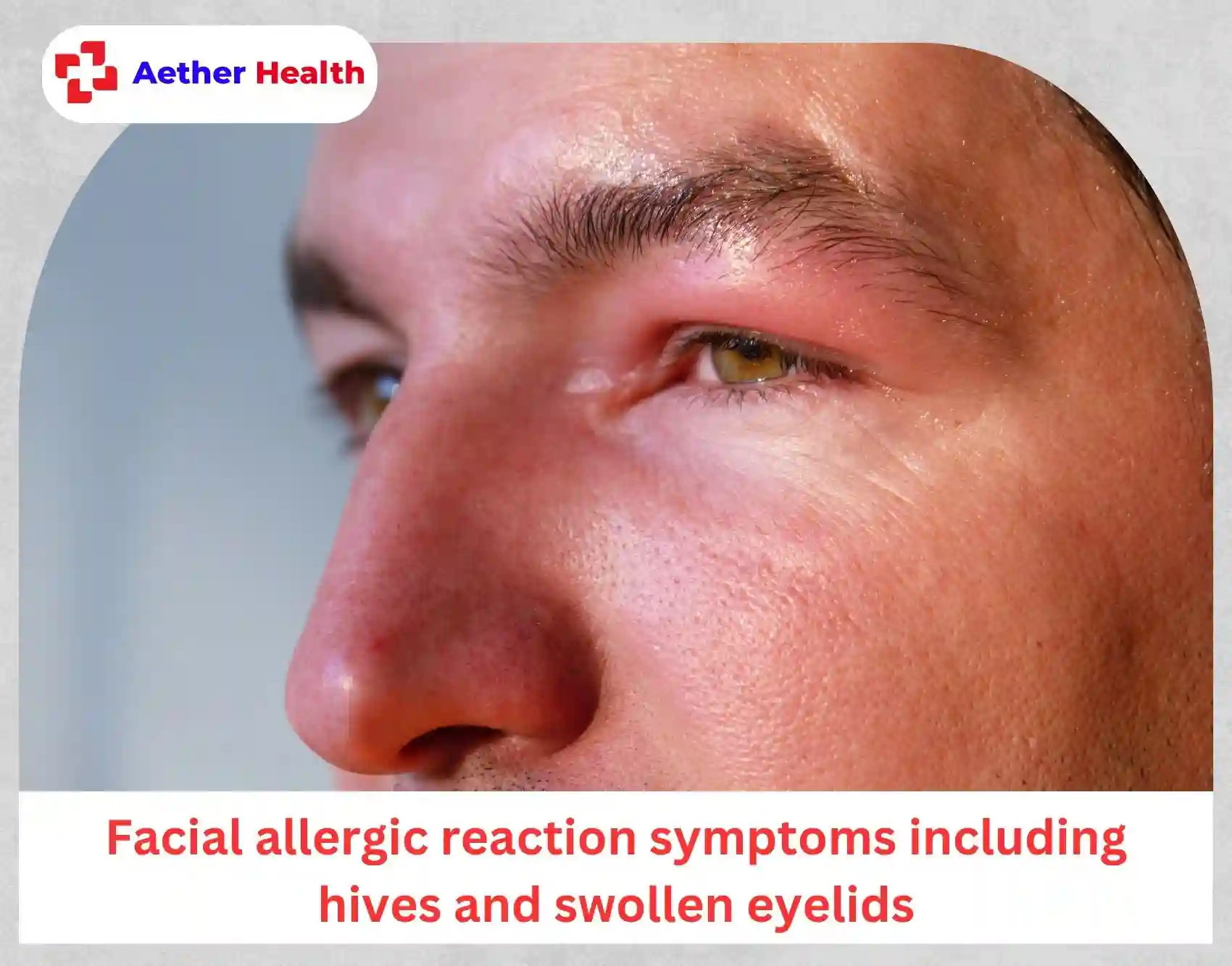
Facial allergic reactions have a very distinct look and feel that sets them apart from acne, sunburn, or dry skin flare-ups.
What You Might See
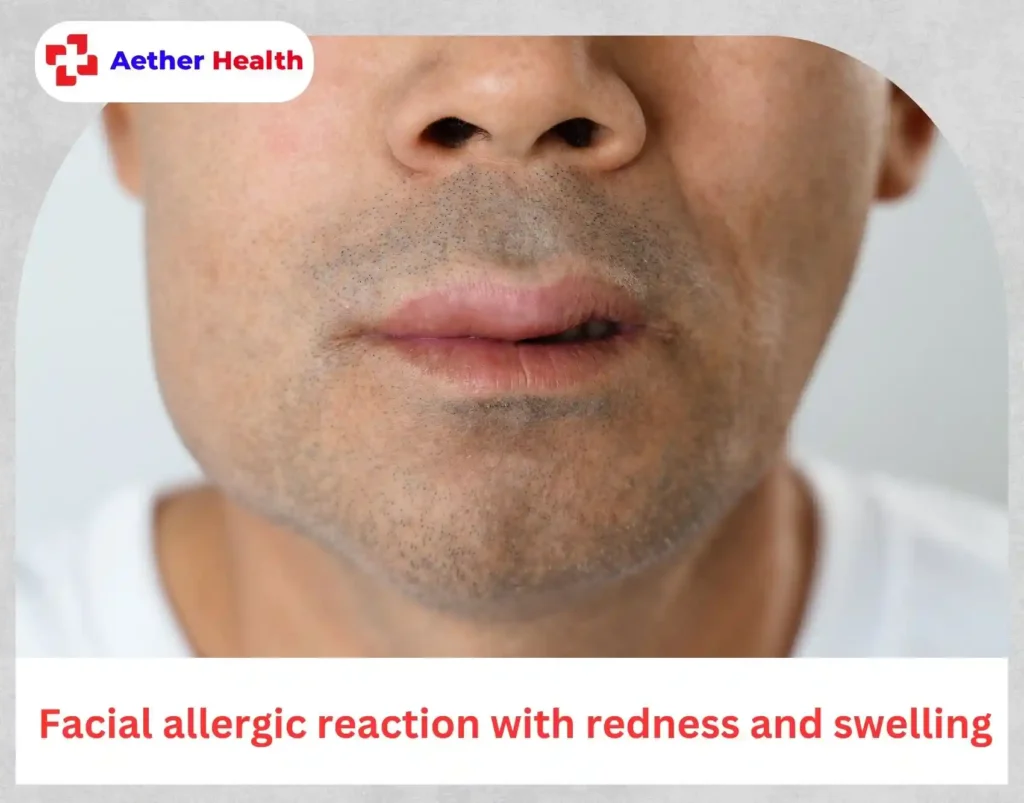
- Red, blotchy skin or bright pink patches that appear within minutes to hours of exposure.
- Raised, itchy welts (hives) that can appear anywhere on the face.
- Puffy eyelids or a swollen appearance around the eyes.
- Swelling of the lips, cheeks, or under the jawline.
- Small blisters, weeping patches, or scaly skin in contact-dermatitis reactions.
- Flushing across the cheeks, forehead, or neck.
- Rash with a warm, tight, or burning feel.
What You Might Feel
- Intense itching that’s hard to ignore.
- A tingling or numb sensation around the mouth.
- Tightness in the face or a feeling of pressure.
- Burning or stinging on the skin.
- Runny nose, watery eyes, sneezing (when the trigger is airborne).
- A metallic taste in the mouth (a warning sign of a more severe reaction).
Common Causes of Facial Allergic Reactions
Identifying the trigger is the first step in any allergy response. Facial reactions often come from something the skin has touched directly, but they can also be triggered by food, medications, or airborne allergens.
Common Direct Triggers
- Cosmetics and skincare: Fragrances, preservatives, or dyes in makeup, moisturizers, or cleansers.
- Hair products: Dyes and preservatives in shampoos and conditioners.
- Metals: Nickel earrings or facial jewelry.
- Plants: Poison ivy, oak, or sumac transferred to the face by hand contact.
- Topical products: Sunscreens, insect repellents, or acne treatments.
- Environmental exposure: Pollen, dust, mold, or pet dander landing on facial skin.
Systemic Triggers That Show Up on the Face
- Foods: Common triggers are shellfish, nuts, eggs, dairy, and soy.
- Medications: Antibiotics, pain relievers, and other prescriptions can cause facial swelling.
- Insect stings: Face and neck are common sting locations for outdoor workers.
- Latex or medical products: Fillers, dyes, or preservatives can trigger reactions in sensitive individuals.
| Think about what changed: New skincare product? A meal outside your normal diet? A recent medication started? Insect exposure? Tracking recent changes helps a provider identify the trigger and prevent repeat reactions. |
What Provides the Fastest, Safest Relief
A licensed healthcare provider is best positioned to guide relief, especially when the face is involved. Self-treating a moderate or severe reaction can allow it to escalate.
General Care Categories a Provider May Use
- Medical treatment: Prescription-based treatment to reduce histamine release and calm inflammation, prescribed after evaluation.
- Supportive care: Care approaches that provide symptom relief while the reaction resolves.
- IV-based care: For moderate or severe reactions, delivery of care through an IV allows rapid response.
- Continuous monitoring: Real-time tracking to catch delayed or secondary reactions.
For mild reactions, general supportive steps often include stopping exposure to the trigger, gently cleansing the area, and applying a cool compress. These do not replace medical evaluation for anything more than a minor reaction.
For anything moderate or severe, or when swelling involves the eyes, lips, tongue, or throat, professional care is the fastest path to safe relief. Learn more about allergic reaction emergency care at Aether Health.
Warning Signs That a Facial Reaction Is Turning Serious
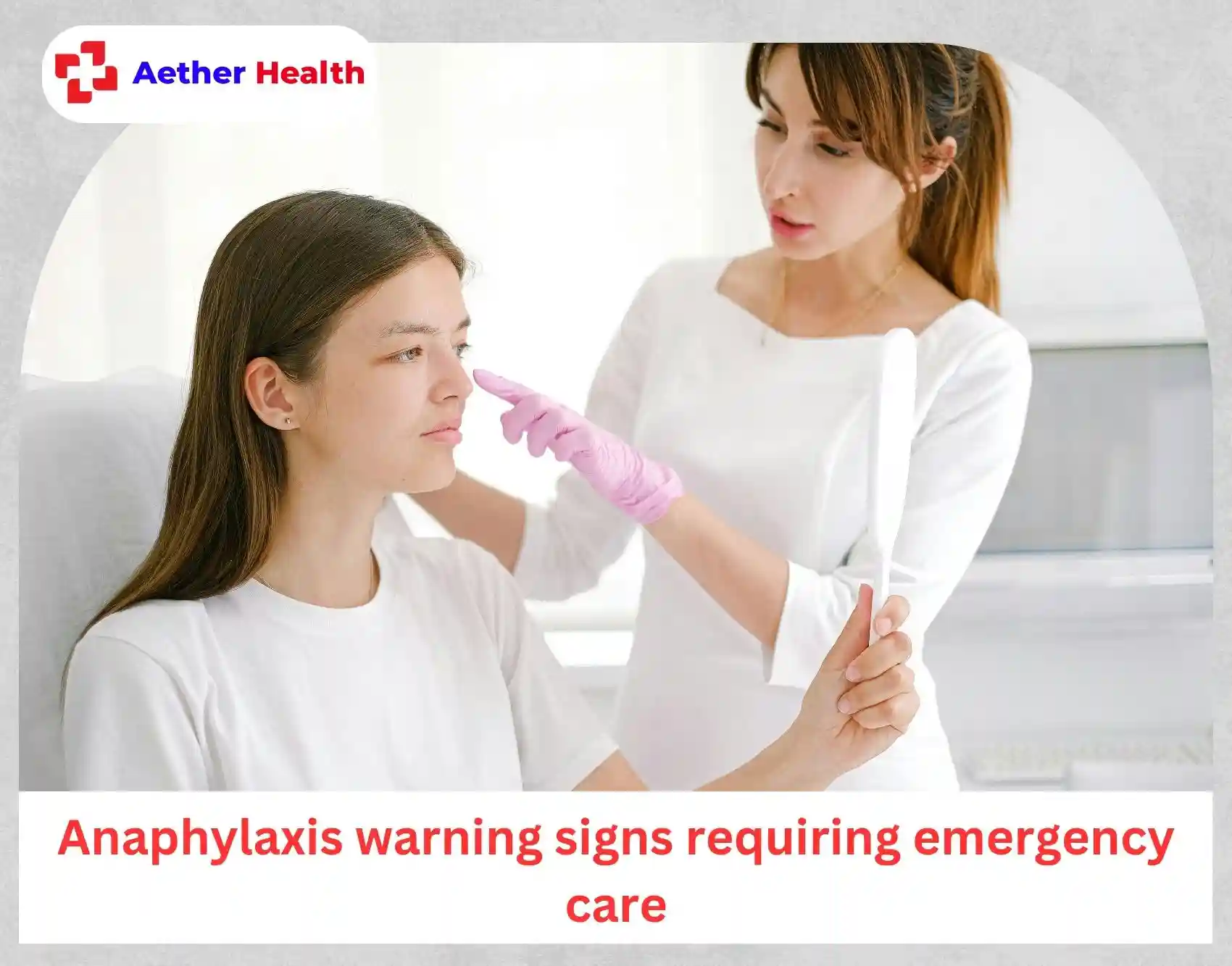
Recognizing these warning signs early can save your life. Anaphylaxis can develop within minutes and progress quickly.
Red Flags Requiring Immediate ER Care
- Swelling of the lips, tongue, or inside the mouth.
- Swelling that extends down the neck or into the throat.
- Difficulty breathing, wheezing, or a whistling sound with each breath.
- Trouble swallowing or drooling (a sign of throat swelling).
- A hoarse or strained voice, or complete loss of voice.
- Rapid heartbeat, dizziness, or feeling faint.
- Nausea, vomiting, or sudden severe abdominal cramps.
- Rash spreading rapidly beyond the face to the neck, chest, or body.
- Sudden anxiety, restlessness, or an unexplained sense of doom.
- Bluish tint to the lips, tongue, or fingertips.
- Loss of consciousness.
| Anaphylaxis is a medical emergency: It can progress from mild to life-threatening within minutes. Never wait to see if it gets better on its own. Call 911 or come immediately to Aether Health ER. |
When a Facial Allergic Reaction Needs Emergency Care
Most mild facial allergic reactions do not require the ER. However, certain situations always do. Get to the ER right away if any of the following apply.
Go to the ER Immediately If You Have:
- Any swelling of the lips, tongue, throat, or eyes that’s rapidly worsening.
- Difficulty breathing, wheezing, or a change in your voice.
- Facial swelling paired with hives spreading across the body.
- Dizziness, fainting, or a rapid heart rate.
- Nausea, vomiting, or severe abdominal cramps alongside facial symptoms.
- A known severe allergy that has been triggered.
- A prior history of anaphylaxis.
- A facial reaction after being stung by an insect.
- A facial reaction after starting a new medication.
- A child under 5 with rapid facial swelling or breathing difficulty.
- An older adult, pregnant woman, or immunocompromised patient with facial swelling.
- Facial symptoms that keep returning after initial improvement (biphasic reaction).
For a deeper look at the exact ER decision criteria, our guide on when to go to the ER for an allergic reaction walks through specific warning signs in more detail.
Who Is Most at Risk for Severe Facial Reactions?
Some groups face a higher risk of a facial allergic reaction becoming severe quickly. If any of these describe you or someone in your care, take symptoms seriously and get evaluated sooner rather than later.
- History of anaphylaxis: Prior severe reactions raise the odds of future ones being severe.
- People with asthma: Underlying airway inflammation makes throat swelling more dangerous.
- Known food allergies: Peanut, tree nut, and shellfish allergies carry higher anaphylaxis risk.
- Insect sting or medication allergies: Insect stings and antibiotic reactions are common anaphylaxis triggers.
- Young children: Their airways are smaller and reactions can escalate faster.
- Older adults: Symptoms may be missed and complications develop faster.
- Pregnant women: Facial swelling in pregnancy needs prompt evaluation.
- Immunocompromised patients: Reactions can be harder to manage and complicate faster.
How Aether Health ER Evaluates Facial Allergic Reactions
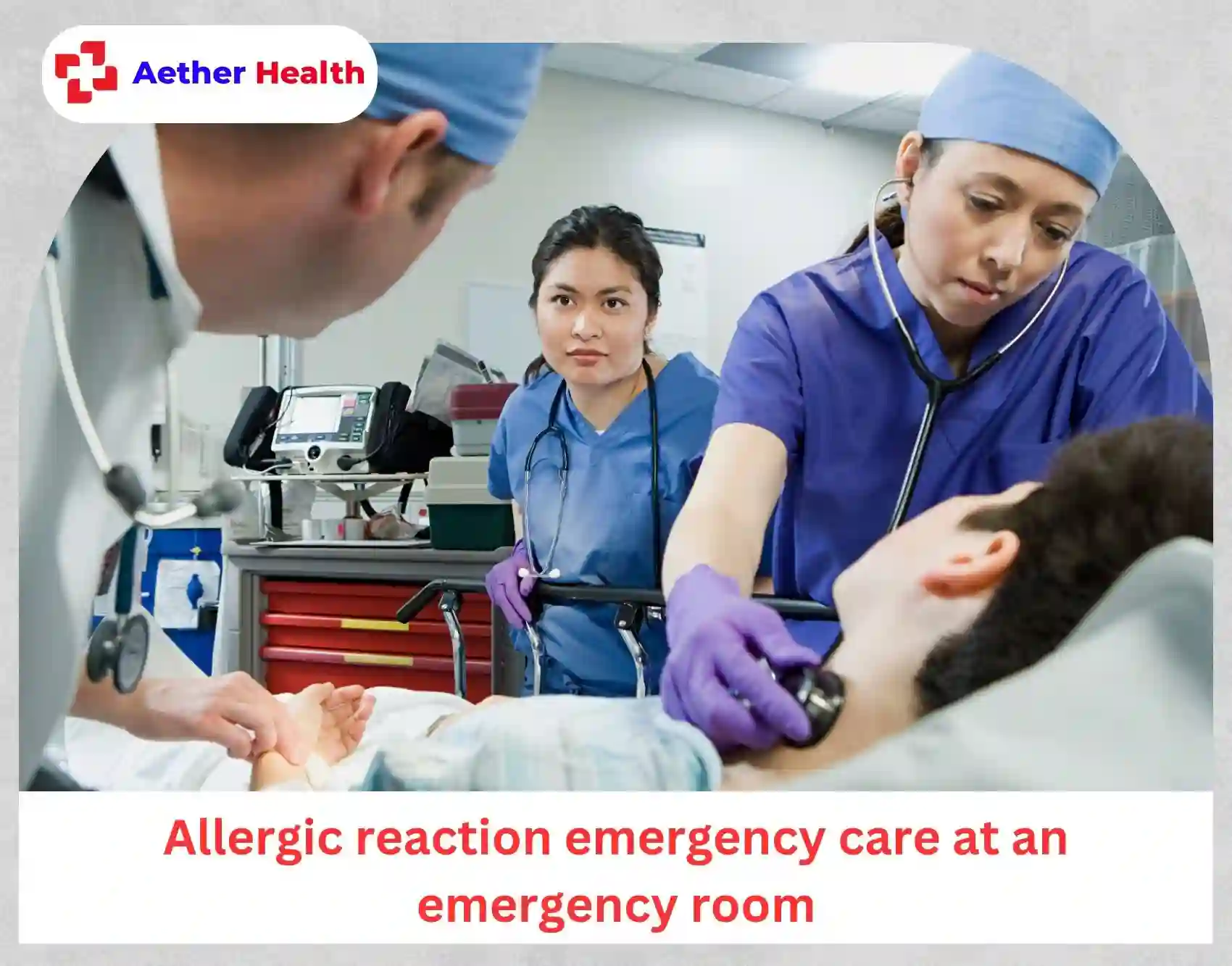
When you walk in with a facial allergic reaction, our team is ready to act fast, protect your airway, and identify the trigger. Here’s what to expect from our 24/7 emergency care:
- Immediate triage: Board-certified emergency physicians assess airway, breathing, and circulation within moments of arrival.
- Continuous monitoring: Real-time tracking of vital signs, oxygen levels, and skin changes throughout your visit.
- IV support: Emergency-level care with IV access when the reaction is moderate to severe.
- Rapid lab testing: Same-visit lab work when indicated to identify the reaction pattern.
- Post-treatment observation: Extended observation for delayed or biphasic reactions before you leave.
- Follow-up planning: Discharge instructions, trigger avoidance guidance, and referral to allergy specialists when needed.
- Hospital coordination: Direct hospital transfer when admission is needed, coordinated by our team.
- Transparent pricing: Most commercial plans accepted. No surprise billing. No balance billing. Transparent care.
Three 24/7 Greater Houston locations, all reachable at +1 (713) 528-8703:
- Aether Health Spring Cypress ER: 8929 Spring Cypress Rd, Spring, TX 77379
- Aether Health Kingwood ER: 2158 Northpark Dr, Kingwood, TX 77339
- Aether Health SilverLake ER: 2752 Sunrise Blvd, Pearland, TX 77584
Frequently Asked Questions
How long does an allergic reaction on the face take to go away?
Mild reactions often ease within a few hours to a day of the right care.
Moderate reactions can take 24 to 48 hours. Severe reactions and anaphylaxis need immediate care and may require observation for delayed rebound symptoms.
Can I treat a facial allergic reaction at home?
Mild cases can sometimes be managed at home with trigger avoidance and gentle skincare.
Anything that involves swelling of the lips, eyes, or throat, or that comes with breathing difficulty, needs immediate professional evaluation. Never rely on home care alone for a moderate or severe reaction.
What is the fastest way to reduce facial swelling from an allergy?
The fastest safe approach is professional evaluation and care from a licensed provider. Prescription-based treatment prescribed after evaluation often works within an hour.
Cool compresses can offer temporary comfort while awaiting care, but they do not resolve the underlying reaction.
Should I go to urgent care or the ER for a facial allergic reaction?
Urgent care may be appropriate for mild to moderate reactions with no breathing symptoms.
Go directly to the ER if there’s any swelling near the eyes, lips, tongue, or throat, or any breathing difficulty, dizziness, or rapid heartbeat. When in doubt, choose the ER.
Can a facial allergic reaction come back after it seems to have gone?
Yes. This is called a biphasic reaction, and it can happen hours after the initial reaction seems to resolve.
Anyone who had a moderate or severe reaction should stay under observation and know the warning signs of a return.
Are children more at risk with facial allergic reactions?
Yes. Children have smaller airways, so throat and tongue swelling can compromise breathing faster than in adults.
A facial allergic reaction in a young child, especially with any breathing change, always deserves urgent evaluation.
People Also Ask About Facial Allergic Reactions
These are the related questions AI search engines and Google’s People Also Ask feature commonly surface alongside this topic. Direct answers below.
Why is my face swollen from an allergic reaction?
Facial swelling from allergy is caused by histamine release, which makes small blood vessels leaky. Fluid escapes into facial tissues and produces the characteristic puffiness.
If the swelling extends toward the throat or eyes, it’s an emergency.
How do I know if my facial reaction is anaphylaxis?
Anaphylaxis involves symptoms beyond the skin: breathing changes, drop in blood pressure, dizziness, throat swelling, or gastrointestinal symptoms.
If facial swelling comes with any of these, call 911 immediately.
Can I have an allergic reaction on my face without knowing the trigger?
Yes, this is common. Unknown triggers often need allergy testing to identify.
A provider or allergist can help pinpoint the cause and prevent recurrence.
Is angioedema the same as a facial allergic reaction?
Angioedema is a specific type of allergic reaction that causes deeper swelling in the skin and mucous membranes, often affecting the face, lips, and around the eyes.
It’s more serious than surface hives because it can affect the airway.
What time of day are allergic reactions on the face worst?
Some reactions worsen at night due to lying flat, cortisol level changes, or cumulative daytime exposure.
Sleeping with the head slightly elevated can help, but it’s not a substitute for professional care in a moderate or severe reaction.
Can stress trigger an allergic reaction on the face?
Stress does not directly cause allergic reactions, but it can worsen underlying skin sensitivity and flare conditions like eczema or hives.
Managing stress alongside professional care improves long-term outcomes.
Facial Allergic Reaction Getting Worse or Involving Swelling? Get Evaluated Now.
When facial swelling involves the lips, tongue, or eyes, when breathing becomes difficult, or when symptoms spread quickly, professional care is the safest path to fast relief.
Aether Health ER provides 24/7 emergency care with rapid triage, IV access, continuous monitoring, and board-certified emergency physicians, usually within minutes of arrival.
- Locations: Three 24/7 locations across Greater Houston
- Spring Cypress – 8929 Spring Cypress Rd, Spring, TX 77379
- Kingwood – 2158 Northpark Dr, Kingwood, TX 77339
- SilverLake – 2752 Sunrise Blvd, Pearland, TX 77584
- Phone: +1 (713) 528-8703
- Hours: Open 24 hours, every day of the year
- Insurance: Most commercial plans accepted. No surprise billing.
| Call 911 now if life-threatening: For facial swelling with breathing difficulty, throat tightness, drooling, dizziness, fainting, or a change in voice, call 911. For urgent but non-life-threatening concerns, call Aether Health ER at +1 (713) 528-8703 or come to any of our three Greater Houston locations. |