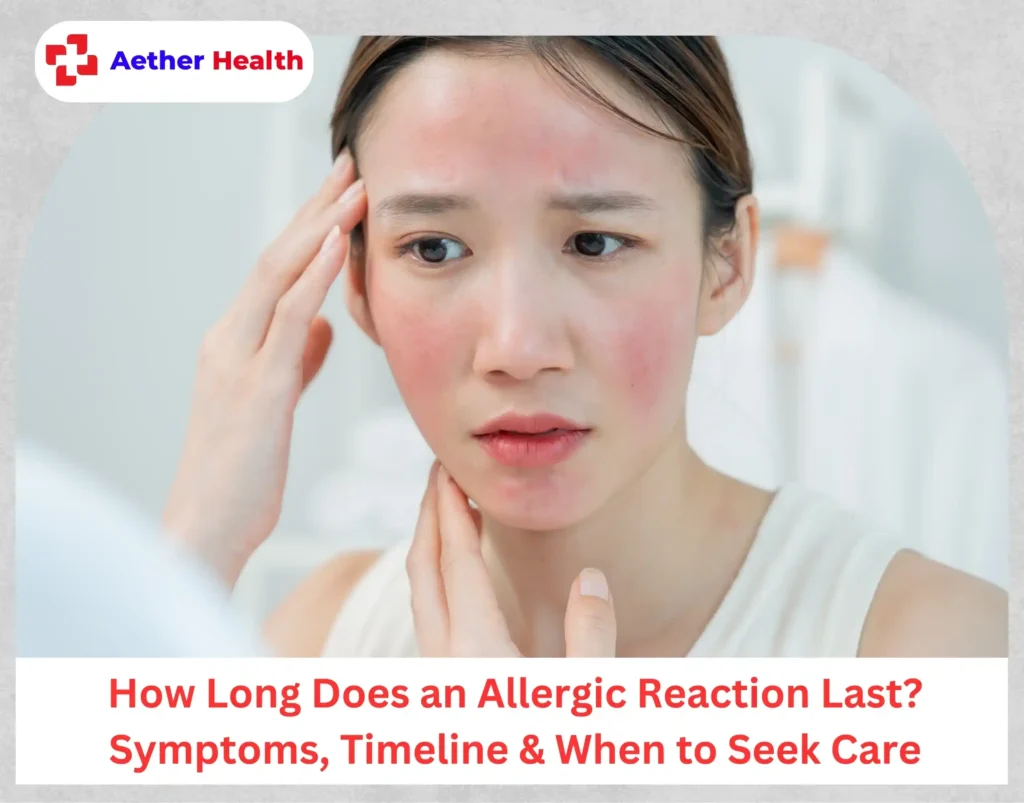
Allergic reactions can be unpredictable, sometimes disappearing within hours, and other times lasting for days or even weeks. The duration depends on what triggered the reaction, how severe it is, and whether you’re still exposed to the allergen.
This comprehensive guide explains how long allergic reactions last, how symptoms progress, and when you should seek medical help.
How Long Does an Allergic Reaction Last?
Allergic reactions don’t have a universal timeline, as each person’s immune system behaves differently. Mild reactions, like sneezing, itching or even skin irritation can generally lead to resolution within a few hours of allergen removal and early treatment.
More persistent reactions like anaphylaxis or seasonal allergies that produce symptoms from pollen or dust can last multiple weeks and even months. Here’s a general timeline when it comes to most reactions:
- Minutes to hours → Mild reactions (e.g., sneezing or itching).
- Hours to a few days → Food allergies or mild hives.
- 2–10 days (or longer) → Skin reactions such as contact dermatitis.
- Weeks → The continued presence of an allergen (e.g., pollen or pet allergies).
What Is an Allergic Reaction?
An allergic reaction happens when the immune system erroneously recognizes a benign substance like pollen, some foods, pet dander or medication as a threat. In response, the body releases things like histamine and other chemicals that cause inflammation and produce observable symptoms.
This causes the release of chemicals such as histamine, resulting in symptoms like:
- Itching or hives.
- Sneezing and runny nose.
- Swelling of lips, face or throat.
- Difficulty breathing (in severe cases).
Reactions can range from mild irritation to life-threatening emergencies. Hence, in most cases a visit to the nearest allergic reaction emergency care is advised.
How Long Different Types of Allergic Reactions Last

The duration of an allergic reaction mostly depends on the allergen and how your body reacts to it. Some reactions are transient and resolve quickly while others persist for years (persistent inflammation owing to chronic exposure).
The length depends on the kind of allergy.
Mild Allergic Reactions
- Symptoms: sneezing, itchy eyes, mild hives. The condition here might seem like a normal cold and flu.
- Onboarding takes a few minutes to an hour.
- Typically clears up within a few hours to a couple of days.
- Improve quickly with antihistamines.
Skin Allergies (Contact Dermatitis)
- Examples: reaction to soaps/plants/metals.
- May appear hours after exposure.
- Last 2 to 10 days or longer.
- Cases (for example, poison ivy) can linger for weeks.
Skin reactions often stick around longer, because inflammation remains active post-exposure.
Food Allergies
- Examples: peanuts, shellfish, dairy.
- Symptoms usually progress from minutes to 2 hours
- Typically clears up within a few hours.
- Symptoms (such as hives) can persist longer.
In rare cases, the symptoms may reoccur hours after the first reaction (known as a biphasic reaction).
Seasonal Allergies (Hay Fever)
- Examples: pollen, dust, pet dander.
- Symptoms last as long as there is exposure.
- Last weeks or even months during allergy season.
These are long-term, not short-term reactions.
Severe Allergic Reactions (Anaphylaxis)
This is a medical emergency.
- Starts within minutes.
- Can last several hours.
- Reappear 8–72 hrs later (biphasic rxn).
- Requires immediate emergency treatment.
Stages of an Allergic Reaction
So, how long does an allergic reaction last? Well, the allergic reaction develops in stages, each stage demonstrating the body’s response to the allergen over time. Knowing these steps can help indicate if a reaction is getting better or more severe.
It starts with exposure, which may occur through inhalation, ingestion or contact with the skin. The immune system then responds, releasing histamine and other chemicals that cause the symptoms to begin.
Here’s how an allergic reaction usually progresses:
Stage 1: Exposure
Exposure to allergen (food, pollen, medication).
Stage 2: Immune Response
Histamine and other chemical substances released by the body. Symptoms begin (itching, swelling, sneezing).
Stage 3: Symptom Peak
Flare up (become more noticeable or severe).
Stage 4: Resolution or Escalation
Symptoms improve with treatment or develop into severe reactions (e.g., anaphylaxis).
The period varies according to how soon the allergen is expelled and managed.
Why Do Some Allergic Reactions Last Longer?

The duration of an allergic reaction depends on a number of factors. The environmental allergens typically result in longer-term symptoms, while reactions involving food tend to be shorter. The strength of the reaction as well is a big factor, with stronger immune responses causing more prolonged symptoms.
Several factors influence duration:
Type of Allergen
- Food → short-lived.
- Skin/contact → longer-lasting.
- Environmental → ongoing.
Severity
- Mild reactions fade quickly.
- Severe reactions can persist for days or longer.
Continued Exposure
- Stay close to allergen = symptoms stay.
Treatment Timing
- Early medication = faster recovery.
- Delayed treatment = longer symptoms.
- Individual Immune Response.
When Is It Time to See a Doctor?
The majority of those who are allergic have mild reactions, though some do need medical attention.
Go to a doctor or the nearest emergency room If:
- Persistent symptoms (i.e., more than 1–2 days).
- Rash or swelling isn’t improving.
- Difficulty breathing.
- Swelling of the face, lips or throat.
- Chest tightness.
- Dizziness or fainting.
- Rapidly spreading hives.
Most of these are signs of anaphylaxis, a potentially deadly reaction.
How to Make an Allergic Reaction Go Away More Quickly

While allergic reactions cannot always be stopped instantly, early and appropriate treatment can significantly reduce their duration. The first step is to remove or avoid the allergen to prevent further exposure.
Anti-allergy medications like antihistamines can alleviate symptoms by blocking the body’s immune reaction. In more extreme cases, prescription drugs or emergency interventions may also be necessary. Drinking fluids, resting and avoiding irritants can also facilitate a quick return of the body to normal.
Final Thoughts
Allergic reactions can last anywhere from a few minutes to several weeks, depending on the cause, severity, and level of exposure. While mild reactions are usually short-lived, more serious or prolonged reactions require careful monitoring and sometimes medical treatment.
The most important takeaway is to pay attention to your symptoms and act quickly if they worsen. Recognizing the signs of a severe reaction and seeking timely care can make a significant difference in outcomes and overall safety. Hopefully, you now have a clear idea of how long does an allergic reaction lasts and what to do in it’s severity.
FAQs
1) How long do mild allergic reactions last?
Mild reactions usually last a few hours to a couple of days, especially with treatment.
2) Can an allergic reaction last for days?
Yes. Skin reactions and moderate allergies can last several days or even weeks.
3) How quickly do allergic reactions start?
They can begin within minutes to a few hours after exposure.
4) Can symptoms come back after going away?
Yes. Some reactions return hours later (biphasic reaction).
5) When should I go to the ER for an allergic reaction?
Go immediately if you have breathing difficulty, swelling, dizziness, or severe symptoms.