
That nagging knee pain has you walking funny, skipping the gym, or wincing every time you climb the stairs and you want relief now. Whether it’s from a weekend hike, an old injury flaring up, or pain that appeared out of nowhere, you’re not alone. Knee pain is one of the most common reasons adults visit emergency rooms and primary care offices in the United States. The good news? Most cases respond quickly to the right combination of rest, targeted home care, and movement if you know what to do (and what not to do).
In this guide, the board-certified emergency team at Aether Health ER walks you through proven, fast-acting strategies to relieve knee pain, the medical treatments that speed recovery, and the warning signs that mean your knee needs immediate emergency care. With three 24/7 freestanding ER locations across Greater Houston and no surprise billing, no balance billing, we’re here whenever your knee pain becomes more than something you can manage at home.
Quick Answer: How Fast Can You Get Knee Pain Relief?
Realistically, most minor knee pain begins to improve within 24–48 hours with proper care, and many people return to normal activity within 1–2 weeks. The fastest results come from combining rest, ice, compression, elevation, and an anti-inflammatory medication during the first 48 hours then transitioning to gentle movement and stretching to restore function. Severe injuries (torn ligaments, meniscus tears, fractures) take longer and often need medical evaluation.
The key is matching your treatment to the cause. A muscle strain heals differently than a torn meniscus, and pushing through serious knee pain can turn a minor issue into a long-term injury.
Common Causes of Knee Pain
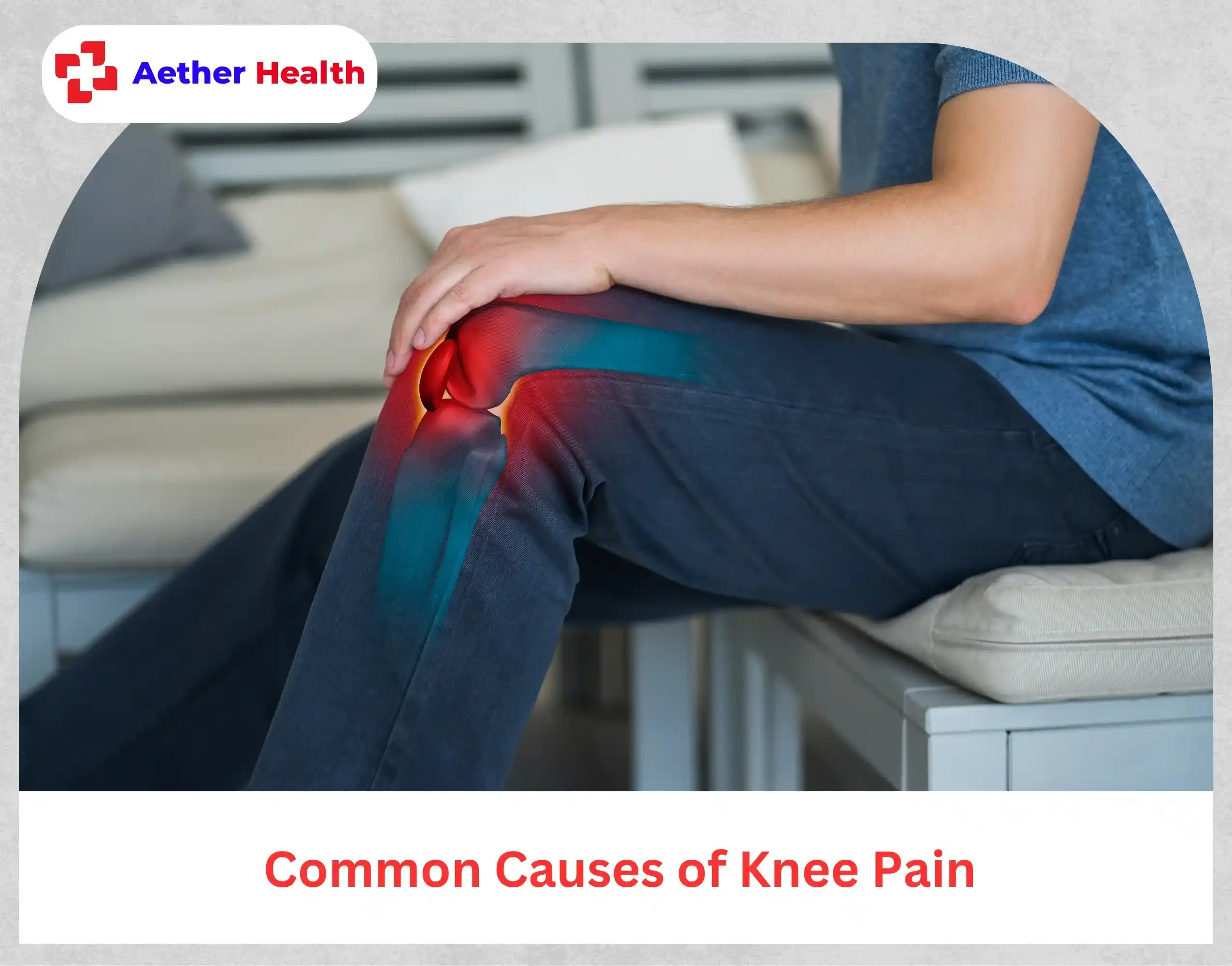
Knowing the cause helps you choose the right treatment. The most common causes of sudden or worsening knee pain include:
Acute Injuries
- Sprains: Overstretched or torn ligaments typically from twisting movements, sports, or falls.
- Meniscus tears: Cartilage damage from twisting or deep squatting, often felt as locking or clicking.
- ACL, MCL, PCL, or LCL injuries: Knee ligament tears, common in basketball, soccer, and football. Often accompanied by a popping sound.
- Fractures and dislocations: From falls, direct blows, or high-impact accidents.
Overuse Injuries
- Patellofemoral pain syndrome (“runner’s knee”): Pain around the kneecap, common in runners and people who sit for long periods.
- Tendonitis: Inflammation of the patellar tendon, frequent in jumping sports.
- IT band syndrome: Friction in the band running down the outer thigh, common in long-distance runners.
- Bursitis: Inflammation of fluid-filled sacs that cushion the joint.
Chronic & Underlying Conditions
- Osteoarthritis: Wear-and-tear arthritis, most common in adults over 50.
- Rheumatoid arthritis: An autoimmune condition causing joint inflammation and pain.
- Gout: Caused by uric acid crystal buildup, often very painful and sudden.
- Infections: Septic arthritis from bacterial infection. Rare but serious requires emergency care.
- Hemarthrosis: Sudden swelling with no clear injury may indicate bleeding inside the joint, which needs evaluation.
Immediate Relief: What to Do in the First 24–48 Hours
For most acute knee pain, the RICE protocol delivers the fastest relief and prevents the injury from worsening.
R Rest
Stop the activity that caused the pain. Avoid putting weight on the knee for the first 24–48 hours. Use crutches if you can’t walk without significant pain.
I Ice
Apply an ice pack wrapped in a thin towel to the knee for 15–20 minutes every 2–3 hours during the first 48 hours. Cold reduces swelling, numbs pain, and limits inflammation. Never apply ice directly to skin.
C Compression
Wrap the knee with an elastic bandage or compression sleeve to control swelling. The wrap should be snug but not so tight that it cuts off circulation if your toes go numb or change color, loosen it immediately.
E Elevation
Keep the knee raised above heart level whenever possible. This uses gravity to reduce fluid buildup and swelling. Prop your leg up on pillows while sitting or lying down.
Add Anti-Inflammatory Medication
Over-the-counter NSAIDs like ibuprofen (Advil, Motrin) or naproxen (Aleve) reduce pain and inflammation. Take with food to protect your stomach. Avoid if you have kidney problems, ulcers, or are on blood thinners acetaminophen (Tylenol) is a safer alternative.
Home Remedies for Fast Pain Relief
Beyond RICE, these home remedies can speed your recovery and ease pain between rest periods.
Heat Therapy (After 48 Hours)
Once initial swelling subsides, switch from ice to heat. Apply a warm compress or heating pad for 15–20 minutes to relax tight muscles, improve circulation, and ease stiffness. Heat helps especially with chronic pain and pre-stretch warmups.
Topical Pain Relievers
Creams and gels containing menthol, capsaicin, or diclofenac provide targeted relief without the systemic side effects of oral medications.
Epsom Salt Soak
Soaking the knee in warm water with Epsom salt for 15–20 minutes can reduce muscle tension and ease pain. Best for chronic or generalized knee soreness.
Turmeric and Anti-Inflammatory Foods
Curcumin (found in turmeric), omega-3 fatty acids (fatty fish, flaxseed, walnuts), ginger, and tart cherries have natural anti-inflammatory properties. Incorporating them into your diet supports recovery.
Stay Hydrated
Joint cartilage is roughly 80% water. Dehydration worsens joint pain and slows healing. Aim for 8–10 cups of water daily more in Texas heat.
Use a Supportive Brace
A knee sleeve or hinged brace provides stability, reduces movement that aggravates pain, and gives the joint time to heal. Wear it during activity, especially when returning to mobility.
Stretches & Exercises for Knee Pain
After the first 48 hours of rest, gentle movement is one of the fastest ways to restore function and prevent stiffness. Stop any exercise that causes sharp pain.
Straight Leg Raises
Lie on your back with one leg bent and the other straight. Slowly lift the straight leg about 12 inches, hold for 3 seconds, then lower. Perform 2–3 sets of 10 reps. Strengthens the quadriceps without stressing the knee.
Hamstring Stretch
Sit with one leg extended and the other bent. Lean forward gently from the hips until you feel a stretch behind your knee. Hold for 30 seconds. Repeat 3 times per side. Tight hamstrings worsen knee pain.
Quad Stretch
Standing, hold onto a wall for balance. Grab one ankle and gently pull it toward your buttocks until you feel a stretch in the front of your thigh. Hold 30 seconds, switch sides.
Calf Stretch
Face a wall, step one leg back, keep that heel down and the leg straight, and lean forward. Hold 30 seconds per side. Tight calves change your gait and stress the knees.
Wall Sits (When Pain Allows)
Stand against a wall and slide down until your knees are bent about 45 degrees not 90, which is too much stress. Hold for 15–30 seconds. Builds quad and glute strength.
Low-Impact Cardio
Swimming, water walking, stationary cycling, and elliptical work allow you to maintain fitness without pounding the knee. Stick with these until you’re pain-free during daily activities.
Medical Treatments to Speed Recovery
If pain isn’t improving with home care after 5–7 days, professional treatment can dramatically speed recovery.
- Physical therapy: Targeted exercises, manual therapy, and modalities like ultrasound or electrical stimulation accelerate healing.
- Corticosteroid injections: For severe inflammation, doctors may inject corticosteroids directly into the joint for rapid relief.
- Hyaluronic acid injections: Lubricates arthritic joints. Provides longer-lasting relief than steroid injections.
- Platelet-rich plasma (PRP) therapy: An emerging treatment using the body’s own platelets to promote healing in tendons and ligaments.
- Bracing and immobilization: If the knee is locked, dislocated, or unstable, a brace and weight-bearing restrictions may be prescribed.
- Surgical intervention: Severe ligament tears, meniscus damage, or fractures may require arthroscopic surgery for full recovery.
- Joint replacement: For chronic, severe arthritis pain unresponsive to other treatments.
What NOT to Do When You Have Knee Pain
Avoid these common mistakes that slow healing or make injuries worse:
- Don’t push through sharp pain: Walking, running, or working out through significant pain dramatically worsens most knee injuries.
- Don’t apply heat in the first 48 hours: Apply ice for the first 48 hours, not heat. Heat too early increases swelling.
- Don’t wrap too tightly: Compression should be snug, not constricting. Numbness, tingling, or color changes mean it’s too tight.
- Don’t stay completely immobile for too long: After 48–72 hours, gentle movement helps. Prolonged immobility leads to stiffness and weakness.
- Don’t ignore worsening symptoms: Lingering pain, swelling, instability, or locking are signs you need professional evaluation.
- Don’t “work through it” if it’s been weeks: Persistent pain isn’t normal. Pain isn’t a goal to push past it’s information to respect.
- Don’t rely on Dr. Google: Self-diagnosing through search results can lead to wrong treatments especially if you suspect a tear or fracture.
When Knee Pain Requires Emergency Care
Most knee pain can be managed at home or with a follow-up to your primary care doctor. But certain warning signs mean you need emergency evaluation right now:
- Inability to bear any weight on the knee
- Visible deformity or the knee appearing out of place
- Severe swelling that develops within minutes of injury (possible bleeding inside the joint)
- A loud popping sound at the moment of injury
- The knee feels unstable or “gives out”
- Inability to fully straighten or bend the knee
- Numbness, tingling, or color changes in the foot below the injury
- Open wounds or bone visible at the injury site
- Fever combined with a hot, red, swollen knee (possible infection)
- Severe pain that doesn’t improve with rest and over-the-counter pain medication
- Calf swelling, redness, or pain along with knee symptoms (possible blood clot)
These symptoms can indicate fractures, ligament ruptures, joint infections, dislocations, or blood clots all conditions where delayed treatment leads to permanent damage.
How Aether Health ER Treats Knee Injuries & Pain in Texas
When you walk into any Aether Health ER with a serious knee injury or severe pain, here’s what to expect:
- Immediate imaging: On-site X-rays, ultrasound, and CT to immediately identify fractures, dislocations, or soft tissue damage
- Expert physician care: Board-certified emergency physicians on-site 24/7 not nurse practitioners or PAs alone
- Same-visit lab work: Joint fluid analysis to rule out infection, gout, or internal bleeding
- Same-visit treatment: Splinting, casting, joint aspiration, pain management, and in-house pharmacy for medications
- Specialist coordination: If specialist care is needed, we coordinate orthopedic and sports medicine referrals directly
- Shorter wait times: Most patients are seen within minutes not hours like a hospital ER
- No surprise billing, no balance billing: Transparent pricing. We accept most major PPO insurance. No surprise billing. No balance billing.
Our three Texas locations are open 24/7, 365 days a year. Call us anytime at +1 (713) 528-8703.
- Aether Health Spring Cypress ER 8929 Spring Cypress Rd, Spring, TX 77379
- Aether Health Kingwood ER 2158 Northpark Dr, Kingwood, TX 77339
- Aether Health SilverLake ER 2752 Sunrise Blvd, Pearland, TX 77584
Frequently Asked Questions
How long does it take for knee pain to go away?
Minor knee pain from overuse or strain typically improves within 1–2 weeks with proper care. Ligament sprains can take 3–6 weeks. Meniscus tears or significant injuries may take 6–12 weeks or require surgery. Chronic conditions like arthritis need long-term management.
Should I walk if my knee hurts?
Light walking can actually help if pain is mild and you can move without limping. But avoid walking long distances or putting full weight on the knee if pain is sharp, the knee feels unstable, or there’s significant swelling. When in doubt, rest the first 48 hours and reintroduce activity gradually.
Is heat or ice better for knee pain?
Ice for the first 48 hours after injury it reduces swelling and inflammation. Heat after 48 hours or for chronic pain it relaxes muscles and improves blood flow. Some people benefit from alternating between the two.
What painkiller works best for knee pain?
NSAIDs (ibuprofen or naproxen) work best because they reduce both pain and inflammation. Acetaminophen helps with pain but not inflammation, and is safer for people with kidney issues, ulcers, or who take blood thinners. Always follow dosing instructions and check with a pharmacist if you take other medications.
Should I go to the ER or urgent care for knee pain?
For mild pain, swelling, or stiffness you can walk through, urgent care or your primary doctor is appropriate. Go to a freestanding ER like Aether Health for inability to bear weight, visible deformity, severe swelling, popping sounds at injury, loss of sensation, signs of infection (red, hot, fever), or any high-impact trauma.
Severe Knee Pain or Injury? Get X-Rays & Treatment Today.
If your knee is swollen, unstable, deformed, or you can’t bear weight on it, walk into your nearest Aether Health ER for same-visit X-rays, expert evaluation, and a clear treatment plan. We’re open 24/7, every day of the year, with no surprise billing and no balance billing.
Call us anytime: +1 (713) 528-8703
Check in online: https://aetherhealth.org/check-in/
Find your nearest location: https://aetherhealth.org/locations/
Medical Disclaimer
The information on this page is for general educational purposes only and is not a substitute for professional medical advice, diagnosis, or treatment. Reading this content does not establish a doctor-patient relationship. For medical emergencies, call 911 or visit your nearest Aether Health ER.